How to tell if kitchen cabinets are good quality — before you sign
Two kitchens can look identical in a showroom and be worlds apart inside the box. This is the buyer's guide to judging cabinet construction — so you can read a quote, ask the four questions that matter, and spot the upsells before you sign anything.
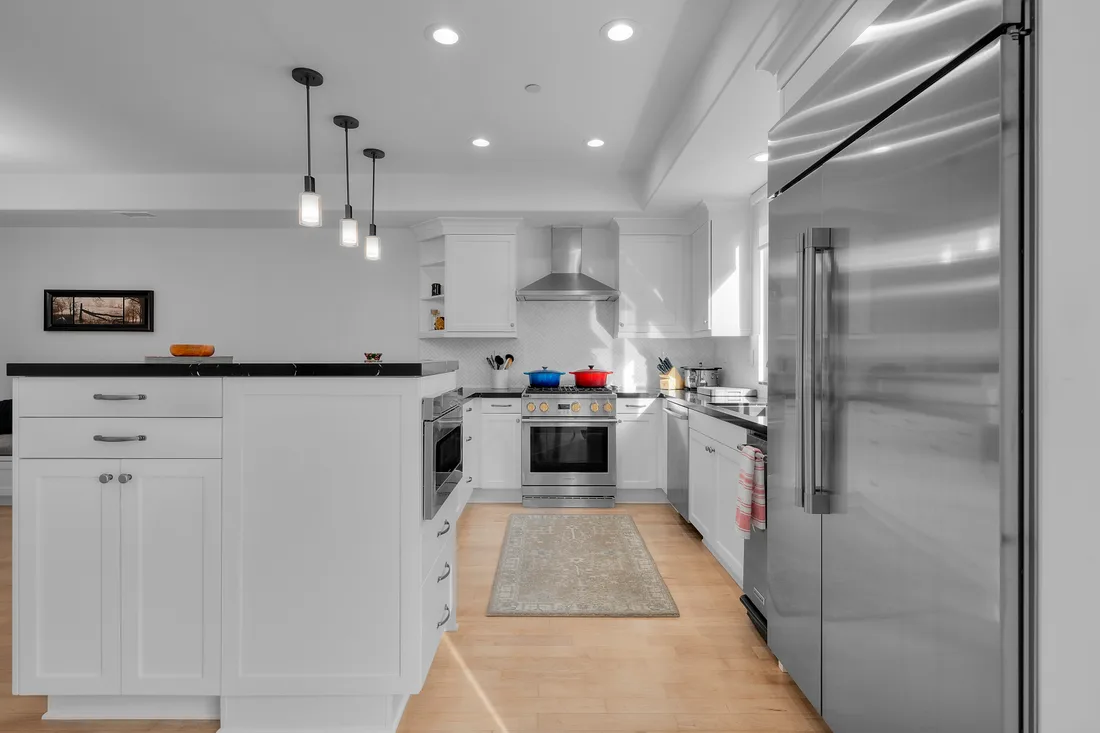
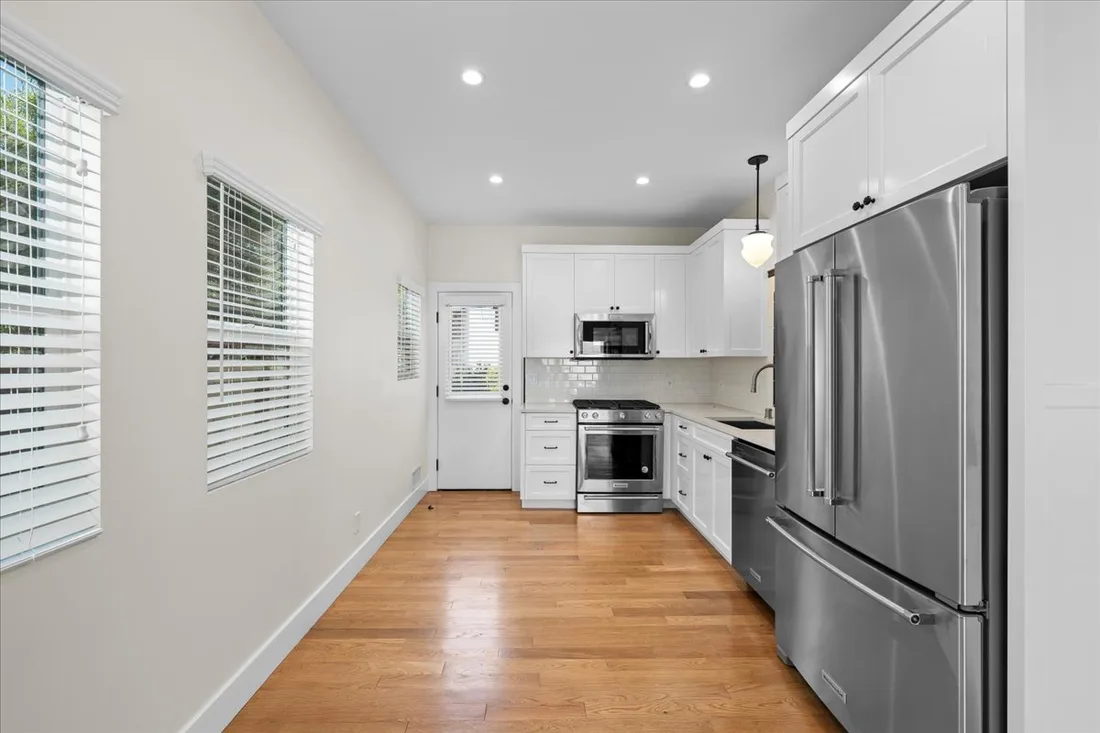
How to tell a well-built cabinet from a cheap one
Start with the box. A quality cabinet is built from plywood — usually 3/4" — because plywood holds screws, resists sagging under stone countertops, and shrugs off moisture far better than particleboard, which swells and crumbles if it ever gets wet. Then the drawers: the single best question you can ask a cabinet salesperson is "Are the drawers dovetailed?" A dovetailed solid-wood drawer box interlocks at the corners and lasts decades; a stapled or glued particleboard box is the first thing to fail.
The last two are the hardware. Look for full-extension, soft-close undermount glides — they let you reach the very back of the drawer and carry real weight without the drawer front telling you it's cheap. And concealed hinges, ideally six-way adjustable, so doors can be re-aligned perfectly years later. Plywood box, dovetailed drawers, undermount soft-close glides, concealed hinges — that's the whole checklist, and any honest quote should let you confirm all four.
Choosing a tier: custom, semi-custom, or stock →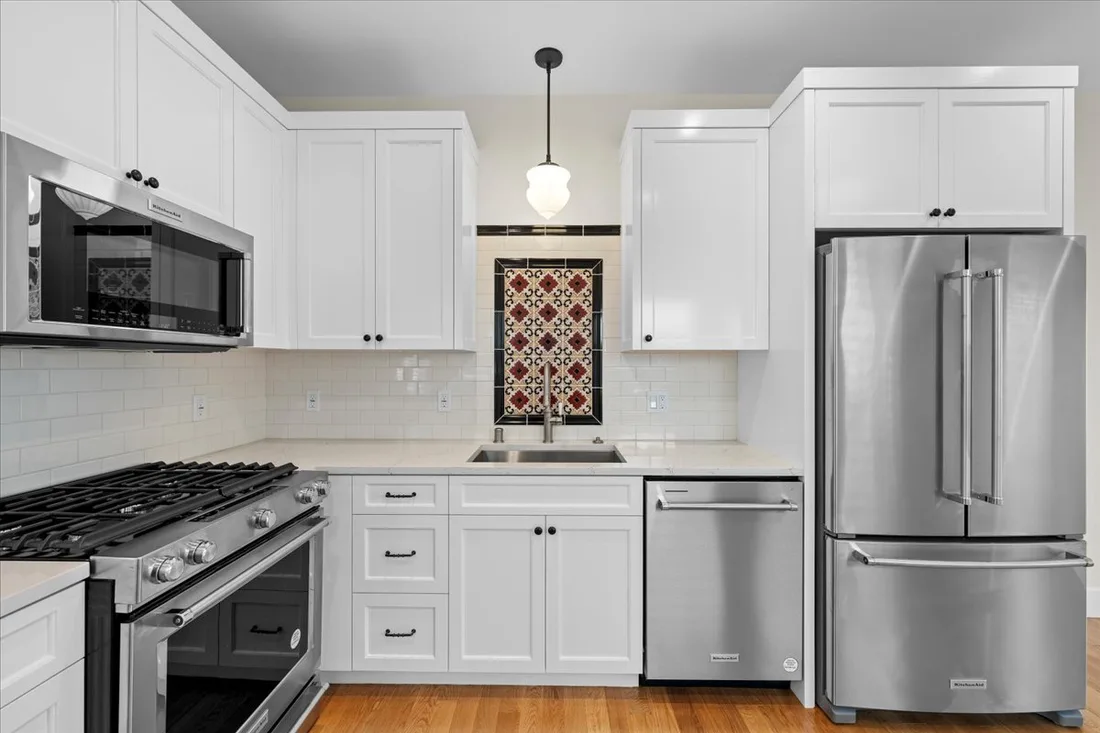
Finish quality — and the red flags hiding in a quote
Finish is where cheap cabinets age fastest. A catalyzed, multi-coat finish — sprayed, cured, and sanded between coats — bonds hard and holds its color for the life of the kitchen. A vinyl (thermofoil) wrap or a printed foil, by contrast, can peel at the edges near heat and delaminate over time. And be wary of a bright, dead-white painted or foil finish over a warm substrate: some low-grade white finishes yellow as they age, especially near a range or a sunny window. A quality shop will tell you exactly what's going on the doors and why.
Now read the quote itself. The clearest red flag in 2026 is a line charging extra for soft-close — soft-close glides and hinges are baseline hardware now, and charging to add them is an upsell on something that should be standard. Watch too for vague terms like "wood" (solid wood or veneer over particleboard?), "all-plywood construction" that quietly excludes the drawers, and a finish described only as a color with no coat or process named. If a line item is vague, ask for it in writing before you sign — a specialist will happily itemize it.
White oak and finishes that don't yellow →Framed vs. frameless (European) cabinets
| Framed | Frameless (European) | |
|---|---|---|
| Face frame | Yes — a wood frame on the box front | No — full-access box, no frame |
| Storage & access | Slightly narrower openings | Wider openings, a bit more usable space |
| Look | Traditional & transitional | Clean, modern, seamless |
| Alignment | More forgiving in out-of-square rooms | Demands precise, dead-flat installation |
| Best for | Shaker, inset, classic South Bay homes | Slab-front modern, handleless kitchens |
Both can be excellent when built and installed well — the box, drawer, and finish quality matter more than framed vs. frameless.
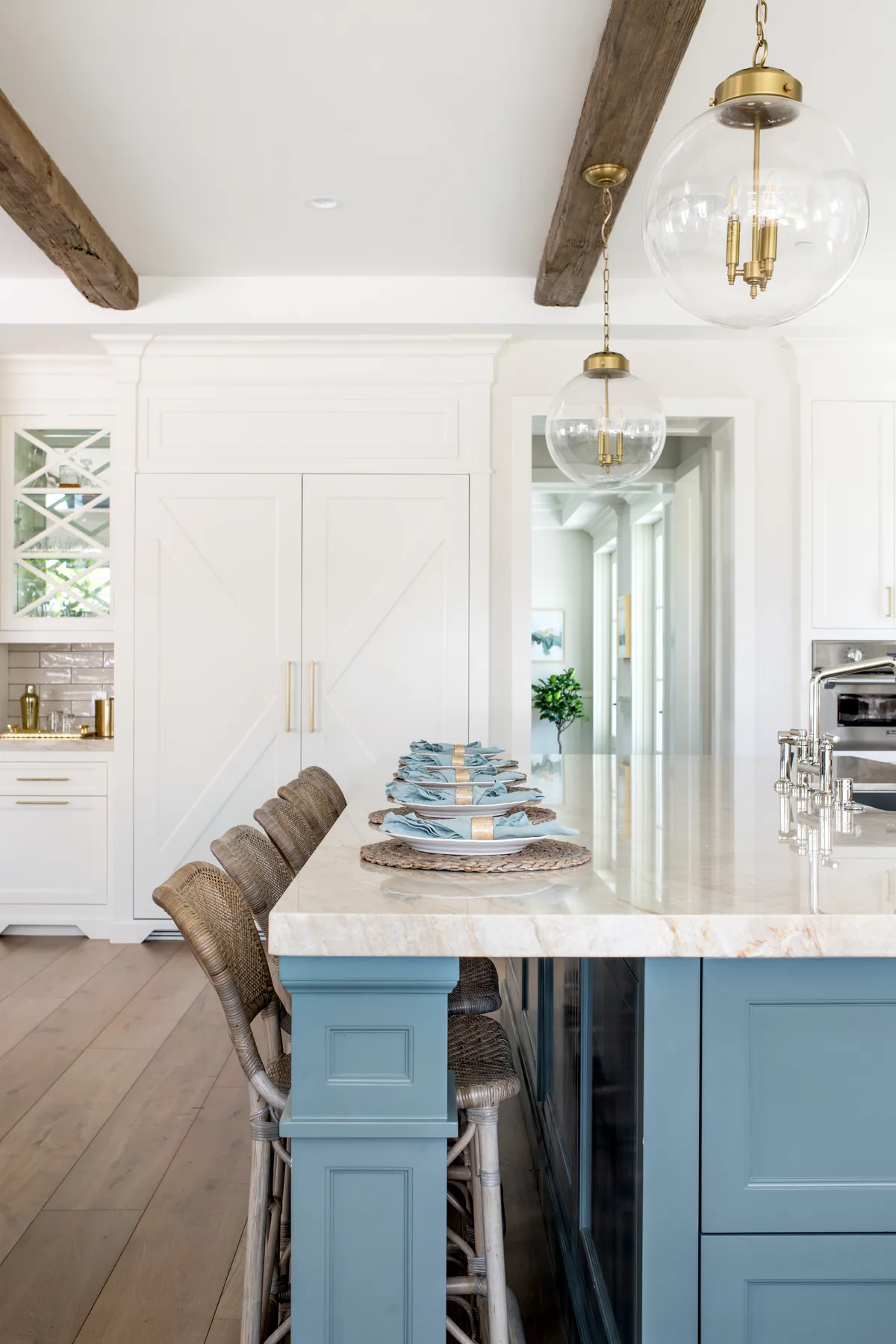
Inset vs. overlay — reveals, cost, and how forgiving each is
Overlay doors sit on top of the cabinet face; inset doors sit flush inside the frame, like a well-made drawer in an antique. Overlay is the everyday standard, and full overlay — where the doors nearly touch and hide the frame — gives a clean, near-seamless face at a sensible price. Partial (standard) overlay leaves more frame showing between doors, reads a touch more traditional, and is the most forgiving and economical of the three.
Inset is the premium, furniture-grade look: doors set flush with the frame, crisp shadow-line reveals all around. It costs more because it demands tighter tolerances and more material, and it's the least forgiving to install and to live with — a flush door telegraphs even small seasonal movement, so it wants a stable, well-built box and a precise install. In an older, out-of-square South Bay home that trade-off is real, which is exactly why it's a conversation to have up front rather than a box to check on a quote.
Shaker done right →Where our construction quality shows up
Our custom construction standard
Plywood boxes, dovetailed solid-wood drawers, undermount soft-close glides and concealed hinges — as the baseline, not the upsell. Built full-custom to your room.
Learn more →Shaker done right
The proportions, reveal and finish tuned to your home instead of pulled from a catalog — the most-requested door, built to last.
Learn more →Finishes that don't yellow
White oak and catalyzed multi-coat finishes chosen to hold their color in salt air and sun — not a vinyl wrap that peels or a white that ambers with age.
Learn more →Choosing a tier
Custom, semi-custom, or stock — where the money actually goes and which tier fits your kitchen, explained without the sales pressure.
Learn more →Panel-ready integration
Cabinet fronts and openings built to spec for panel-ready refrigeration and dishwashers, so appliances sit flush and integrated — not bolted on after.
Learn more →Refacing quality
When the boxes are sound, new doors, drawer fronts and a quality finish can transform a kitchen — held to the same hardware and finish standard as new cabinetry.
Learn more →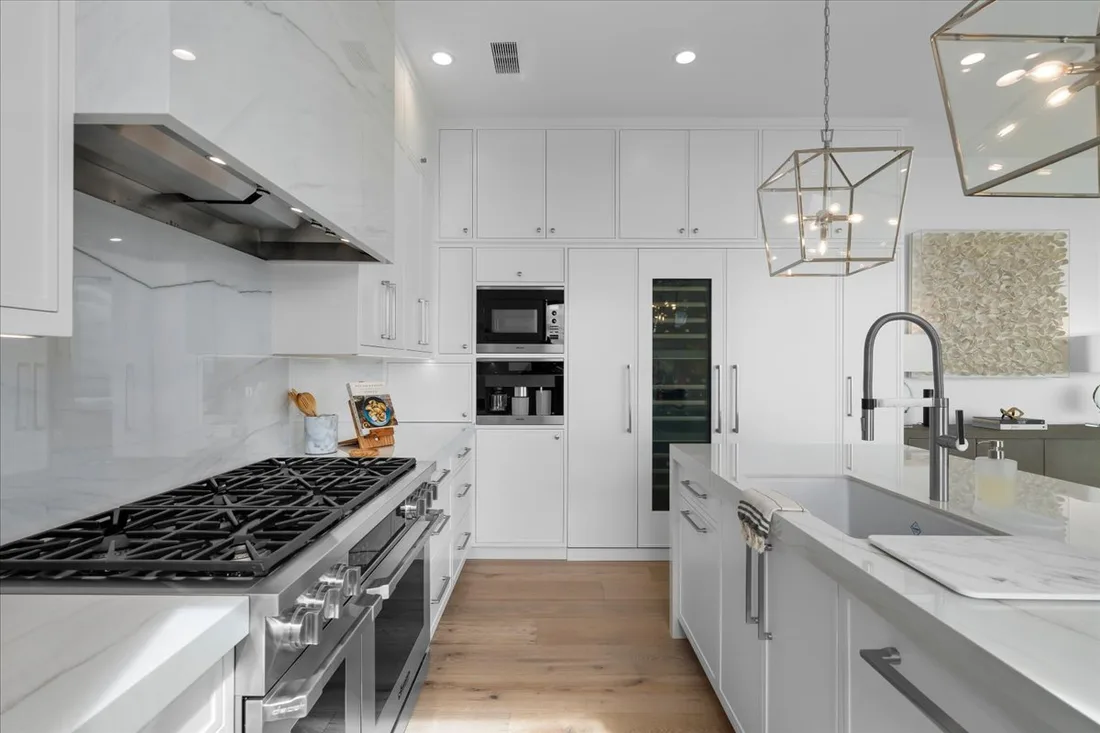
Ask one question — "Are the drawers dovetailed?" — and you'll learn more about a cabinet than any showroom door will tell you.
Why construction quality matters more here.
Built for coastal air.
Salt air and humidity punish cheap boxes and finishes. Plywood construction and a catalyzed multi-coat finish are how a South Bay kitchen holds up over years, not seasons.
Sized to older homes.
Many South Bay homes are out-of-square. We measure and build to the real room, so framed, inset and overlay tolerances land right instead of fighting the walls.
A fixed written scope.
Every box, drawer, glide, hinge and finish itemized in writing before we start — so there's nothing vague to hide an upsell behind.
Licensed & insured.
Milestone payments tied to real progress — never a big check up front — backed by our 2-year workmanship warranty.
Cabinet quality questions
How can I tell if kitchen cabinets are good quality?
Check four things: the box (3/4" plywood, not particleboard), the drawers (dovetailed solid-wood boxes, not stapled particleboard), the glides (full-extension, soft-close undermount) and the hinges (concealed and adjustable). Then look at the finish — a catalyzed multi-coat finish over a vinyl wrap. If a quote lets you confirm all of those in writing, you're looking at a quality cabinet.
Are the drawers dovetailed — why does it matter?
It's the single best question to ask. A dovetailed drawer box interlocks solid wood at every corner, so it stays square and carries weight for decades. A stapled or glued particleboard drawer is usually the first thing to fail in a cheap kitchen. Because dovetailing is a hallmark of careful construction, the answer tells you a lot about the rest of the cabinet too.
Plywood or particleboard cabinet boxes — which is better?
Plywood, in almost every case. It holds screws better, resists sagging under a heavy stone countertop, and stands up to moisture far better than particleboard, which can swell and crumble if it gets wet — a real risk under a sink or in coastal humidity. Particleboard costs less, which is why it shows up in budget lines, but the box is not the place to save.
Framed vs. frameless — which is better?
Neither is inherently better; they suit different looks and rooms. Framed cabinets have a wood face frame, read traditional-to-transitional, and are more forgiving in out-of-square older homes. Frameless (European) cabinets skip the frame for full access, slightly more usable space, and a clean modern face — but they want a precise, dead-flat install. The box, drawer and finish quality matter more than the choice between them.
What's the difference between inset and overlay?
Overlay doors sit on top of the cabinet face; inset doors sit flush inside the frame. Full overlay gives a clean near-seamless look at a sensible price, and partial overlay is the most forgiving and economical. Inset is the premium, furniture-grade look with crisp reveals — it costs more and is the least forgiving to build and install, so it wants a stable box and a precise fit.
Should soft-close cost extra?
No. Soft-close glides and hinges are baseline hardware in 2026. If a quote charges extra to add soft-close, treat it as an upsell on something that should already be standard, and ask why it isn't included.
Do frameless cabinets hold up as well as framed?
Yes, when they're well built and well installed. Durability comes from the box material, the drawer construction, the glides and hinges, and the finish — not from whether there's a face frame. A quality frameless cabinet lasts just as long as a quality framed one; the difference is in look, access and how demanding each is to install level.
Bring us your cabinet quote — we'll help you read it
Send us the spec you're considering and we'll walk you through what's inside the box, honestly. A real person answers — usually the same day.