Transitional kitchens for South Bay homes — timeless, not trendy
The style that still looks right in twenty years — because it was never chasing a trend. Transitional blends traditional warmth with modern restraint, and the whole craft is tuning that dial to your home instead of defaulting to a generic white-shaker box.
Is a transitional kitchen dated?
No — and it's arguably the most future-proof choice you can make. Transitional reads as current because it never committed to a trend that can go out of fashion. Where a heavy traditional kitchen can feel dated and a stark all-contemporary one can feel cold in a few years, transitional ages in the middle, where taste tends to settle back to.
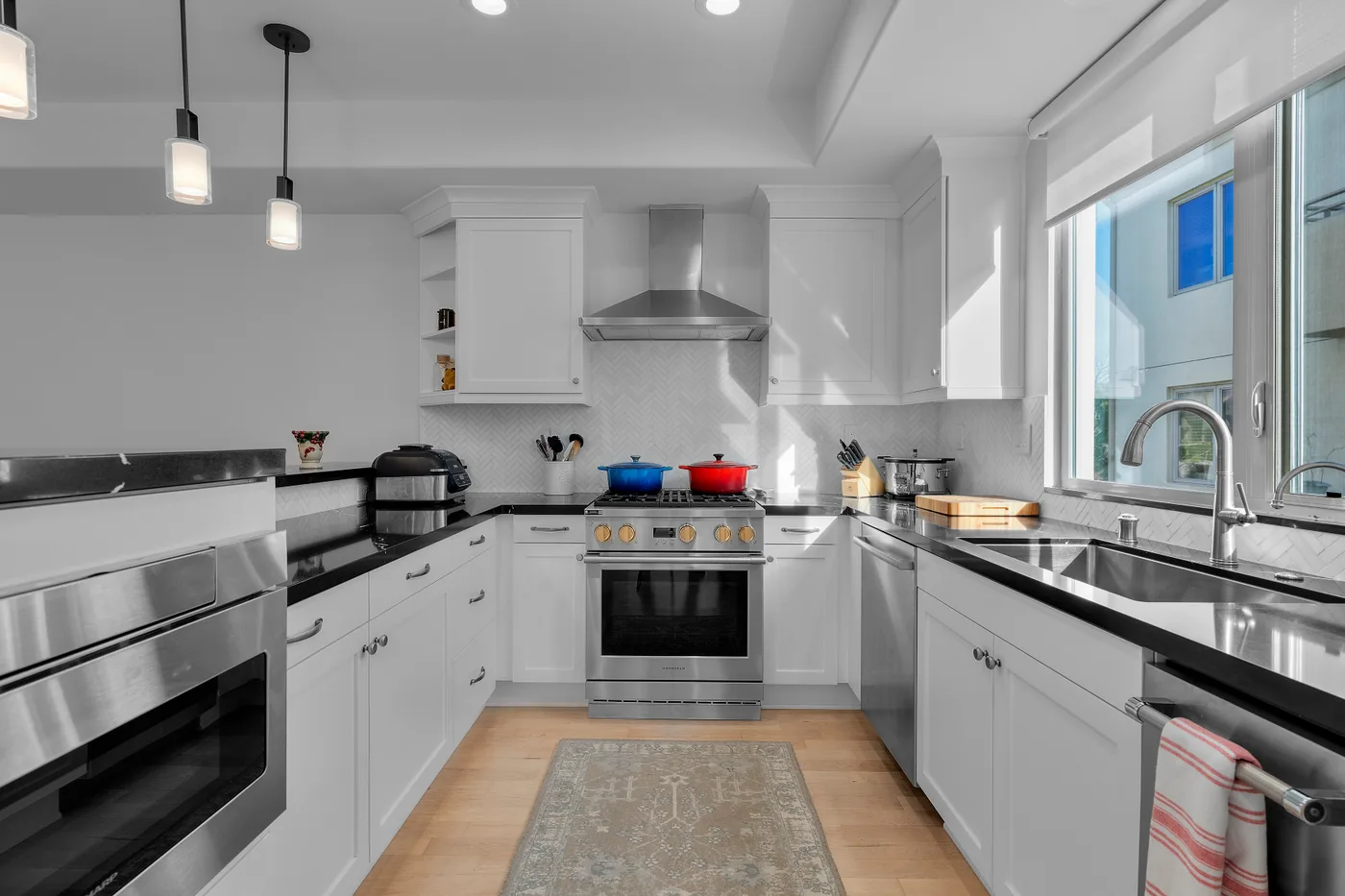
Designers agree: it's consistently expected to stay one of the most-requested styles because it's a framework, not a fad. What actually dates a "transitional" kitchen isn't the style — it's defaulting to the generic version: thick stark-white shaker, plain subway tile, one cold grey everywhere. The fix is warmth and material contrast — wood, stone, and a considered palette — which is exactly the part a specialist earns their keep on.
Shaker doors — and where wood grain earns its place
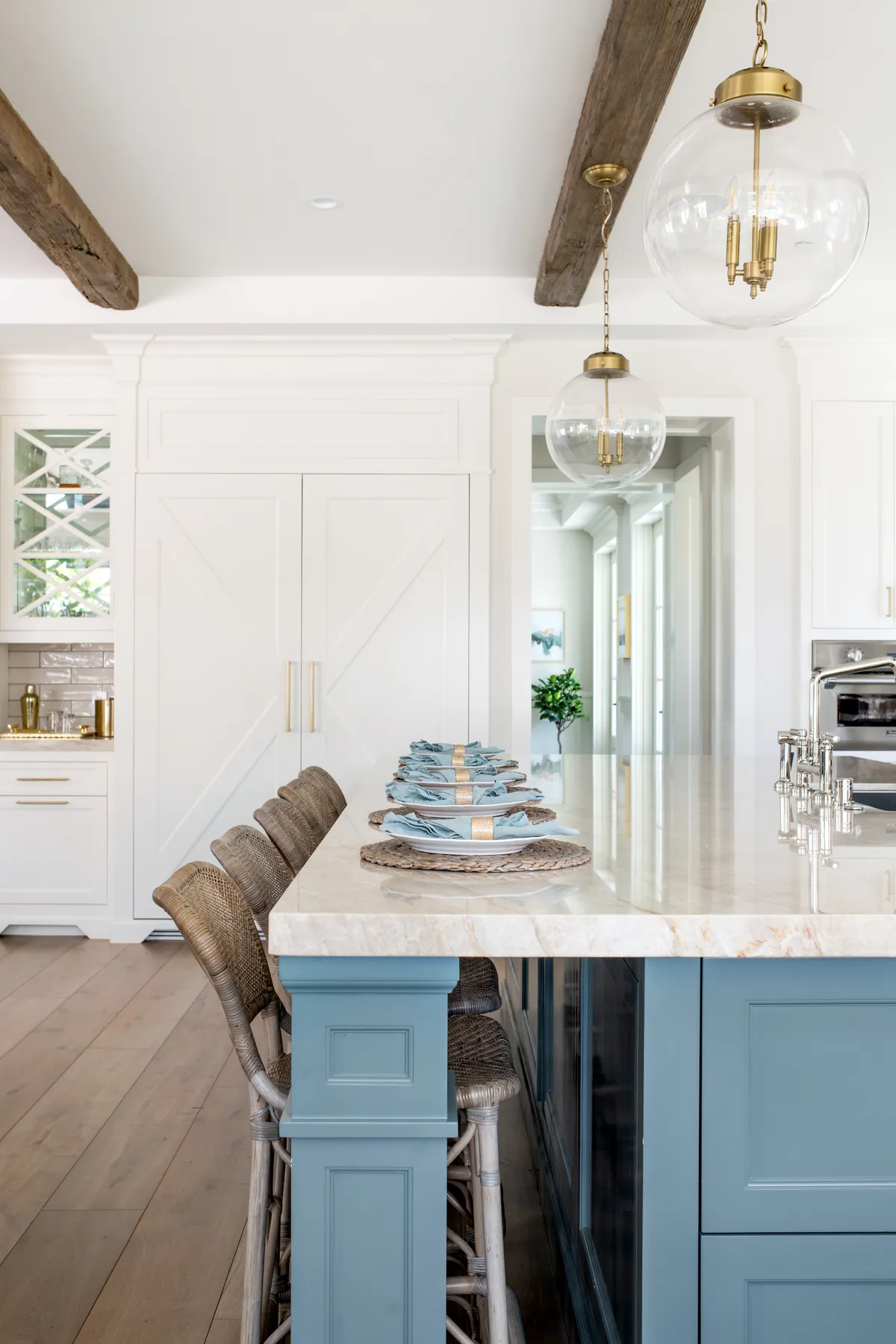
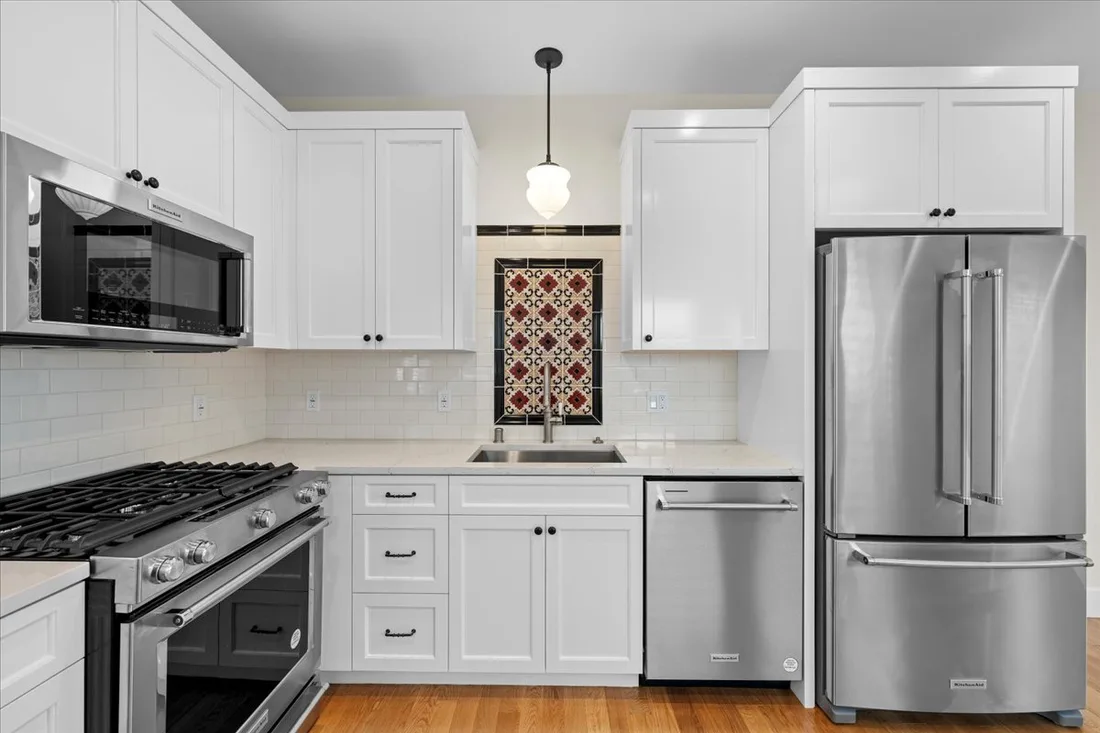
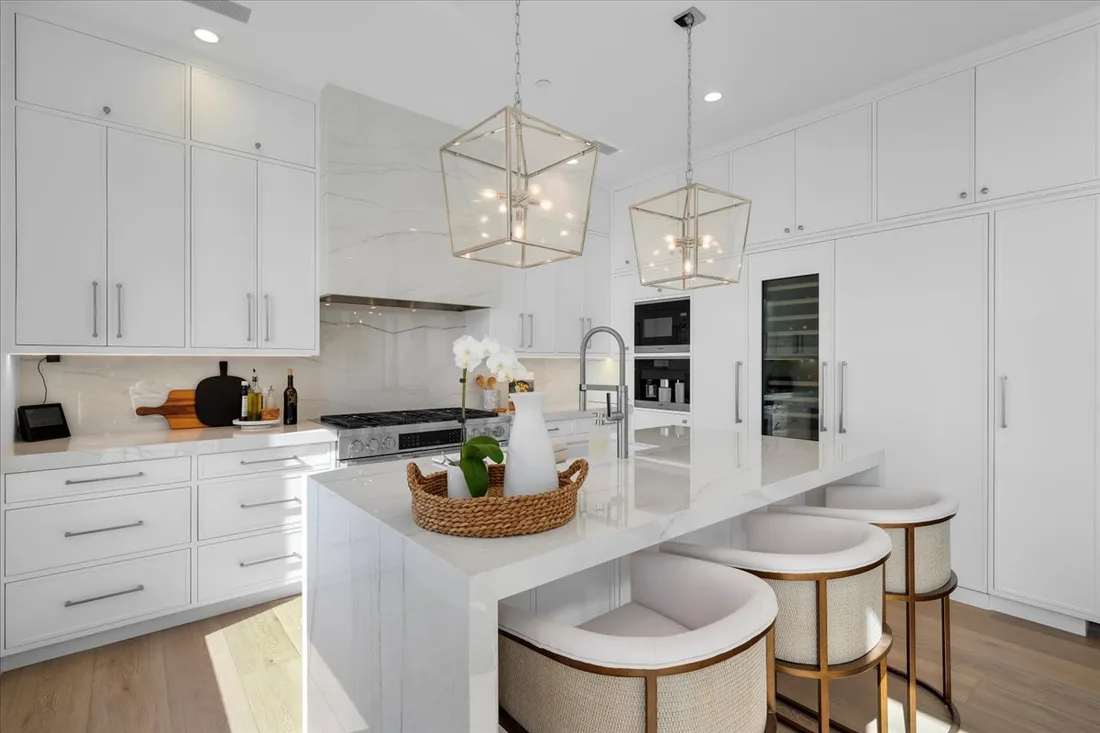
The shaker door is transitional's workhorse: a flat recessed panel that reads both crafted and clean, at home next to a farmhouse sink or a panel-ready Sub-Zero. A white or warm off-white perimeter with a contrasting island — greige, navy, forest green, or natural wood — is the classic move, and it's what keeps the room from going flat.
The 2026 shift is toward wood grain over paint: white oak and walnut on an island, or a full wood-grain perimeter, warming the whole kitchen and bridging traditional and modern in a single material. We build these full-custom, so the door proportions, the reveal, and the finish are tuned to your room rather than pulled from a catalog.
Explore custom cabinetry →The elements of a transitional kitchen
Countertops
Quartz is the workhorse for a consistent, low-maintenance surface; a soft-grey quartzite brings airy natural veining; marble earns a statement moment where you'll baby it.
Learn more →Hardware & metals
Restrained profiles in brass or mixed metals. The real decision is how much to show — transitional lives on the dial between visible traditional pulls and quiet modern edges.
Learn more →The island
A contrasting island — painted or natural wood — is what breaks the monotony and anchors the room. Sized to your walkways, not to a rendering.
Learn more →Lighting
Sculptural pendants bring the warmth over clean bones — the one place a transitional kitchen is allowed to make a statement.
Learn more →Backsplash
Handmade-look tile or a full-height stone slab. We steer away from the default plain subway that makes a transitional kitchen read generic.
Learn more →Palette
Warm neutrals layered with wood and stone. One contrasting accent — never a single flat color everywhere. This is the anti-cliché move.
Learn more →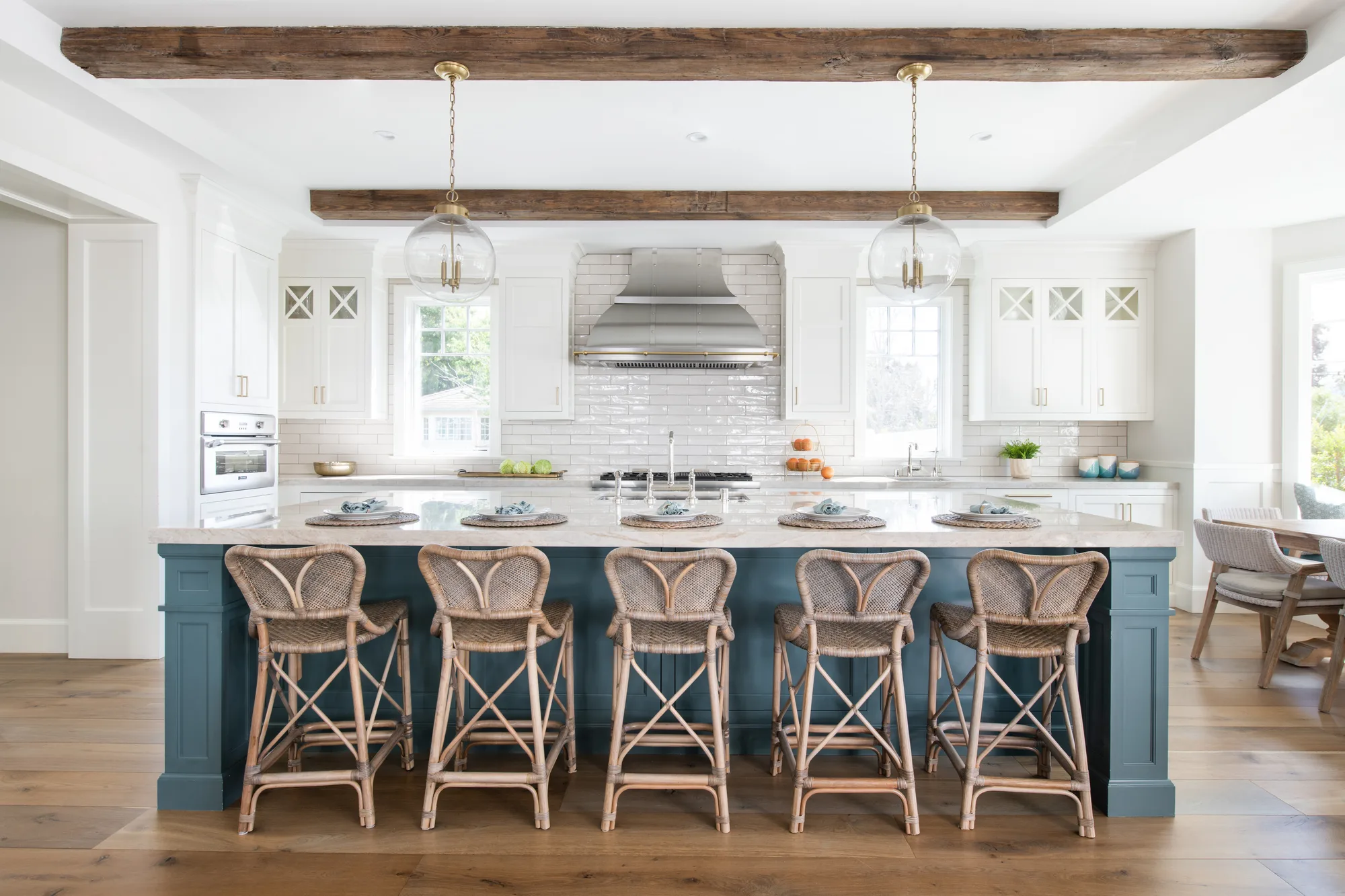
The generic white-shaker box is what dates. Warmth and contrast are what last.
How transitional lands in the homes we build in
In a mid-century Torrance ranch, transitional is the natural upgrade from a dated 1990s builder kitchen — it modernizes without going cold, and it keeps the home's low, horizontal calm intact. In an El Segundo or Torrance bungalow, shaker fronts and white oak respect the home's craftsman bones instead of fighting them.
In a Palos Verdes Estates traditional or Spanish home, transitional lets us bring in clean modern function — better storage, integrated appliances, a proper island — without clashing with arches, beams, and plaster. And in the beach cities, a warm-white transitional with a wood or blue island is the coastal-adjacent default that photographs beautifully and sells fast when the time comes.
See the cities we serve →Why a specialist builds transitional better.
Tuned, not templated.
The door proportions, the metal, the wood-to-paint ratio — dialed to your room, because that balance is the whole style.
One accountable team.
Design through final walkthrough under one roof — no subcontractor chaos, no finger-pointing.
A fixed written scope.
Quoted in writing before we start, with a line-item breakdown. No vague bids, no surprise change orders.
Licensed & insured.
Milestone payments tied to real progress — never a big check up front — backed by our 2-year workmanship warranty.
Transitional kitchen questions
Is a transitional kitchen dated?
No. Because transitional blends traditional and modern rather than committing to a single trend, it ages better than either a heavy-traditional or a stark-contemporary kitchen. It's consistently one of the most-requested styles. What dates a kitchen is the generic version — thick stark-white shaker with plain subway tile — not the style itself.
What's the difference between transitional and modern?
Modern is a specific, fixed minimalist style rooted in clean-lined 20th-century design. Transitional is a blend — it keeps traditional warmth (shaker doors, natural materials) while borrowing modern restraint (clean lines, quiet hardware). Transitional is more flexible and, for most homeowners, easier to live with long-term.
What's the difference between transitional and traditional?
Same warmth and quality, cleaner execution. Transitional keeps the natural materials and shaker cabinetry of a traditional kitchen but simplifies the profiles, quiets the hardware, and pares back the ornamentation for a lighter, more current feel.
What colors work in a transitional kitchen?
Warm neutrals as the base — creamy whites, greige, soft taupe — layered with a contrasting island (navy, forest green, or natural wood) and natural wood accents. The rule is one considered contrast, never a single flat color everywhere.
Are white oak cabinets transitional?
Yes — white oak is one of the most-requested woods precisely because it bridges warm and clean, which is the heart of transitional. It works as a full perimeter, a wood-grain island against painted cabinets, or as a two-tone accent.
What countertop suits a transitional kitchen?
Quartz for a consistent, low-maintenance workhorse surface; quartzite when you want natural veining that reads like marble but holds up better; and marble as a statement on an island or baking zone if you'll maintain it. We'll match the counter to how you actually cook.
Is transitional more expensive than modern?
Not inherently — cost is driven by your cabinet construction, countertop material, and appliances, not the style label. A transitional and a modern kitchen at the same spec land in the same range. Use our cost guide for market-typical figures, then we price yours in writing.
Let's design a transitional kitchen that lasts
Tell us about your home and we'll show you how transitional tunes to it. A real person answers — usually the same day.