Granite countertops for South Bay kitchens — the heat champion, chosen well
Unfashionable to say, but true: granite is still a large share of real remodels, and it's the surface that shrugs off a screaming-hot pan at a real-budget price. The whole craft is picking a slab that reads 2026 instead of 2004 — light, quiet movement over busy gold-vein brown.
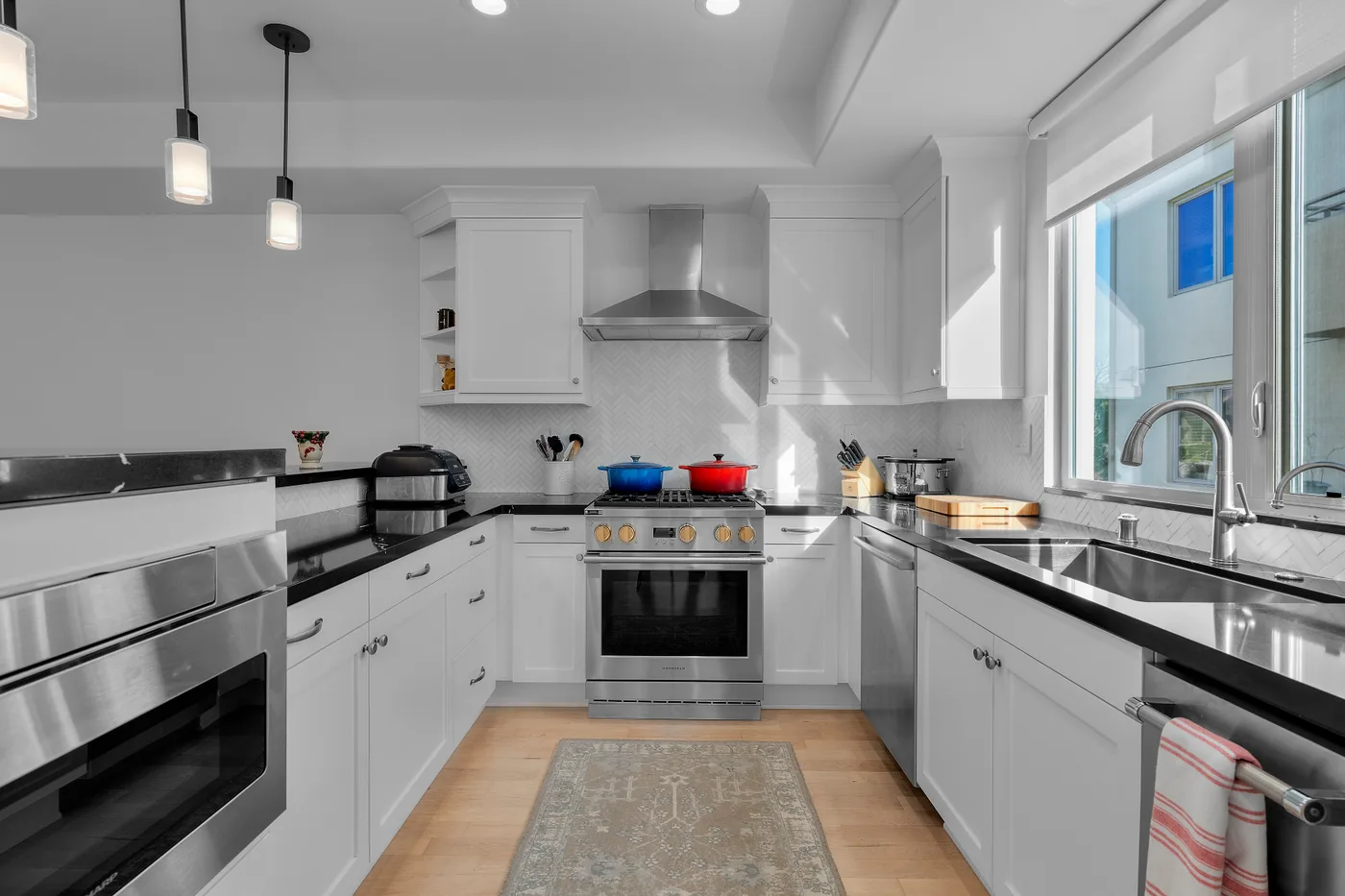
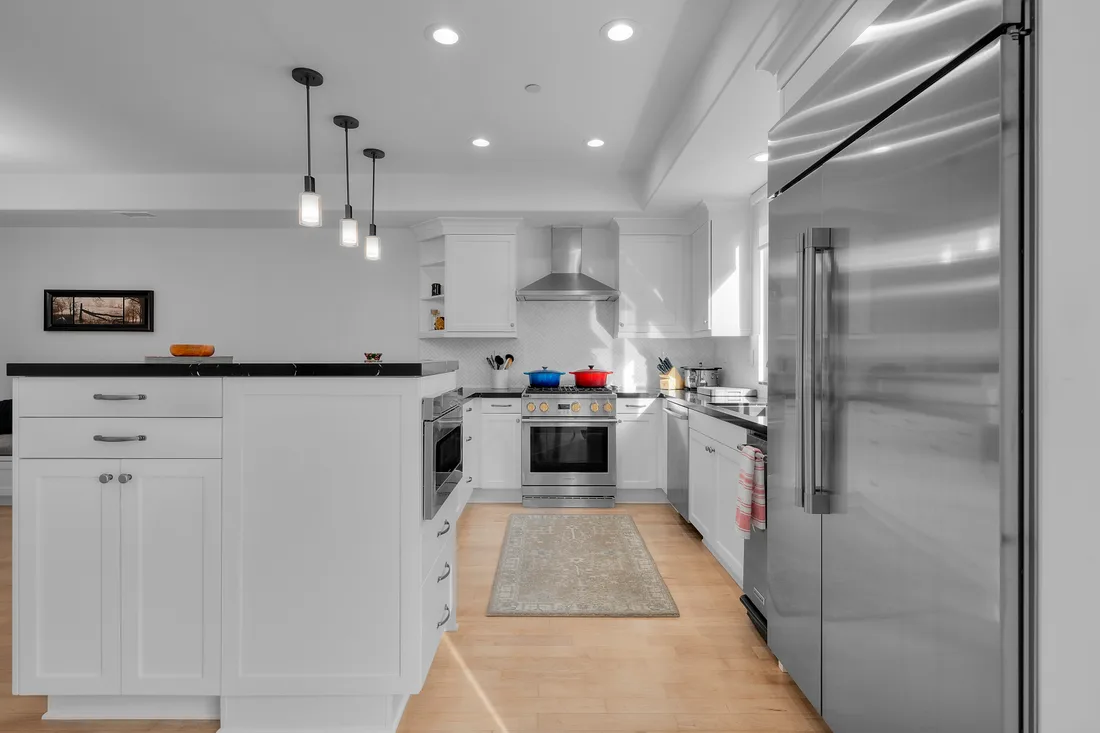
Is granite out of style in 2026?
It depends entirely on the color — and that's the honest answer most showrooms won't give you. The granites that read dated are the ones that defined the 2000s: cream-and-brown speckle like Santa Cecilia, and busy blacks shot through with loud gold veining. If your mental picture of granite is those, we understand why quartz feels like the safe default.
But light whites and soft greys with subtle, low-contrast movement look completely current, and they sit comfortably next to white shaker or warm wood cabinetry. The catch you should hear up front: granite is natural stone, so it's porous and needs sealing roughly every one to two years, and a bad chip is genuinely hard to repair invisibly. None of that is disqualifying — it's just the trade you're making for the toughness, and it's exactly the part a specialist walks you through before you fall for a slab.
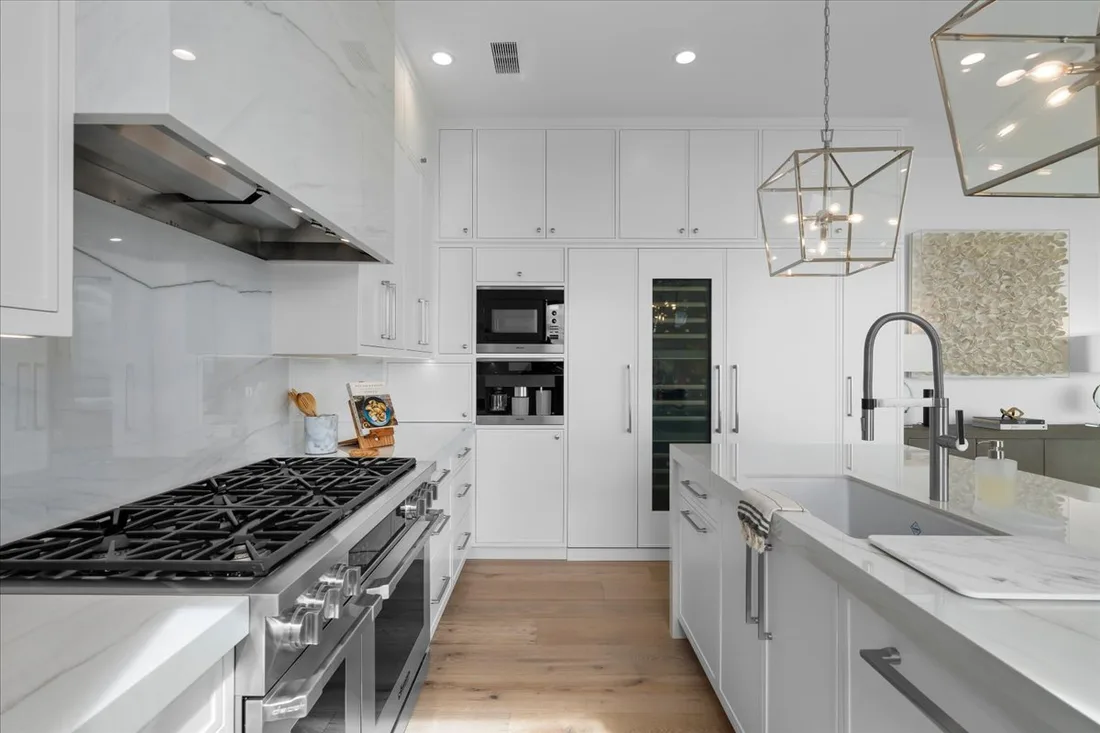
The one thing quartz can't do — take real heat
This is granite's superpower, and it's not marketing. It's natural stone rated around 6–7 on the Mohs hardness scale, and it handles very hot cookware straight off the burner without the scorch risk that quartz carries — quartz is bound with resin that can discolor under a truly hot pan. If you cook seriously, sear on cast iron, and pull heavy pots off a pro range, granite is the surface that stops making you think about it.
It also holds real resale value: buyers still recognize natural stone as a quality upgrade, which matters in a market where kitchens sell homes. And you don't have to accept the dated look to get the durability — a light, low-movement granite gives you a clean, contemporary field that photographs beautifully and takes the abuse of a working kitchen for decades.
Plan the appliances around it →The decisions that make or break a granite kitchen
Granite vs quartz
The real trade is heat tolerance versus never sealing. Granite wins on hot pans and price; quartz wins on maintenance and pattern consistency. We help you weigh it against marble and quartzite too.
Learn more →Granite for the serious cook
If you're specifying a pro range and heavy cookware, granite is the counter that keeps up. We coordinate the stone with the appliances so nothing fights.
Learn more →Pair it with cabinetry
A light granite reads current against white shaker or warm white oak. We tune the cabinet color to the slab's undertone, not the other way around.
Learn more →Granite on an island
The island is where a low-movement slab earns its keep as a hardworking, heat-proof landing zone. Sized to your walkways and your cooking, not to a rendering.
Learn more →Budget-durability in a full remodel
Granite lets you put your money into cabinetry and appliances while still getting a genuinely tough counter. It's the sensible-budget move in a complete remodel.
Learn more →What it costs
Market-typical granite runs about $55–$175 per square foot installed, with most kitchens landing $70–$115 — figures, not a quote. See how it fits the whole budget.
Learn more →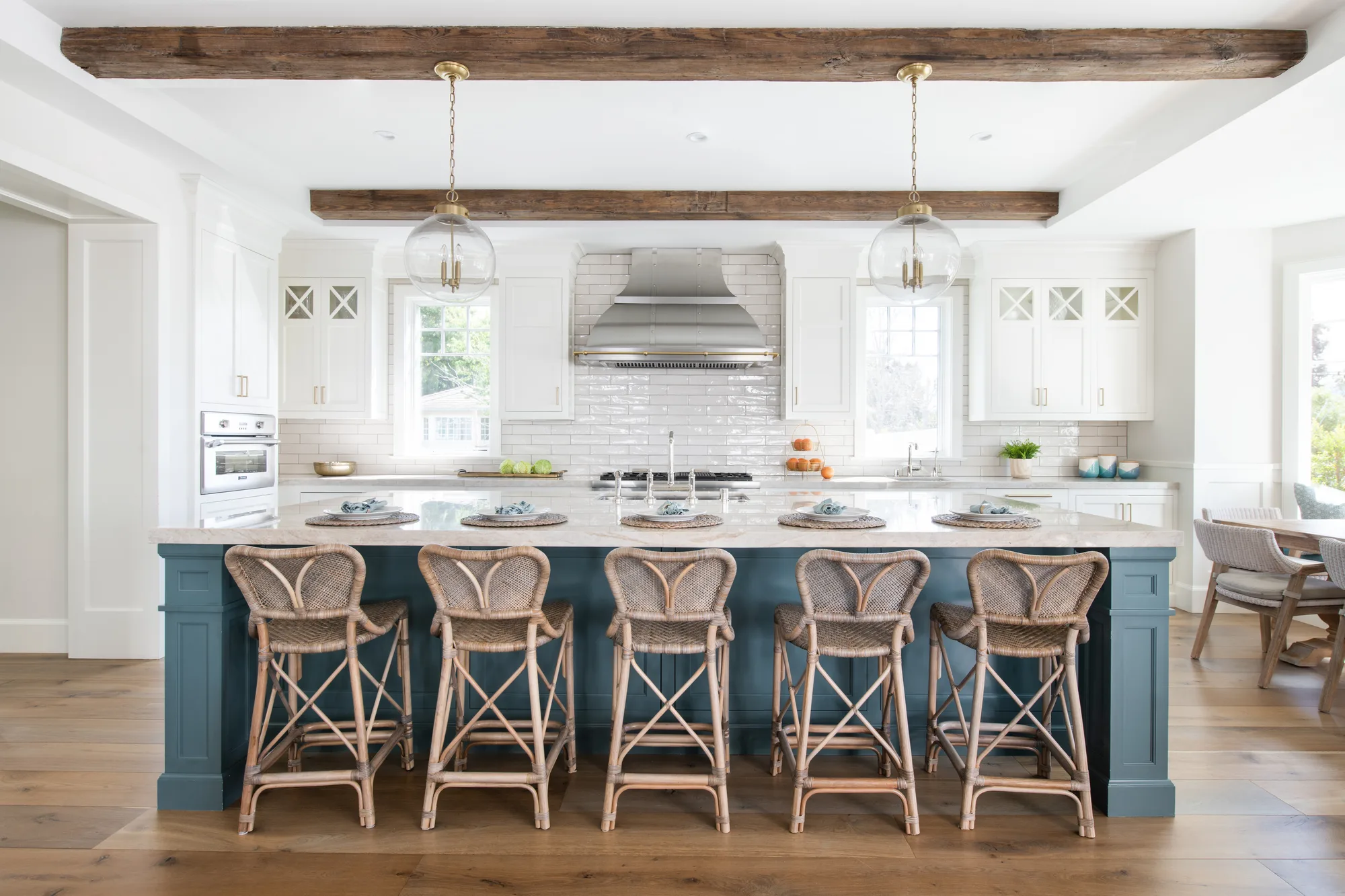
Granite didn't go out of style. The busy brown slab of 2004 did. Choose the light one.
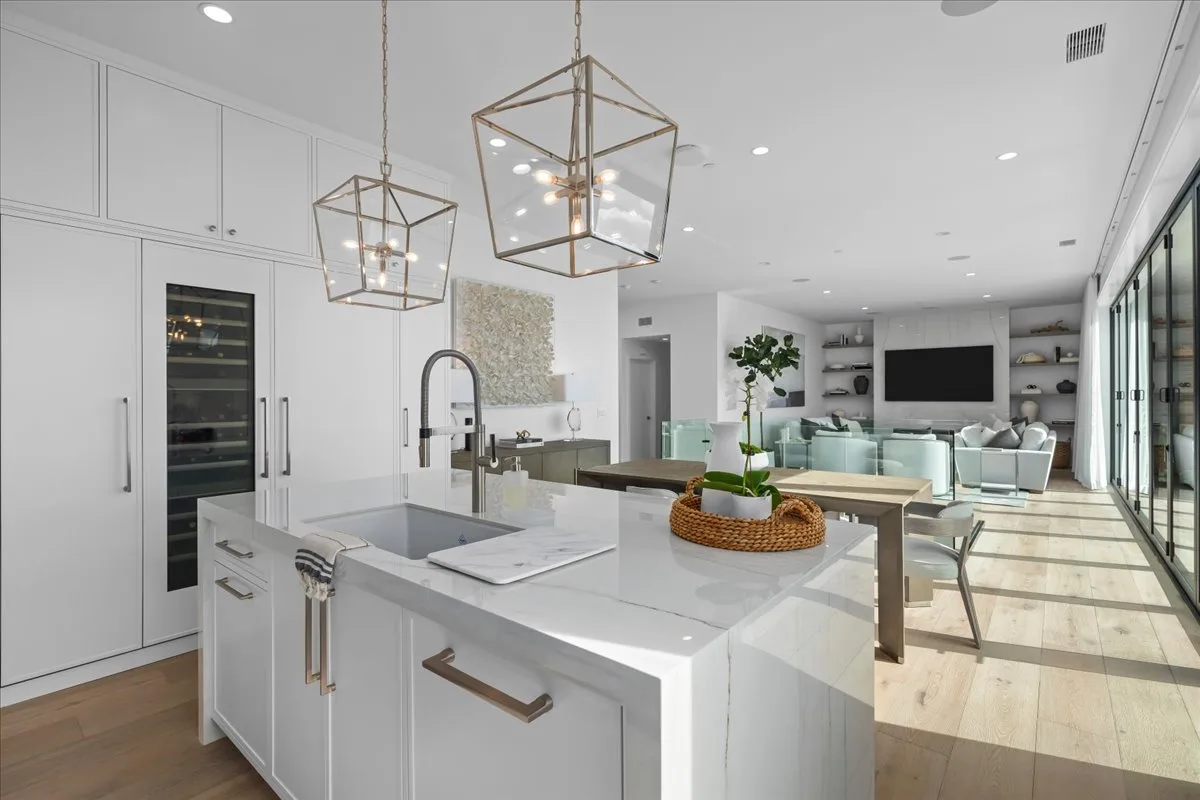
Choosing granite for a coastal-contemporary palette
Our light-filled beach-city kitchens live on a bright, airy palette — warm whites, soft greys, natural wood — and that's exactly where granite gets picked badly. The busy gold-vein browns that dated so many kitchens fight that light. So for our homes we steer you toward whites and soft greys with subtle, low-contrast movement, the slabs that read clean and current in a Manhattan Beach or Redondo Beach kitchen rather than dragging it back a decade.
It's the right call for the serious cook on a sensible budget: someone who wants true heat tolerance for a working pro range, keeps their money in cabinetry and appliances, and is happy to reseal once a year for a counter that will outlast the trend cycle. If that's you, granite isn't a compromise — it's the honest choice, and we'll help you find the slab that proves it.
See the South Bay cities we serve →Why a specialist gets granite right.
Slab-first, not sample-first.
Granite is natural — no two slabs match. We steer you toward light, low-movement stone that reads current, and away from the busy browns that date a kitchen.
One accountable team.
Template, fabrication, and install coordinated under one roof — no finger-pointing between a slab yard and a separate installer.
A fixed written scope.
Square footage, edge profile, sealing, and price quoted in writing before we start. No vague bids, no surprise change orders.
Licensed & insured.
Milestone payments tied to real progress — never a big check up front — backed by our 2-year workmanship warranty.
Granite countertop questions
Is granite out of style in 2026?
It's color-dependent, not style-dependent. Cream-and-brown speckle (like Santa Cecilia) and busy gold-vein blacks read dated because they defined the 2000s. Light whites and soft greys with subtle, low-contrast movement look completely current and pair well with white shaker or warm wood cabinetry. Granite as a material isn't obsolete — the wrong slab is.
Is granite better than quartz?
Neither is universally better — they trade strengths. Granite takes real heat (you can set a hot pan straight down) and usually costs less, but it's porous and needs periodic sealing. Quartz never needs sealing and offers consistent patterns, but its resin binder can scorch under a truly hot pan. If you cook seriously on a pro range, granite's heat tolerance often wins; if you want zero maintenance, quartz does.
Does granite need to be sealed?
Yes. Because it's natural, porous stone, granite should be sealed roughly every one to two years to resist staining — a simple wipe-on product you can apply yourself in a few minutes. A quick water-drop test tells you when it's due: if water beads, the seal is holding; if it soaks in and darkens the stone, it's time to reseal.
Can you put hot pans on granite?
Yes — this is granite's biggest advantage. It's natural stone that handles very hot cookware straight off the burner without scorching, unlike quartz, whose resin binder can discolor under a truly hot pan. We still suggest trivets for good habits, but granite is genuinely the heat champion among countertops.
Does granite stain?
It can if it's left unsealed and a liquid sits long enough to soak in — oil, wine, and coffee are the usual culprits. A properly sealed granite counter resists everyday spills easily; wipe them up and you'll have no issue. Keeping up with sealing every one to two years is what keeps staining a non-problem.
Does granite add resale value?
Yes. Buyers still recognize natural stone as a genuine quality upgrade, and a well-chosen granite counter reads as a real, durable material rather than a shortcut. In a market where the kitchen sells the home, that recognition is worth real money at resale.
How long does granite last?
Effectively a lifetime. It's rated around 6–7 on the Mohs hardness scale and resists scratching and heat for decades with only routine sealing. The one caveat is that a hard impact can chip an edge, and a chip is difficult to repair invisibly — but day to day, granite is one of the most durable surfaces you can install.
Let's find the granite slab that reads 2026
Tell us how you cook and what your kitchen looks like, and we'll steer you to the right stone — light, tough, and current. A real person answers, usually the same day.