Porcelain countertops (sintered stone) for South Bay kitchens — the near-indestructible surface
Sintered stone — the material behind Dekton and Neolith — is the toughest surface you can put in a kitchen: heatproof, UV-proof, scratch-proof and acid-proof, essentially maintenance-free. It's engineered for large-format, minimalist, indoor-outdoor kitchens — and most contractors don't even offer it. As a kitchen specialist, we'll tell you honestly where it wins and where it doesn't.
Where porcelain is harder — and why the fabricator matters
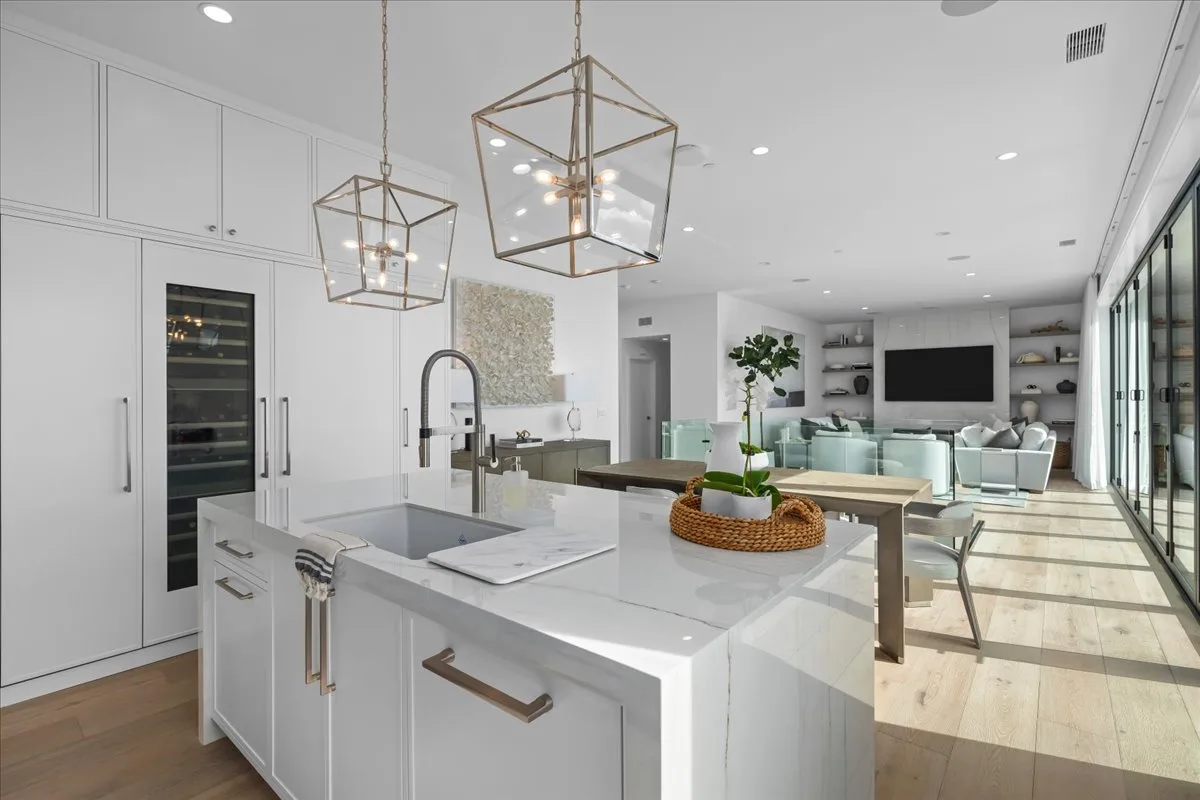
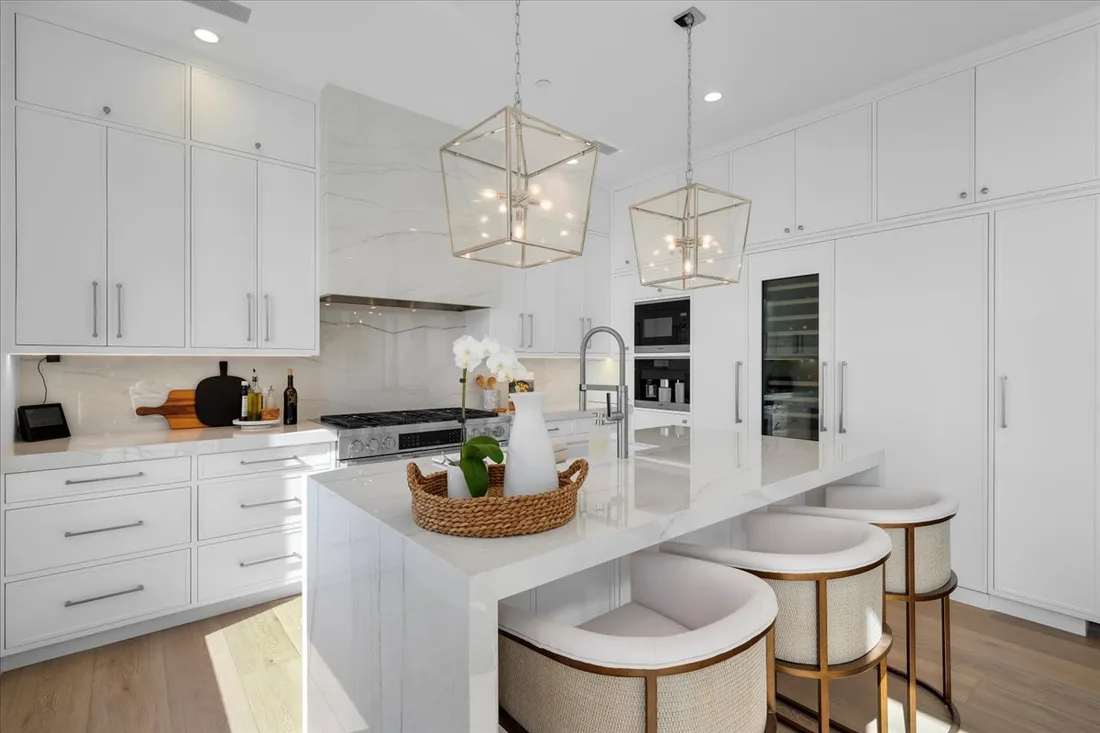
The catch with sintered stone is that its greatest strength is also its weakness: it's incredibly hard, which makes it brittle. A thin, unsupported edge can chip under a sharp, hard impact — a dropped cast-iron pan hitting a corner — in a way a softer quartz might survive. The slabs are also genuinely harder to fabricate: cutting, mitering and drilling ultra-compact material demands the right blades, water, and a slow, patient hand, and fewer local shops are equipped and experienced enough to do it well. Edge profiles are more limited too, so the dramatic ogees and bullnoses you'd get in marble aren't really on the menu.
This is exactly why porcelain is a material where installer skill is the whole ballgame — and where a lot of general contractors quietly steer you away because it's outside their comfort zone. As a kitchen specialist, we work with fabricators who cut sintered stone for a living, we detail thin waterfall edges with proper support behind them, and we set expectations honestly before the slab is ever ordered. Done right, the brittleness is a non-issue in daily use; done by someone learning on your kitchen, it's an expensive lesson. We'd rather you know that up front.
It solves quartz's two weaknesses — heat and UV
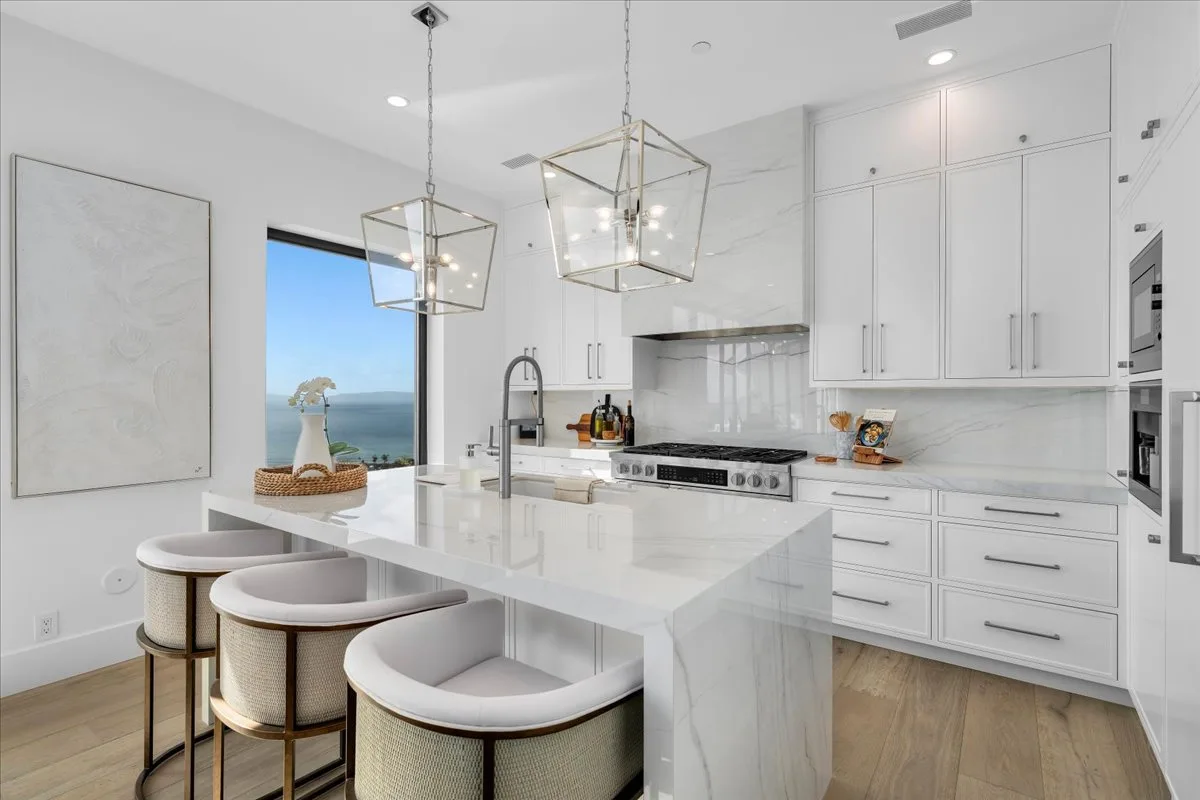
Quartz is a fantastic everyday surface, but it has two real vulnerabilities: it can scorch if you set a hot pan on it, and it can fade or yellow in direct sun because the resin binder isn't UV-stable. Sintered stone has neither problem. Because it's mineral fused under heat with no resin, you can put a hot pan straight from the burner onto it without a trivet, and it's rated for full outdoor exposure — it won't fade under years of bright South Bay sun. Add near-total scratch resistance and complete acid-proof, non-porous performance (lemon, wine and vinegar do nothing, and there's no sealing, ever) and you have the most bulletproof surface in the kitchen.
The look is its own reason to choose it. Sintered stone comes in true large-format slabs, which means fewer seams and the ability to run one continuous material across a big island, up a full-height backsplash, and down a thin waterfall edge. The matte, ultra-contemporary finishes and convincing marble-look and concrete-look patterns suit exactly the clean, minimalist kitchens it was made for — and because it's outdoor-rated, the same slab can carry from the indoor island out to a covered patio counter for a seamless indoor-outdoor run.
See how it compares to quartz and quartzite →Where porcelain fits in your project
Porcelain vs quartz vs quartzite
How sintered stone stacks up against the other engineered and natural surfaces on heat, UV, etching, price and looks — an honest side-by-side.
Learn more →Large-format waterfall islands
Thin, seamless waterfall edges on a big island are where sintered stone shines — one continuous slab, minimal joins, engineered to hold up.
Learn more →Indoor-outdoor & luxury kitchens
UV and heat immunity make it the one surface that runs uninterrupted from an indoor island out to a covered patio counter.
Learn more →Pair with integrated appliances
The clean, seam-minimal look pairs naturally with panel-ready refrigeration and flush induction — we coordinate the fabrication and the install.
Learn more →Minimalist modern kitchens
Matte finishes, full-height slab backsplashes and quiet contemporary lines — sintered stone was engineered for exactly this aesthetic.
Learn more →What it costs
Porcelain runs market-typical at roughly $55–$120 per square foot installed. See where it lands in a full remodel budget.
Learn more →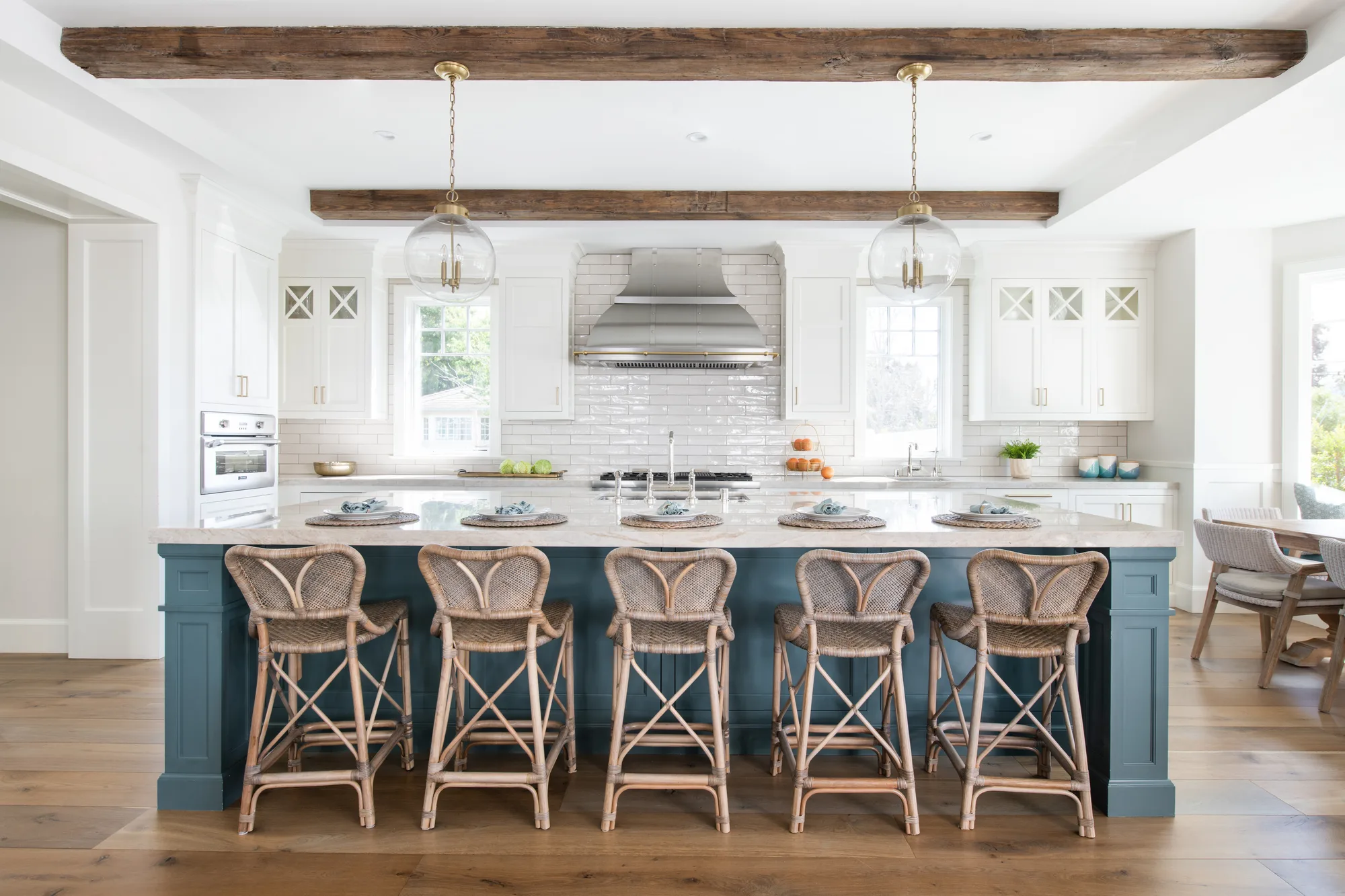
The toughest surface in the kitchen is only as good as the fabricator who cuts it.
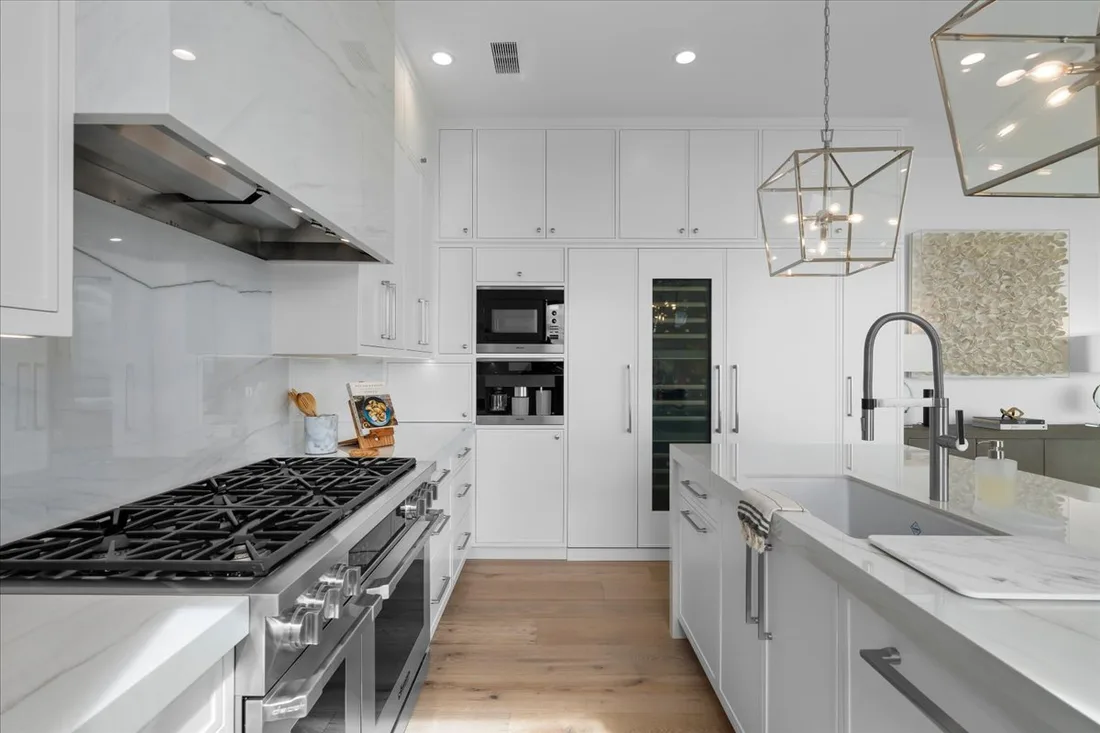
The best technical match for coastal indoor-outdoor living
If any market was built for sintered stone, it's the South Bay. Homes here live with the doors open, sun pouring across the island, and a covered patio that's really a second kitchen half the year. That's precisely the environment that exposes quartz's weaknesses — the sun that fades a resin-bound counter, the outdoor grill station that needs a heatproof, weatherproof surface — and precisely where porcelain's heat and UV immunity turn those problems into non-issues. The same slab can run from the indoor island straight out to the outdoor counter without fading, staining or breaking down.
The look matches too. The clean, thin, large-format slabs suit the coastal-contemporary aesthetic that reads so well in Manhattan Beach and Palos Verdes — minimal seams, a matte finish, a bright uncluttered island that photographs beautifully and stands up to salt air and everyday coastal use. For homeowners building the kind of open, light-filled kitchen the South Bay is known for, sintered stone is often the most rational choice on the board — even if it's the one their last contractor never mentioned.
Kitchen remodels in Manhattan Beach →Why a specialist builds in porcelain better.
The right fabricator.
Sintered stone is hard to cut. We work with shops that fabricate it every week — not a general crew learning on your slab.
One accountable team.
Design, fabrication and install coordinated under one roof — so the edge detail, the seams and the appliance cutouts all line up.
A fixed written scope.
Quoted in writing before we order the slab, with a line-item breakdown. No vague bids, no surprise change orders.
Licensed & insured.
Milestone payments tied to real progress — never a big check up front — backed by our 2-year workmanship warranty.
Porcelain & sintered stone questions
Is sintered stone better than quartz?
It depends on what you value. Sintered stone (porcelain, Dekton, Neolith) beats quartz on heat resistance and UV stability — you can set a hot pan directly on it and it won't fade in the sun, both things quartz can't claim. Quartz is more forgiving of hard impacts and generally easier to fabricate with more edge options. For an indoor-outdoor or sun-drenched kitchen, sintered stone usually wins; for a standard indoor kitchen on a tighter budget, quartz is often the more practical pick. We'll match the material to how you actually cook and live.
Can you put hot pans directly on porcelain or Dekton?
Yes. Because sintered stone is mineral fused under extreme heat with no resin binder, it's genuinely heatproof — you can place a pan straight off the burner onto it without a trivet, and it won't scorch, discolor or crack from the heat. This is one of its biggest advantages over quartz, which can be damaged by direct heat.
Does porcelain chip?
It can, at a thin or unsupported edge, under a hard, sharp impact — its extreme hardness makes it somewhat brittle. On the flat surface it's extremely tough and scratch-resistant. The risk is almost entirely about edges, which is why fabrication and edge detailing matter so much: a thin waterfall edge built with proper support behind it and cut by an experienced fabricator holds up fine in daily use.
Dekton vs Neolith — what's the difference?
Both are premium sintered-stone brands made by fusing natural minerals under high heat and pressure, and both deliver the same core benefits: heatproof, UV-proof, scratch-proof, acid-proof and non-porous. They differ mainly in their color and pattern collections, available thicknesses and finishes. For most kitchens the choice comes down to which brand carries the exact look you want rather than a meaningful performance gap. We'll help you compare the specific slabs.
Is porcelain good for outdoor kitchens?
It's arguably the best surface for one. Sintered stone is rated for full outdoor exposure: it won't fade under UV, it's completely non-porous and weatherproof, it's frost- and heat-resistant, and it's acid-proof against everything from citrus to cleaning products. That makes it ideal for a South Bay indoor-outdoor kitchen where the same slab can run from the interior island out to a covered patio counter.
Does sintered stone scratch or stain?
Very little. It's one of the most scratch-resistant countertop surfaces available, and because it's non-porous it doesn't absorb liquids — wine, coffee, oil and citrus wipe away and won't stain or etch it. It never needs sealing. Normal knife contact won't mark it, though you should still cut on a board to protect your knives, not the counter.
How much do porcelain countertops cost?
Market-typical pricing runs roughly $55–$120 per square foot installed, with most kitchens landing around $75–$95. The range reflects the brand and collection, slab thickness, edge details and the fabrication complexity — sintered stone takes more skill and time to cut than quartz, which is part of the cost. Those are market-typical figures, not a quote; we price your specific kitchen in writing after we see the space.
Let's design a kitchen around the toughest surface there is
Tell us about your home and whether an indoor-outdoor, sun-filled or minimalist kitchen is the goal — we'll tell you honestly whether porcelain is the right call. A real person answers, usually the same day.