Butcher block countertops for South Bay kitchens — warmth, in the right place
Wood is an accent, not a whole-kitchen surface. Used right — on an island or a dedicated prep zone against cool stone — butcher block brings a warmth nothing else matches. Used wrong — a full run through the sink and range — it scorches, swells, and disappoints. The whole job is knowing the difference, and we'll tell you plainly.
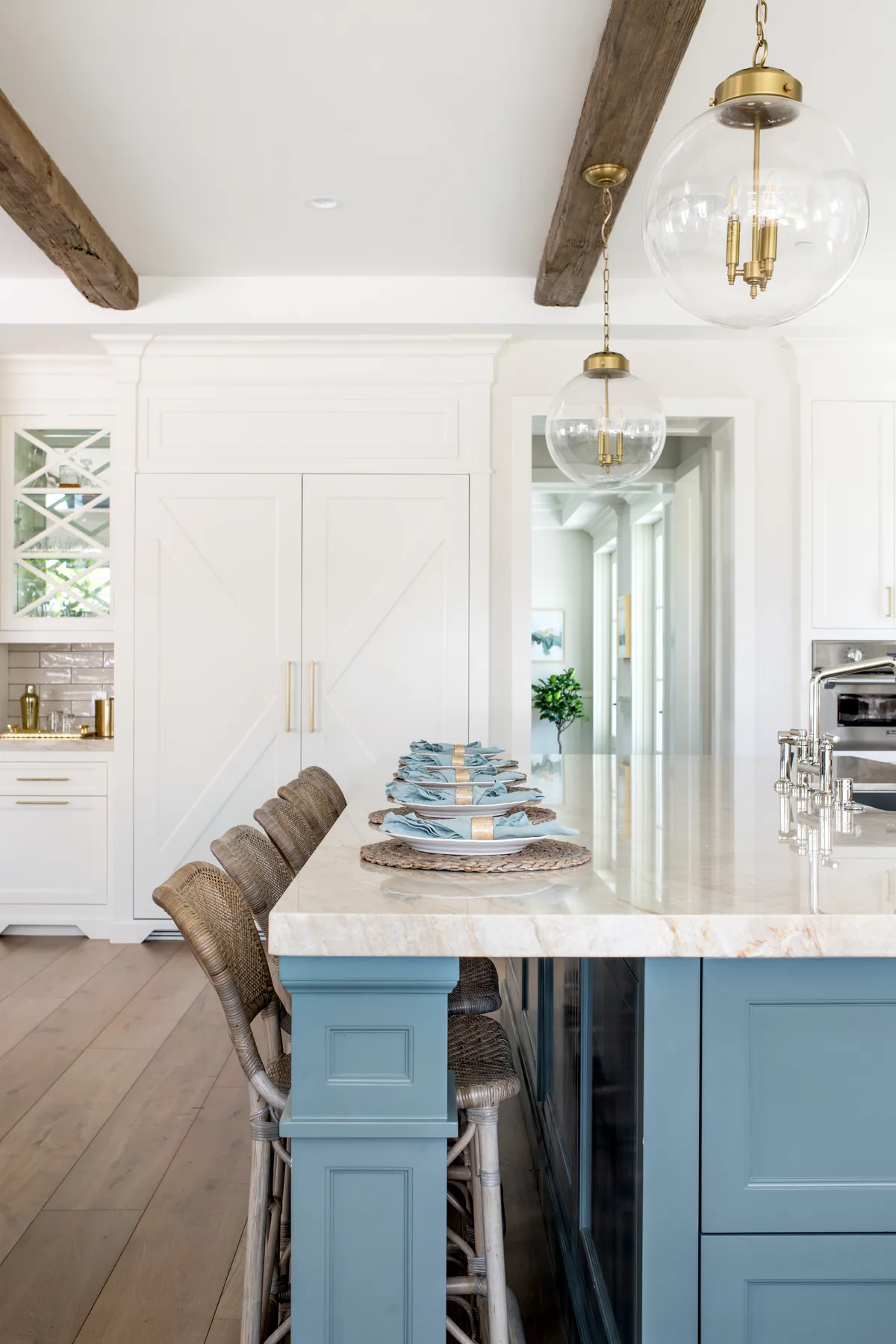
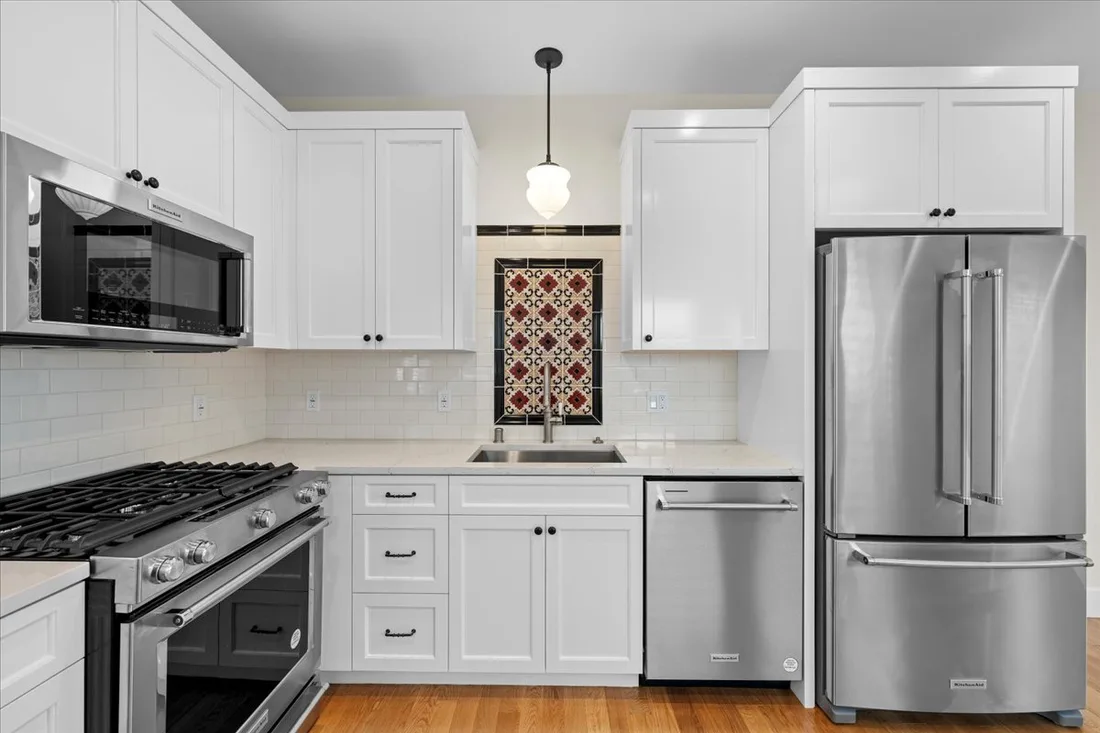
Where wood belongs — and where it will let you down
Let's be straight before you fall for the photos. Butcher block is porous, softer, and reactive in ways stone is not. It scorches and burns — set a hot pan straight down and you'll brand the surface. It takes on water: a wet sponge left overnight, standing water at a seam, and you get rings, dark staining, and eventually swelling. Unsealed, it's porous enough to harbor bacteria from raw meat and juices. And it asks for maintenance stone never does — re-oiling roughly every month if you finish it with oil, to keep it fed and water-resistant.
So we don't run it wall to wall, and we keep it away from the two places it fails: the sink and the range. Where it earns its keep is as an accent — a warm island top, or a dedicated baking and chopping station set apart from the wet and hot zones. There the softness is a feature: it's the one countertop you can carve on, and the one you can restore. Sand out a burn or a deep scratch, re-oil, and it looks new — a repair no quartz or granite can offer. Place it right and every honest con above stops mattering.
The natural-material warmth — and the choices behind it
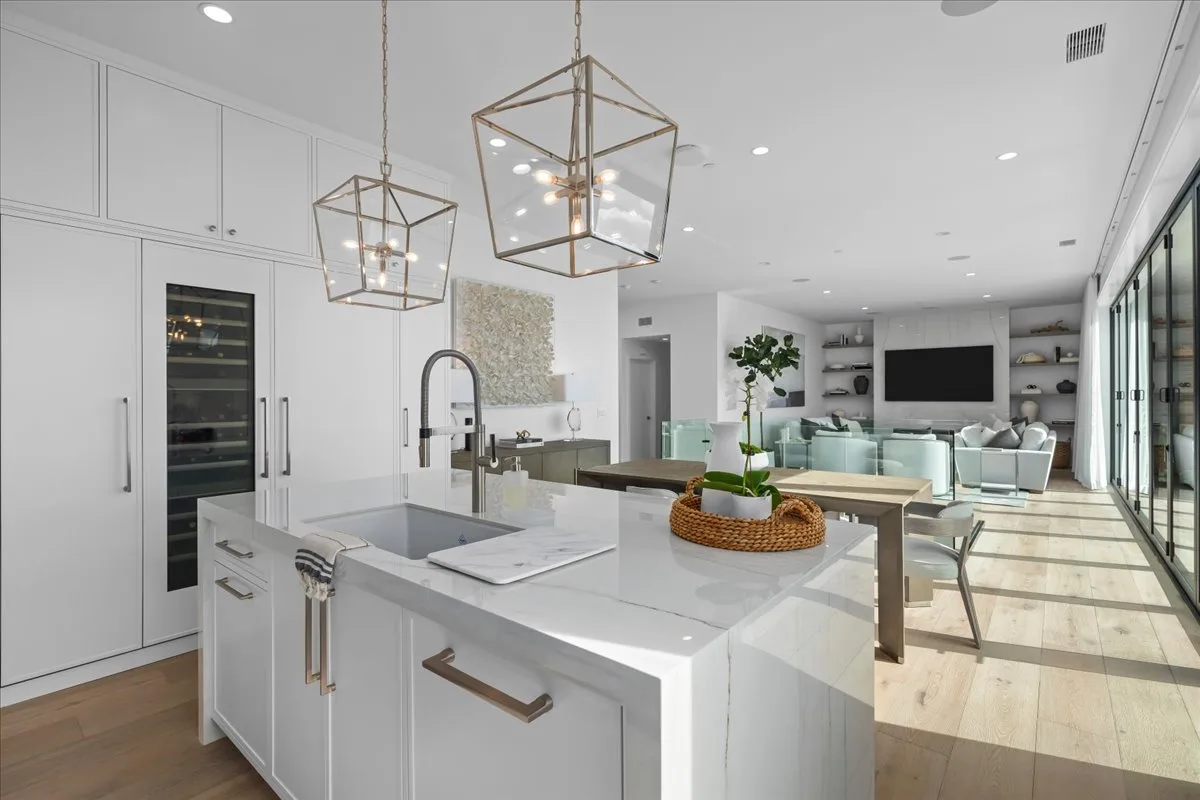
What wood does that stone can't is add a natural, matte, tactile warmth — exactly the register a coastal-contemporary palette lives for. The finish decides how you live with it. An oil finish keeps the wood looking and feeling natural and stays food-safe and fully repairable, but it's the one that wants re-oiling about monthly and is the more water-sensitive of the two. A polyurethane (poly) finish seals the surface into something far more water- and stain-resistant with little upkeep — but you lose the raw feel, you shouldn't cut directly on it, and a scratch means refinishing a patch rather than a quick spot-repair. Neither is wrong; they're a tradeoff, and we'll match it to how you actually use the counter.
Then the wood itself. Maple is the classic — pale, hard, budget-friendly, the workhorse. Walnut reads darker, richer, and more expensive; teak and other exotics run higher still. Grain direction matters too: edge grain (long staves) is the everyday choice, stable and clean-lined; end grain (the true checkerboard butcher's block) is toughest for chopping but pricier and thicker. And the strongest move of all is mixing materials in one kitchen — a wood island top set against light quartz or quartzite perimeters — so warmth and durability each do the job they're best at.
Explore custom cabinetry →How we use wood in a South Bay kitchen
Wood as an island top
The single best home for butcher block: a warm island top, away from the sink and range, anchoring the room without carrying the whole workload.
Learn more →Mixed-material islands — wood + stone
Wood for warmth, stone for the wet and hot zones. Pairing the two in one island is where the material really sings — see how the stones compare.
Learn more →Pair with custom cabinetry
A wood top wants cabinetry tuned to it — grain, tone, and reveal considered together. We build the whole thing full-custom, not off a catalog.
Learn more →Warm coastal palettes
Natural wood, matte finishes, light stone — the material warmth a coastal-contemporary kitchen is built around. This is where design earns its keep.
Learn more →Where stone belongs instead
For the primary runs, the sink surround, and the cooktop counter, stone is the right call. We'll show you which surface goes where.
Learn more →What it costs
Butcher block runs market-typical of about $40–$100 per square foot installed. See how it fits the whole remodel budget.
Learn more →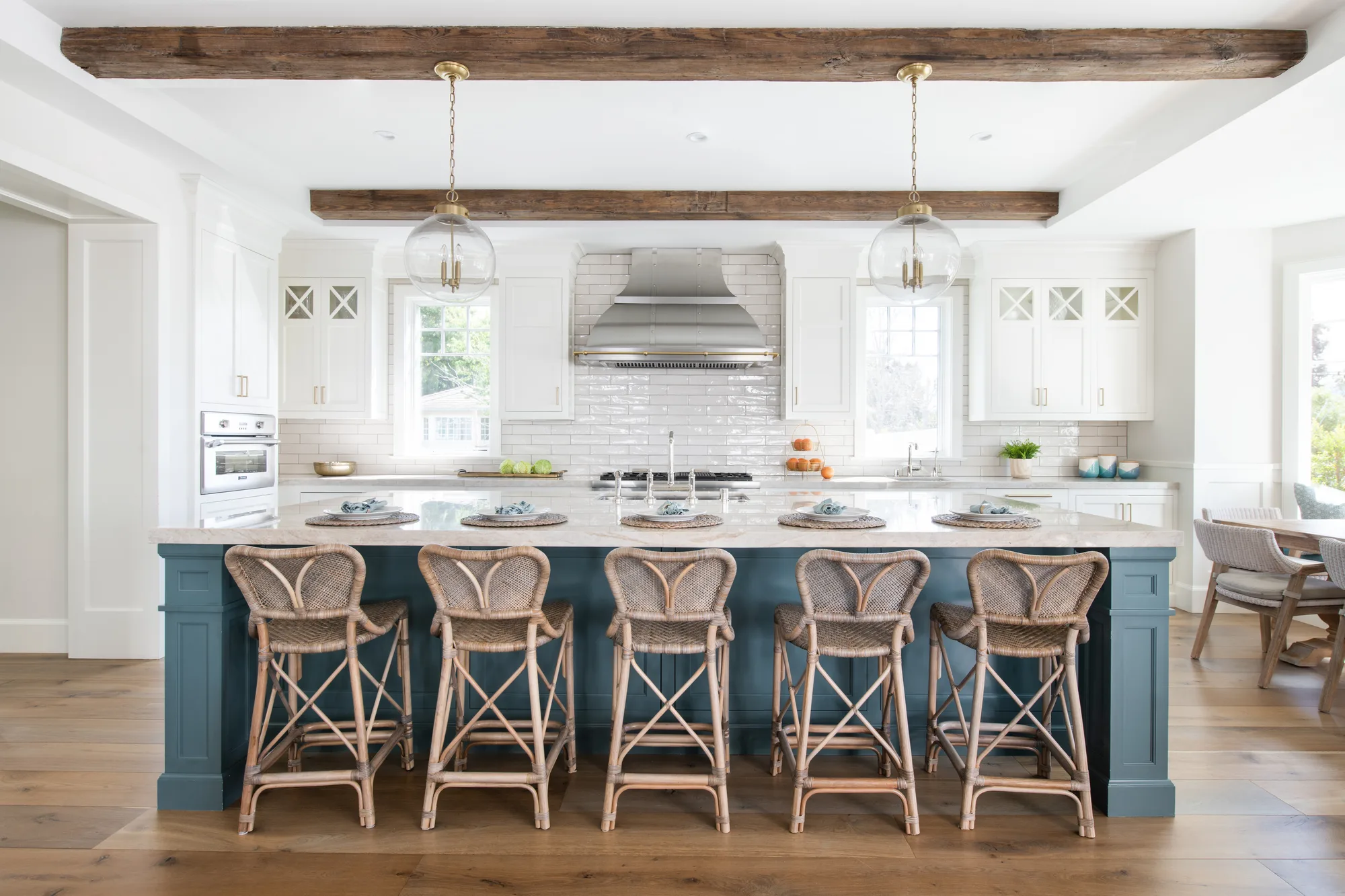
Wood is a warmth move, not a whole-kitchen surface. Place it right and it never lets you down.
Why wood suits the coastal-contemporary look
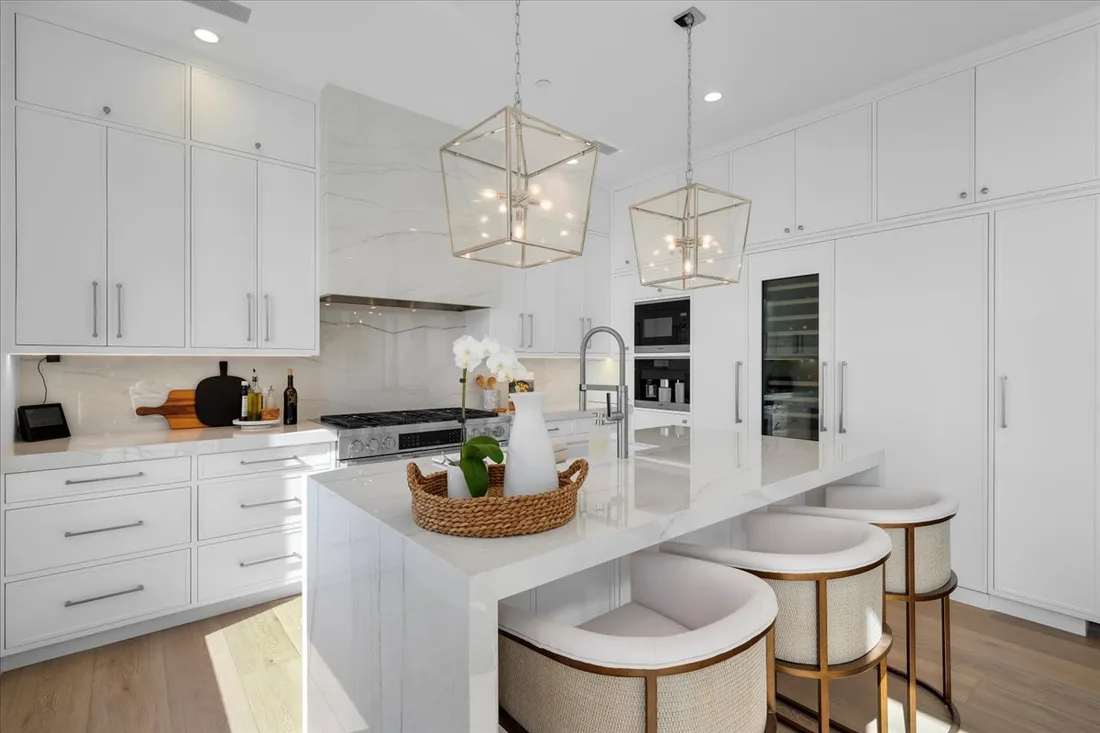
The kitchens we build in Manhattan Beach, Hermosa, and Redondo lean bright, airy, and material-honest — light quartz or quartzite, warm-white cabinetry, natural texture. A wood accent is what keeps that palette from reading cold. The move that works here almost every time is a butcher-block island top or a baking-and-prep counter contrasting the cool light stone around it: the warmth lands, and the durable surfaces still carry the daily work.
The discipline is placement, which matters even more near the coast. We keep wood off the sink surround and away from the range — the two spots where water and heat undo it — and we let stone own those zones. Do that, and you get the natural-material warmth this South Bay look loves without inheriting the maintenance headaches that make people regret butcher block in the first place.
See the cities we serve →Why a specialist places wood better.
Placed, not pasted.
We put wood only where it wins — island, prep zone — and stone where it must be. The whole value is knowing the line.
One accountable team.
Design through final walkthrough under one roof — no subcontractor chaos, no finger-pointing.
A fixed written scope.
Quoted in writing before we start, with a line-item breakdown. No vague bids, no surprise change orders.
Licensed & insured.
Milestone payments tied to real progress — never a big check up front — backed by our 2-year workmanship warranty.
Butcher block countertop questions
Are butcher block countertops sanitary?
Yes, when sealed and maintained. A well-oiled or poly-finished wood surface is food-prep friendly. The risk is with unsealed or neglected wood, which is porous enough to harbor bacteria from raw meat and juices. Keep the finish up, wipe up promptly, and don't leave standing water — and it's a safe surface to work on.
How often do you oil butcher block?
With an oil finish, plan on re-oiling roughly once a month — more often at first, then as the wood tells you (it looks dry and drinks the oil quickly when it's due). If you choose a polyurethane finish instead, the surface is sealed and needs far less upkeep, at the cost of the raw natural feel and the ability to cut directly on it.
Do butcher block countertops stain or burn?
They can do both, which is exactly why we place them carefully. Wood is porous, so standing water and spills can leave rings and dark stains if not wiped up. And it scorches — a hot pan set directly down will burn the surface. The upside is repairability: most stains and burns sand out, then you re-oil and it looks new. Stone can't be fixed that way.
Are butcher block countertops high maintenance?
More than stone, honestly. An oil finish wants re-oiling about monthly, you need to wipe up water and spills promptly, and you keep it away from heat. A poly finish lowers the upkeep a lot. Because of the maintenance, we use wood as an accent — an island or prep zone — rather than a whole-kitchen surface, so the care stays manageable.
How long do butcher block countertops last?
Effectively indefinitely if you maintain them, precisely because they're repairable. Scratches, burns, and worn spots sand out; a fresh coat of oil brings the wood back. A neglected top that's been left to soak up water and stains will fail far sooner. Longevity here is about care and placement, not the material aging out.
Butcher block vs granite for an island?
Different jobs. Butcher block brings warmth, a surface you can chop on, and easy repairs — but it needs oiling and can't take heat or standing water. Granite is heat- and water-tolerant and near-maintenance-free, but cold underfoot to the eye and not something you'd cut on. On many South Bay islands the best answer is both: a wood section for warmth and prep, stone for the working and wet zones.
Can you put a hot pan on butcher block?
No — use a trivet or hot pad every time. Wood scorches and burns, and a pan straight off the stove will leave a mark. This is the main reason we keep butcher block away from the range and reserve heat-heavy zones for stone. If a burn does happen, though, it can usually be sanded out and re-oiled.
Let's put wood exactly where it belongs
Tell us about your kitchen and we'll show you where butcher block wins and where stone should carry the load. A real person answers — usually the same day.