White oak kitchen cabinets — cut, finish and cost, explained honestly
Most pages gush about warm grain and stop. The decisions that actually matter are the cut — rift, quarter, or plain-sawn — and the finish that keeps white oak from yellowing over the years. Get those two right and white oak is one of the most durable, timeless choices in a kitchen. Get them wrong and it dates fast.
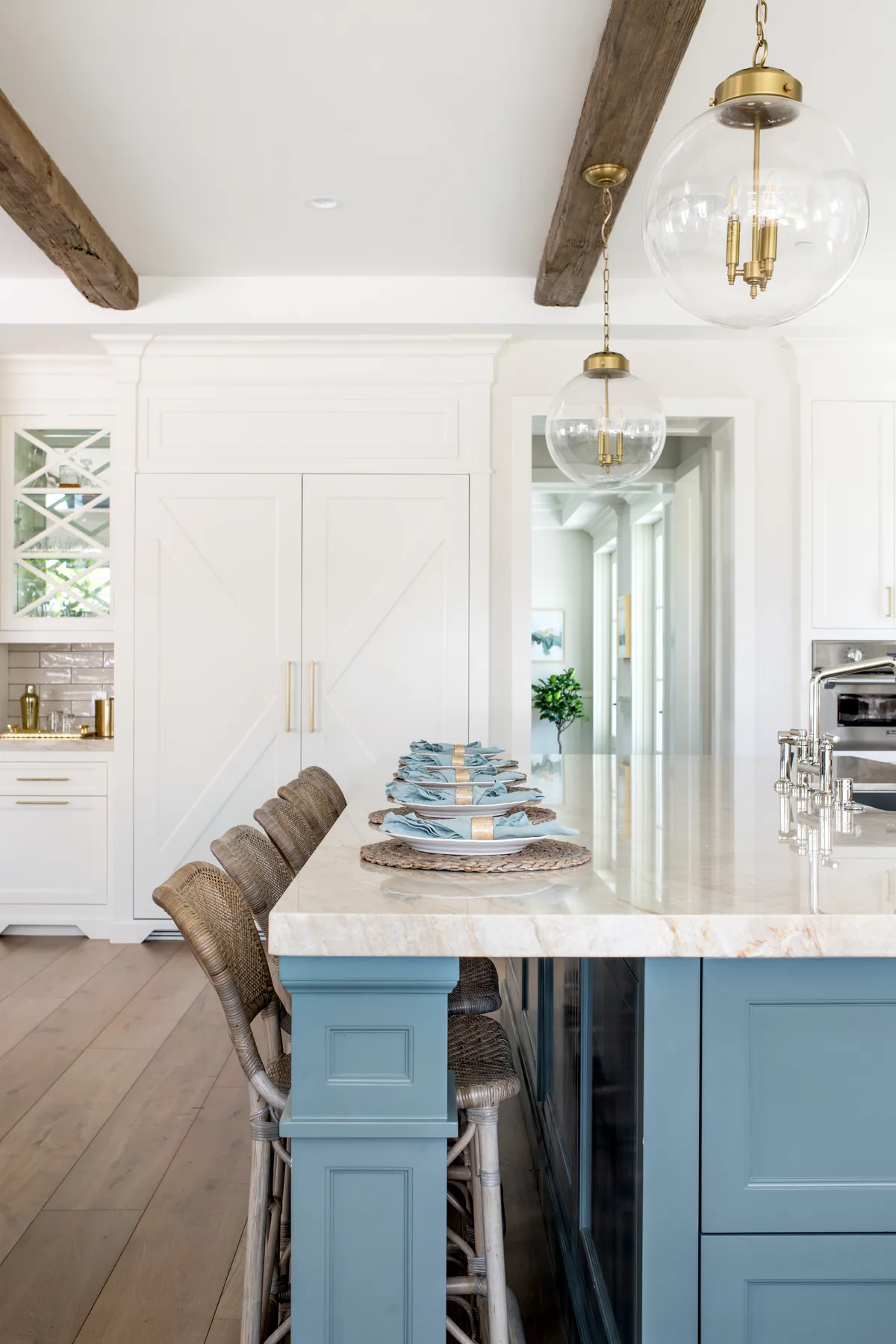
Is white oak good for cabinets — and does it yellow?
Yes, it's an excellent cabinet wood. White oak is hard, dense and naturally rot- and moisture-resistant — the same qualities that make it a boatbuilding and flooring staple — so a well-built white oak kitchen can look right for thirty years and beyond. That durability is real and it isn't the part competitors get wrong.
The yellowing worry is where the honesty has to come in. Older white oak kitchens did yellow and amber over time — but that was the finish, not the wood. Oil-based topcoats and many older water-based finishes carry their own warm tint and keep oxidizing under UV light, so a cool, natural white oak slowly drifts golden. Modern 2K water-based, UV-inhibiting topcoats are formulated specifically to prevent that shift, holding the raw, pale tone the design was chosen for.
So finish selection is genuinely load-bearing here — more than the cabinet box, more than the door style. It matters most in sun-facing kitchens, which in the South Bay means a lot of them. This is exactly the decision a specialist should be making with you on purpose, not defaulting to whatever the shop sprays.
How we build cabinets to last →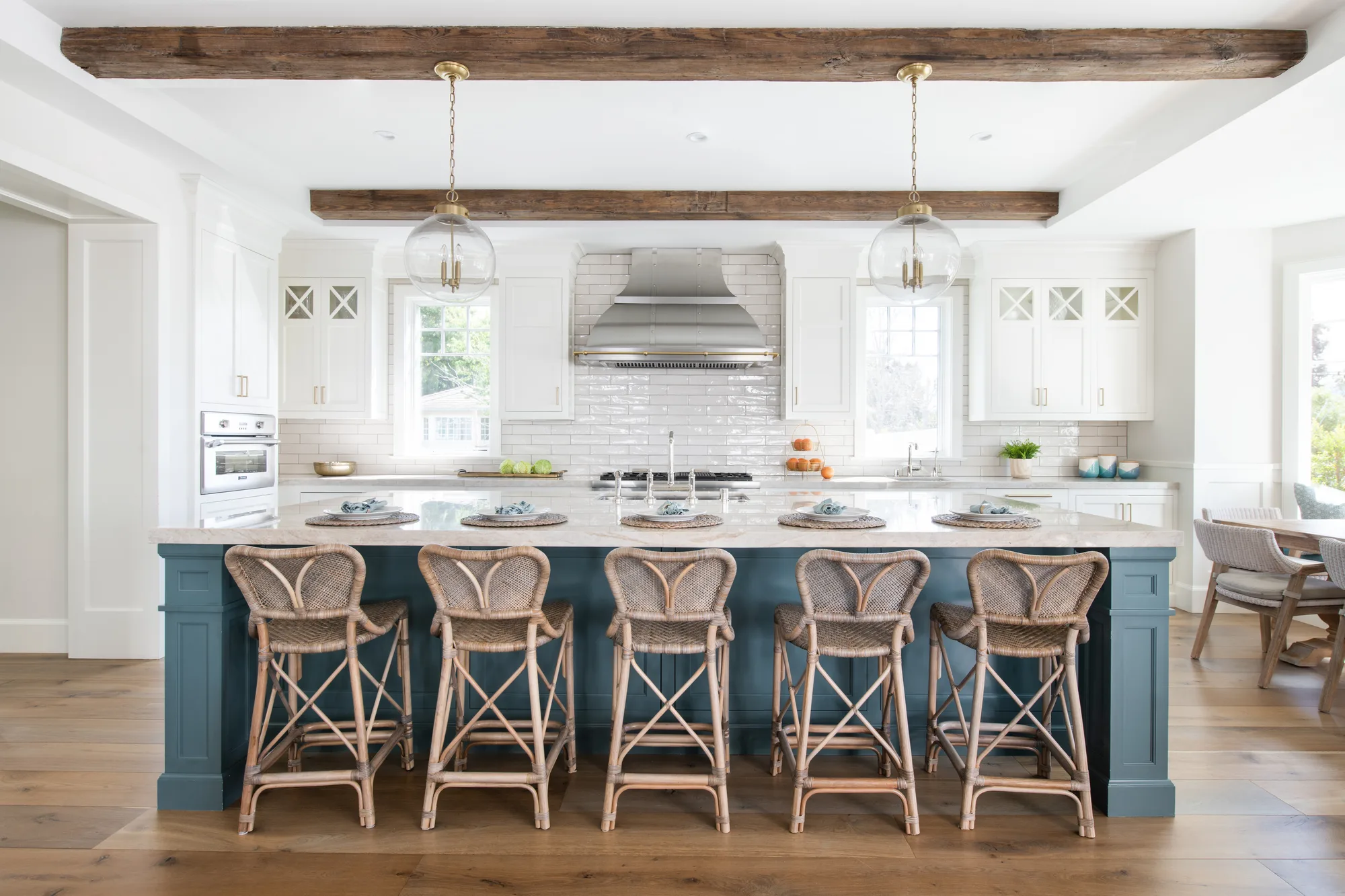
Rift, quarter, or plain-sawn — and the finish that sets the mood
How a log is cut changes the grain completely. Plain-sawn (the most common and most affordable) gives the wide, wavy cathedral figure most people picture as oak. Quarter-sawn cuts across the growth rings to produce straighter grain plus the dramatic 'ray flake' or 'tiger' figure oak is prized for. Rift-sawn cuts at an angle for the tightest, straightest, most uniform grain with almost no flake — the clean, linear look most in demand in contemporary kitchens, and the most expensive because it wastes the most of the log.
For a calm, modern face frame and door, rift-sawn is the connoisseur's pick; quarter-sawn suits anyone who wants that ray-flake character on display; plain-sawn is the value choice and still beautiful when the grain is laid up thoughtfully. There's no single 'best' — only which grain suits your room.
Then the finish sets the mood. Natural (clear, raw-looking) keeps it pale and current. Cerused or limed pushes white pigment into the open grain for a coastal, textured look. Bleached goes even paler and cooler. Fumed reacts the wood's tannins for a deep, smoky tone, and a light stain nudges it warmer without hiding the figure. Every one of these should sit under a UV-inhibiting topcoat so the tone you choose is the tone you keep.
Explore custom cabinetry →Where white oak works in your kitchen
White oak in shaker
A flat recessed shaker panel in white oak reads both crafted and clean — the most versatile way to show the grain without over-styling the room.
Learn more →Two-tone white oak
A white oak island against a painted perimeter — or the reverse — is the classic move: warmth and contrast in one decision, and it keeps the kitchen from going flat.
Learn more →Pairing the counters
White oak sits beautifully under white and grey quartz, soft quartzite, or a honed marble. We match the stone to the finish so the grain reads as intended.
Learn more →Panel-ready integration
White oak fronts on a panel-ready Sub-Zero or dishwasher let the cabinetry run unbroken. We coordinate the appliance spec so the reveals line up.
Learn more →Luxury kitchens
Rift-sawn white oak, waterfall grain-matching and full-height slab backsplashes are the details that carry an estate-level kitchen.
Learn more →Custom cabinetry
We build white oak full-custom, so the door proportions, grain direction and finish are tuned to your room rather than pulled from a catalog.
Learn more →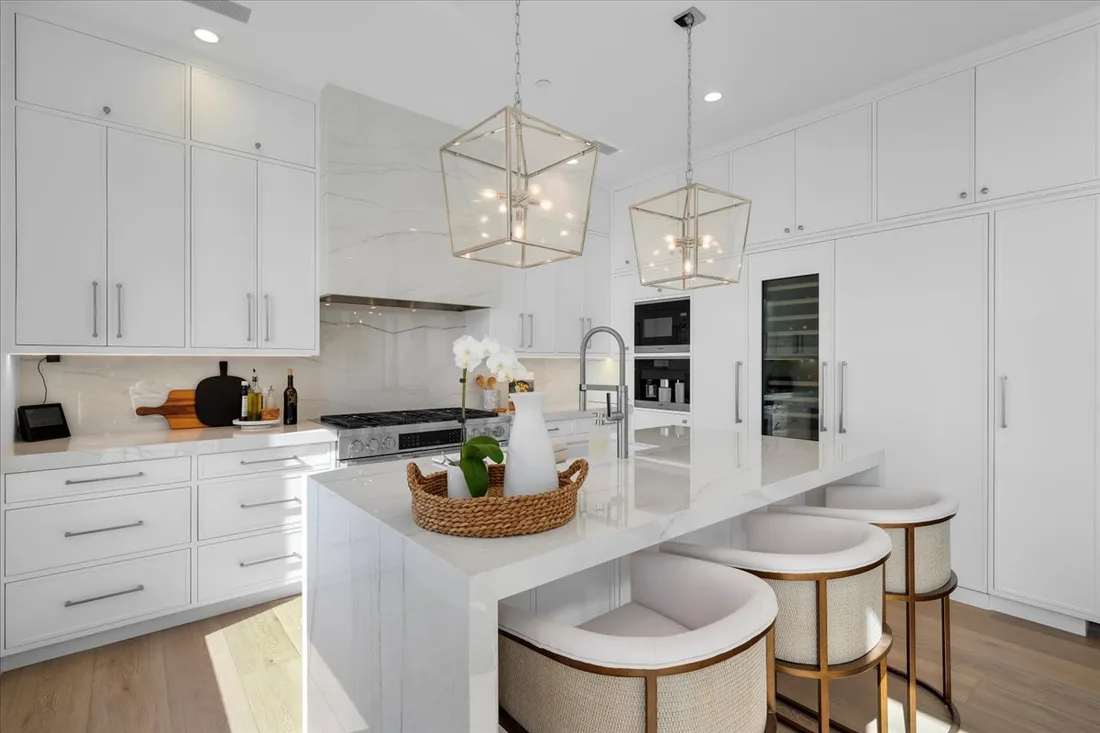
White oak's warmth is easy. The cut and the finish are where the kitchen is won or lost.
Why white oak suits the South Bay — and why finish choice matters more here
White oak's light, warm grain is a natural fit for the coastal-contemporary look the beach cities keep asking for, and it flatters the abundant natural light in Manhattan Beach, Hermosa and Redondo homes — a pale, clean oak glows in that light rather than reading heavy.
But that same light is why the finish decision is not optional here. South- and west-facing kitchens in Palos Verdes, Rancho Palos Verdes and the beach cities take real UV exposure through big view windows, and that's precisely the sun that ambers an under-specified finish. Choosing a UV-inhibiting topcoat isn't a luxury upsell in this market — it's what keeps a cool, natural white oak from drifting golden over the first few summers.
And at PV and RPV estate scale, white oak earns its keep on the details that only show up in person: continuous grain across a long run of doors, a grain-matched island, rift-sawn uniformity where the eye lingers. That's cabinetry built for the room, not ordered by the box.
See the cities we serve →Why a specialist builds white oak better.
The finish, chosen on purpose.
We select and test the UV-inhibiting topcoat against your light and your tone — the single decision that determines whether the oak stays true or yellows.
One accountable team.
Design through final walkthrough under one roof — no subcontractor chaos, no finger-pointing.
A fixed written scope.
Quoted in writing before we start, with a line-item breakdown by cut and finish. No vague bids, no surprise change orders.
Licensed & insured.
Milestone payments tied to real progress — never a big check up front — backed by our 2-year workmanship warranty.
White oak cabinet questions
Is white oak good for kitchen cabinets?
Yes — it's one of the best. White oak is hard, dense and naturally rot- and moisture-resistant, so a well-built white oak kitchen holds up for thirty years and more. It also takes a wide range of finishes, from pale natural to deep fumed, which is why it's so popular in current design. The one thing to get right is the finish, so it doesn't yellow over time.
Does white oak yellow over time?
The wood doesn't — the finish does. Older white oak kitchens ambered because oil-based and early water-based topcoats carry a warm tint and keep oxidizing under UV light. Modern 2K water-based, UV-inhibiting finishes are made specifically to prevent that shift and hold the raw, pale tone. In a sun-facing South Bay kitchen this finish choice is the most important decision you'll make on the cabinets.
Rift-sawn vs quarter-sawn white oak — which is better?
Neither is universally better; they're different looks. Rift-sawn gives the tightest, straightest, most uniform grain with almost no flake — the clean, linear look favored in contemporary kitchens, and the priciest because it wastes the most of the log. Quarter-sawn adds the dramatic 'ray flake' figure oak is prized for. Choose rift for calm and modern, quarter for character.
How much do white oak cabinets cost?
As a market-typical range, not a quote: standard white oak runs about $150–$250 per linear foot; rift- or quarter-sawn semi-custom about $250–$350; full custom about $400–$600; and premium work $700 and up per linear foot. Cut, finish complexity, box construction and grain-matching drive the number. We price yours in writing after seeing the room — use our cost guide for planning figures.
White oak vs red oak for kitchens?
White oak has a tighter, straighter grain, a cooler and more neutral tone, and better moisture and rot resistance — which is why it reads as the more refined, contemporary choice. Red oak has a more open, pinkish grain and the pronounced cathedral figure associated with 1990s kitchens. For a current look that ages well, white oak is generally the pick; red oak can be a value option if you want a warmer, more traditional grain.
Are white oak cabinets high maintenance?
No. With a quality modern topcoat, white oak needs no more care than any other finished cabinet — wipe with a damp cloth and avoid harsh abrasives. The durability of the wood works in your favor, and a good UV-inhibiting finish means you won't be fighting yellowing either. The maintenance question is really answered at the finish-selection stage, not by you later.
What countertop goes with white oak?
White oak is flexible. Cool white and light-grey quartz keep it fresh and contemporary; a soft quartzite adds natural veining without fighting the grain; honed marble brings an organic, high-end pairing on an island or baking zone. Darker soapstone or a deep quartz makes a striking two-tone contrast. We match the stone to your chosen oak finish so the grain reads the way it should.
Let's spec white oak that stays true
Tell us about your kitchen and your light, and we'll walk you through cut, finish and cost for your room. A real person answers — usually the same day.