Cabinet refinishing — the same doors, a genuinely new finish
Refinishing keeps your existing doors and strips them back to a properly sprayed factory-grade finish. It's the cheapest of the three ways to change a kitchen — and the one with the most conditions attached. Here's exactly when it works.
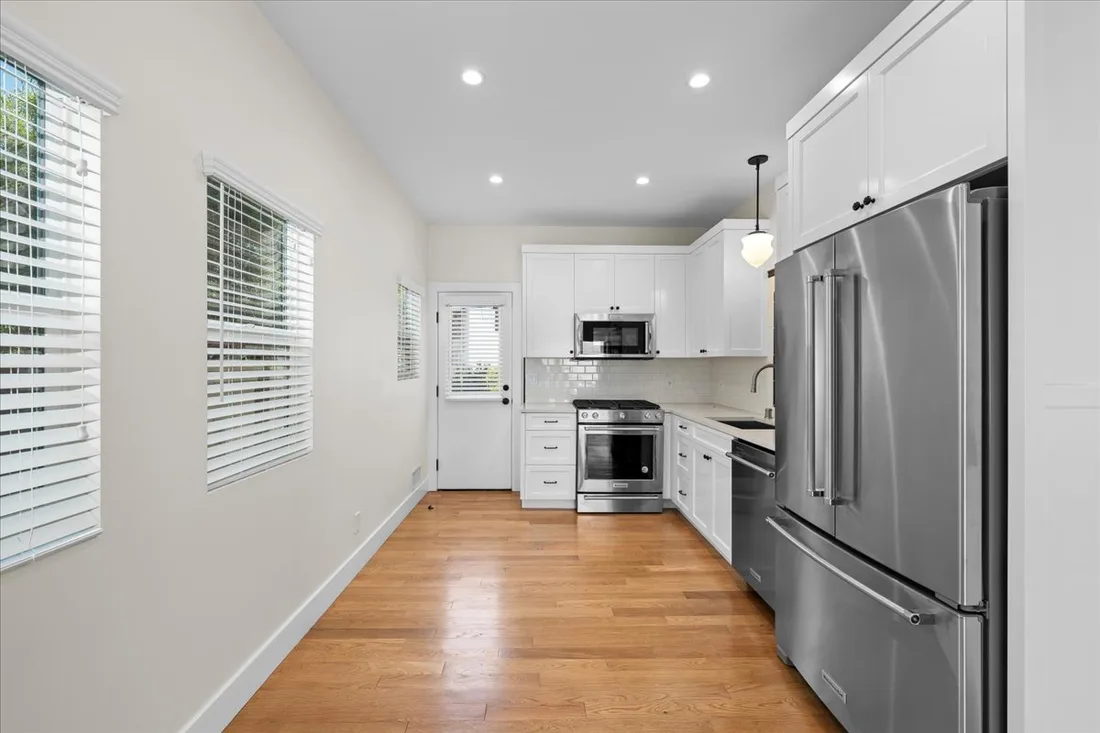
Refinishing vs. refacing vs. replacing
Most confusion about cabinet quotes traces back to these three words. They describe three genuinely different scopes.
| What changes | Refinishing | Refacing | Replacing |
|---|---|---|---|
| Your doors | Kept and refinished | Replaced with new | Replaced with new |
| Your boxes | Kept, refinished in place | Kept, veneered over | Removed and rebuilt |
| Door style | Unchanged | Any style you like | Any style you like |
| Layout | Unchanged | Unchanged | Anything you want |
| Relative cost | Lowest | Middle | Highest |
| Best when | Doors are solid wood and you like the style | Boxes are sound but the style is dated | Layout is wrong or boxes are failing |
If you want a different door style, refinishing cannot get you there — you're looking at refacing or replacing. That single question resolves most of the decision.
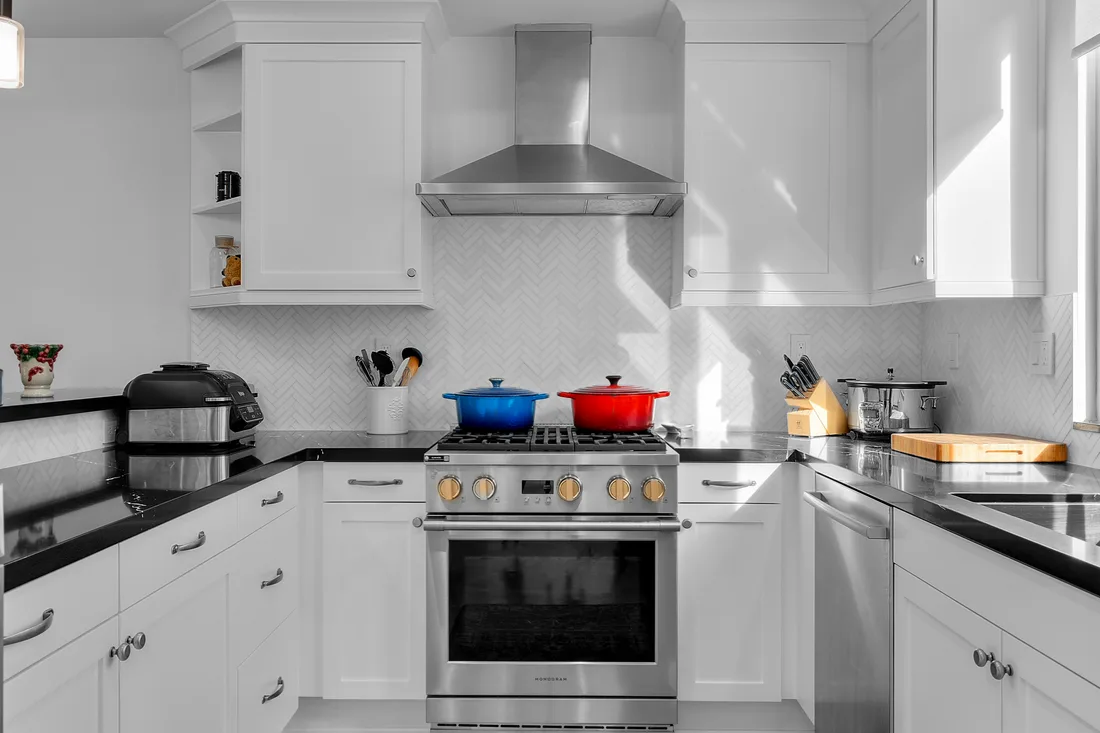
What can and can't be refinished
Solid wood doors and solid wood face frames refinish beautifully. Real wood veneer over plywood usually does too, in careful hands — the veneer is thin, so it can only be sanded so far, and an aggressive sand goes straight through it. Those are the cases where refinishing gives you a genuinely factory-grade result for the least money of any option.
Thermofoil, melamine, laminate, and printed foil over MDF cannot be refinished in any meaningful sense. There's no wood under the surface to sand back to; the film either peels or you end up painting over a surface that paint doesn't want to bond to. Anyone offering to refinish thermofoil is really offering to paint it, and it will chip at the edges. If that's your kitchen, refacing or replacing is the honest answer, and we'd rather tell you now than after a deposit.
See cabinet refacing →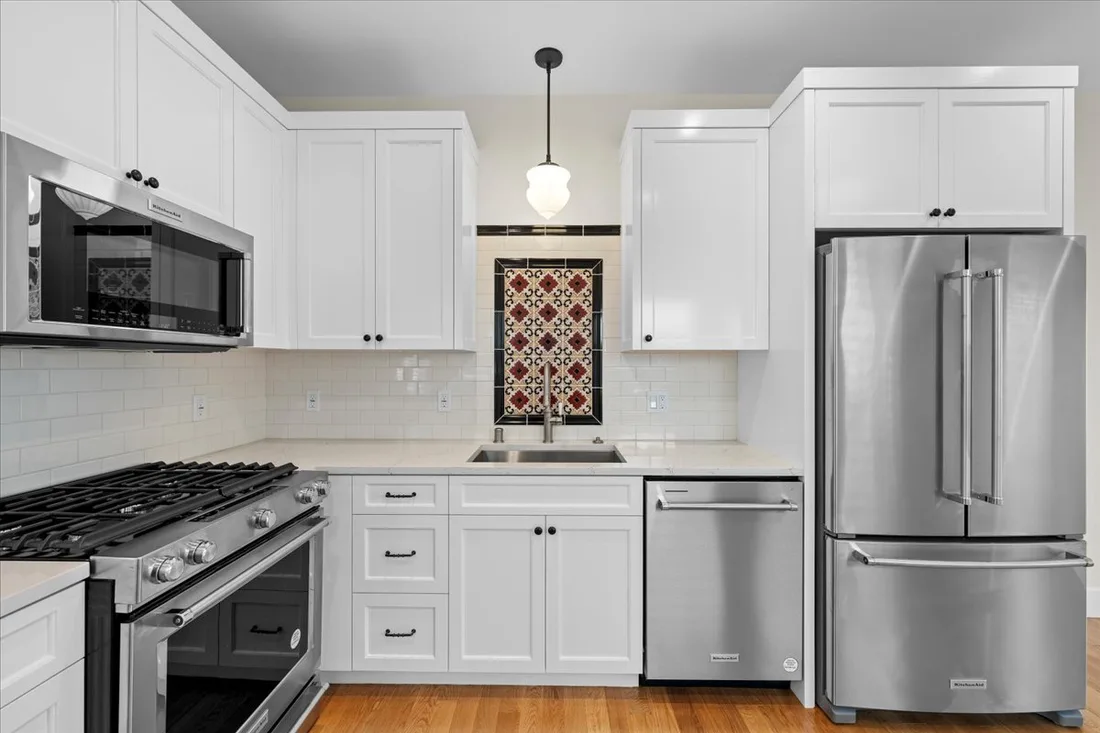
Sprayed in a booth, not brushed in your kitchen
The difference between a refinish that looks like cabinetry and one that looks like a weekend is almost entirely about how the finish is applied. Doors and drawer fronts come off, get labelled, and are sprayed off-site in a controlled booth where there's no dust, no draught, and no daylight curing one side faster than the other. Face frames are sprayed in place with the room properly masked and ventilated. Brush marks and roller stipple are not a texture choice — they're what happens when there's no booth.
Prep is the other half, and it's the half that gets skipped on a cheap quote. Degreasing matters more than people expect: decades of cooking film sits on the surface around a range, and finish will not bond through it. Then sanding, a bonding primer suited to the substrate, and a catalysed topcoat rather than a wall paint. Wall paint on a cabinet door stays soft, marks with a fingernail, and blocks — sticks to itself — where a door meets a frame.
Four things that decide whether a refinish lasts
Degrease before anything else.
Cooking film around the range is invisible and finish will not stick through it. Skipping this is the single most common cause of a refinish failing within a year.
Grain fill, if you're painting oak.
Oak's open pores telegraph straight through paint and read as texture, not as a painted cabinet. Getting a smooth painted finish over oak means filling the grain first — it's real labour, and it's why honest oak-to-white quotes aren't cheap.
Bonding primer matched to the substrate.
Wood, previously varnished wood, and veneer each want different primers. One universal primer for everything is a shortcut you'll see in about two years.
A catalysed topcoat.
Conversion varnish or a catalysed lacquer cures hard. Latex wall paint never fully does, which is why refinished-with-wall-paint doors stick to their frames in summer.
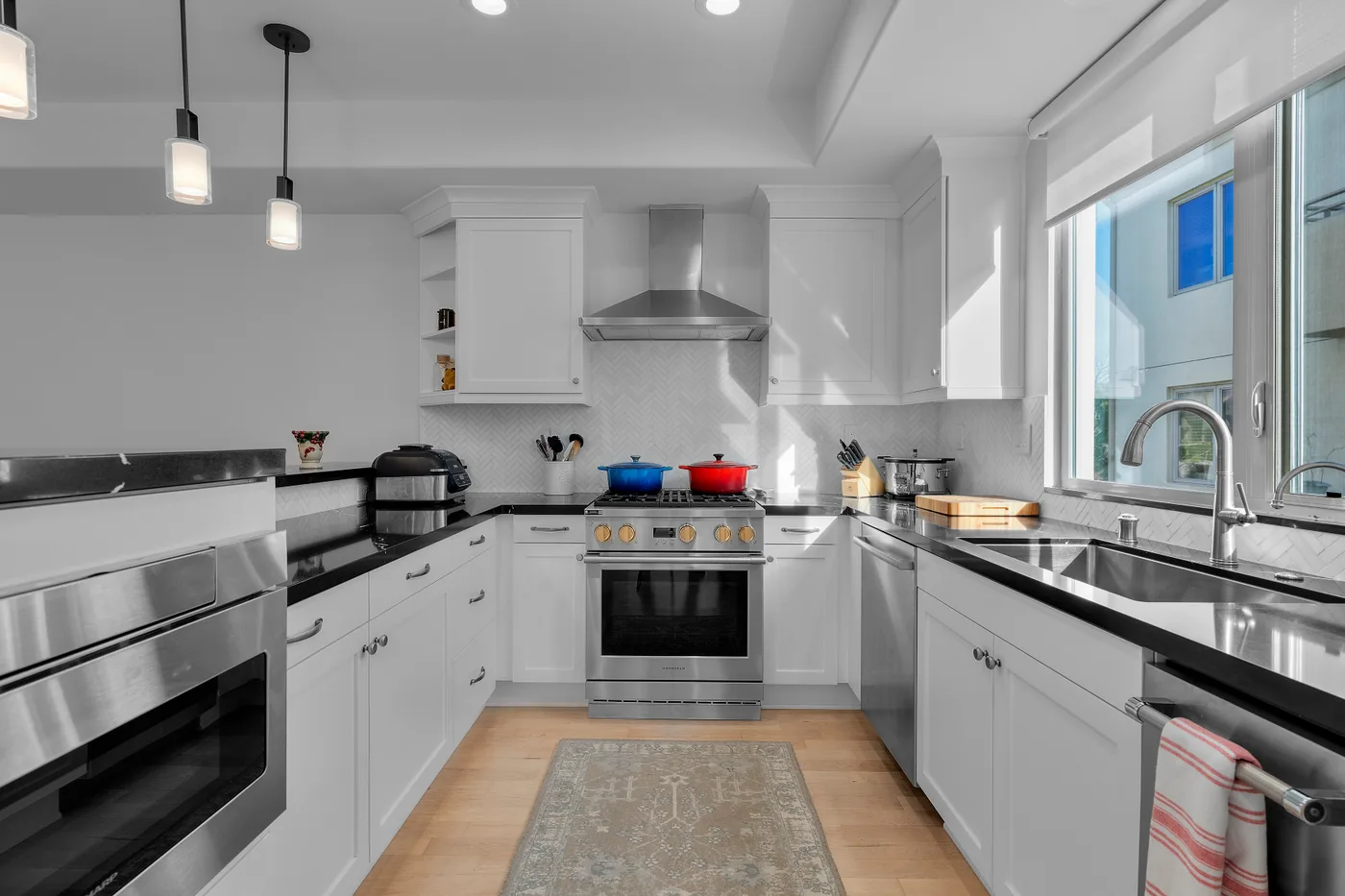
If the layout is wrong, the best finish in the world is lipstick. We'll tell you that before you spend.
What we'd point you toward instead
You want a different door style
Refinishing keeps the doors you have. If flat-panel needs to become Shaker, refacing gets you there without touching the boxes.
Learn more →The layout doesn't work
No finish fixes a bad work triangle, a cramped corner, or a fridge that blocks a walkway. That's a remodel, and it's worth doing properly.
Learn more →The boxes are failing
Sagging shelves, swollen particleboard under the sink, racked drawer boxes — refinishing the outside of a failing box is money you won't get back.
Learn more →You want to go to the ceiling
Closing that dusty gap above the uppers means new cabinetry. It's one of the highest-impact changes in a kitchen and it can't be refinished into existence.
Learn more →You just want a colour change
If the doors are solid wood and the style still works, this is exactly what refinishing is for — and our colour page is a good place to start narrowing.
Learn more →You're weighing all the options
The full four-way comparison — refinishing, refacing, semi-custom, and full custom — with honest cost ranges for each.
Learn more →Cabinet refinishing FAQ
What's the difference between refinishing and refacing?
Refinishing keeps your existing doors and strips them back to a new sprayed finish — the style stays exactly the same. Refacing replaces the doors and drawer fronts entirely and veneers the face frames, so you can change the style completely. Refinishing is cheaper; refacing is the one that can make a dated kitchen look current.
Can thermofoil or laminate cabinets be refinished?
Not properly. There's no wood beneath the surface to sand back to, so what's really being offered is paint over a film that paint struggles to bond with — and it chips at the edges. If your doors are thermofoil, melamine, or printed foil over MDF, refacing or replacing is the honest recommendation.
Can you paint oak cabinets white?
Yes, but the grain has to be filled first or oak's open pores telegraph straight through the paint and read as texture rather than a smooth painted door. Grain filling is genuine labour, which is why a properly quoted oak-to-white refinish costs more than people expect — and why a cheap quote usually means it's being skipped.
How much does cabinet refinishing cost?
It's the least expensive of the options — below refacing, well below replacing — because the doors and boxes stay. Where a specific kitchen lands depends on door count, the substrate, whether grain filling is needed, and the finish. We quote in writing after seeing the kitchen.
How long does it take, and can I use my kitchen?
Doors and drawer fronts come off to be sprayed off-site while face frames are done in place, so you keep the use of your counters, sink, and appliances for most of the job. You'll be without cabinet doors for the spray and cure window, and we'll give you the real timeline in writing before we start.
Why not just paint them myself?
You can, and for a laundry room it's a fine weekend. The reason a professional refinish looks different is the booth and the chemistry — dust-free spraying, a bonding primer matched to your substrate, and a catalysed topcoat that cures genuinely hard. Latex wall paint on a cabinet door never fully cures, marks with a fingernail, and sticks to the frame in warm weather.
Find out if refinishing is right for your kitchen
Send us a photo of your doors and we'll tell you honestly whether refinishing will work, or whether your money is better spent elsewhere. A real person answers, usually the same day.