Shaker kitchen cabinets for South Bay homes — done to read 2026, not 2015
Still the most popular cabinet door in the country — and still the right call. What dates a shaker kitchen isn't the style, it's the execution: thick rails, stark builder-white, plain subway tile. Slim-shaker proportions, warm tones, and honest construction are what keep it current.
Are shaker cabinets going out of style in 2026?
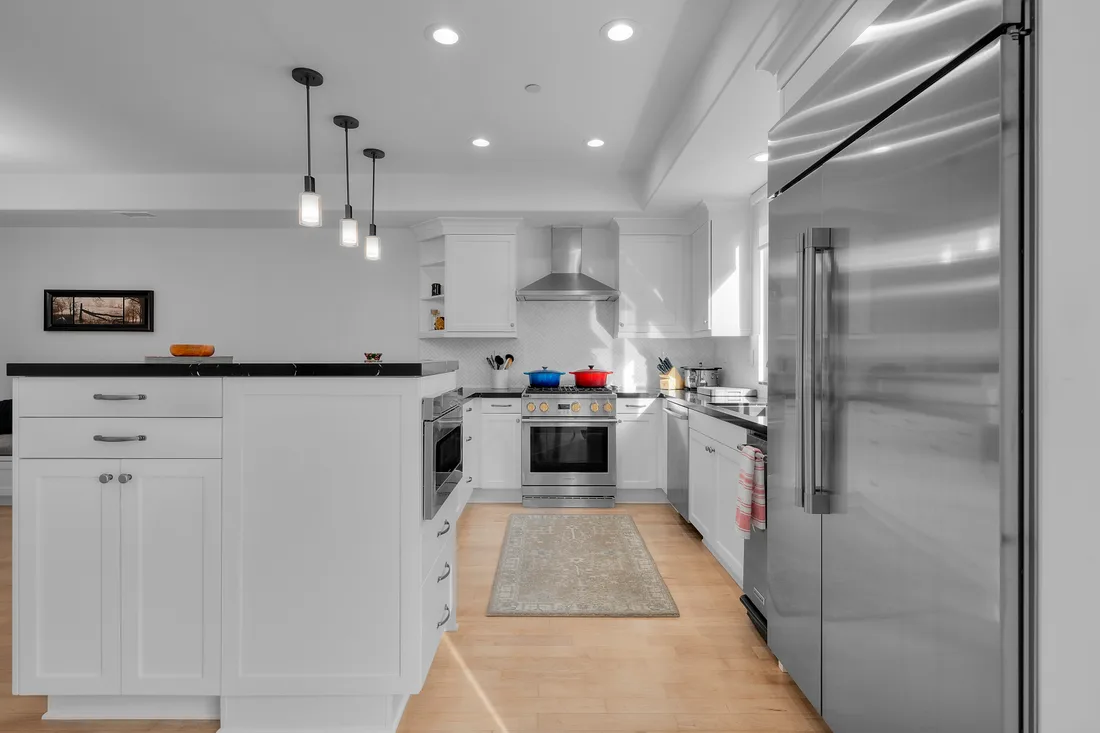
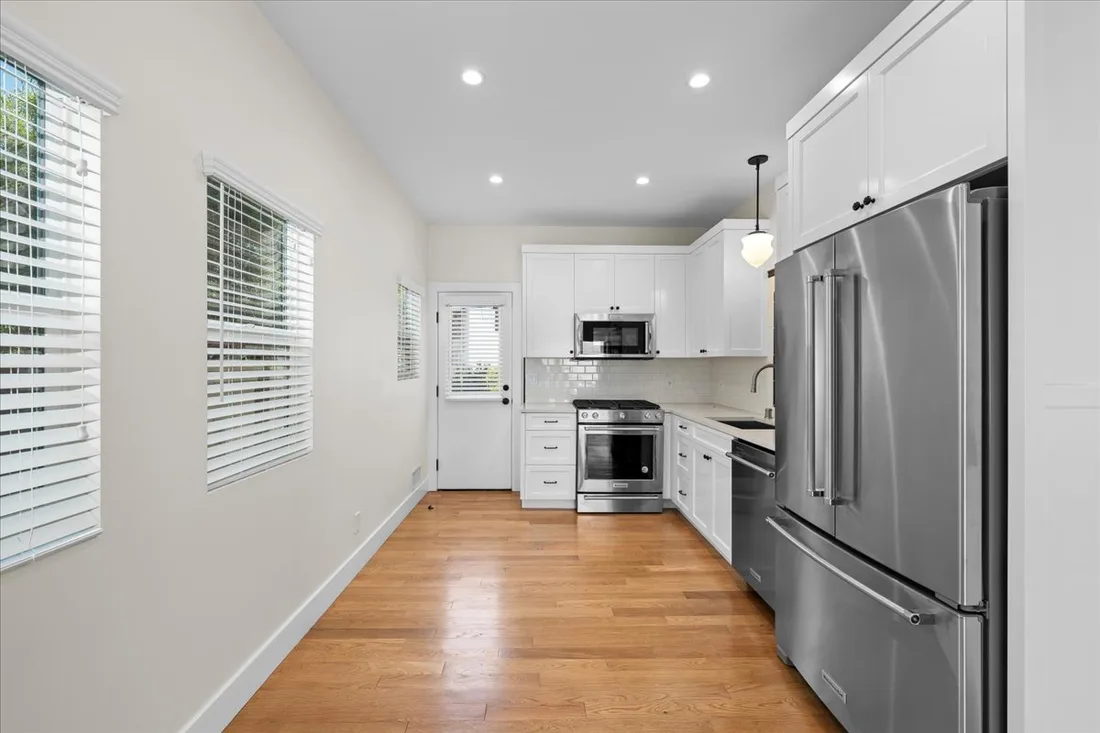
No. Shaker remains the most popular cabinet door style, and it stays popular for the same reason it has for a century — a flat recessed panel reads both crafted and clean, so it sits comfortably in a traditional home or a modern one. It's a framework, not a trend, which is exactly why it doesn't age out.
What actually dates a "shaker kitchen" is the generic version of it: a thick, chunky rail-and-stile frame, one flat builder-white on every door, and plain subway tile behind it. That combination read new in 2015 and reads tired now — but the style isn't the problem, the execution is. Slimmer frames, warmer color, and a considered backsplash are what move the same door from 2015 to 2026, and that's the part a specialist earns their keep on.
Slim-shaker, warmer tones, and the variants that update it
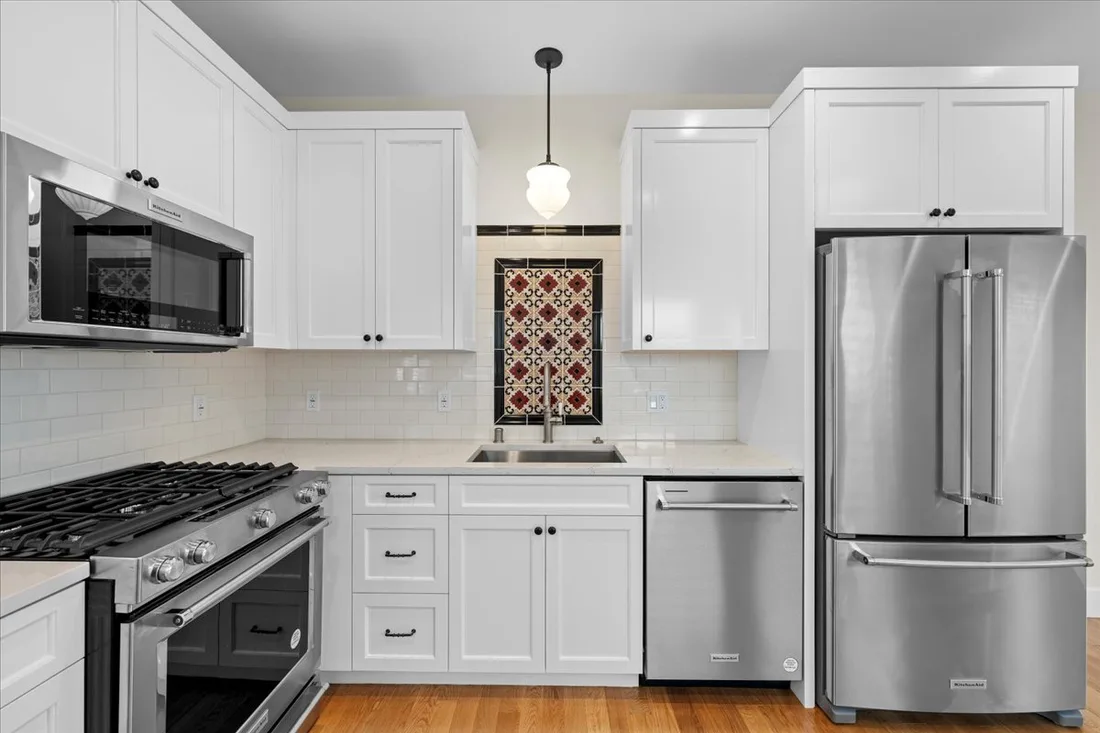
The single biggest change is proportion. A slim-shaker door narrows the rails and stiles — the frame around the recessed panel — from the chunky builder profile down to a tighter, quieter reveal. The eye reads it as more refined and more modern without giving up the shaker character, and on tighter runs it makes the whole wall of cabinetry feel calmer. Reeded and fluted fronts, or a glass-panel upper, let you keep a shaker base while breaking up a long elevation.
Color and material do the rest. Creamy and warm whites have largely replaced stark builder-white; medium wood tones, sage, and soft blues are where South Bay kitchens are landing now. And there's a real choice under the paint: shaker in solid white oak reads warm and current with the grain showing through, while a painted MDF center panel gives you the crispest, most stable painted finish. Neither is 'better' — they solve different rooms, and we'll tell you honestly which fits yours.
Explore custom cabinetry →Ways to build a shaker kitchen that lasts
Shaker in white oak
A rift-cut white oak shaker keeps the clean frame but lets the grain warm the room — the most current way to do the style without painting a thing.
Learn more →Shaker colors that read 2026
Creamy whites over stark builder-white, plus medium wood, sage and soft blue. The color is doing as much work as the door profile here.
Learn more →Framed vs frameless & reveals
Full-overlay framed or true frameless changes the reveal you see between doors. It's the detail that separates a custom shaker from a stock one.
Learn more →Custom shaker, built to your walls
Slim-shaker proportions and door widths tuned to your actual run — not filler panels hiding the gaps a stock cabinet leaves behind.
Learn more →Refacing as a budget entry
Sound boxes but tired doors? New slim-shaker fronts and finish over the existing cabinets is the lower-cost way into the look.
Learn more →Transitional kitchens
Shaker is the workhorse door of the transitional style — the safe, high-resale choice most South Bay homes settle on.
Learn more →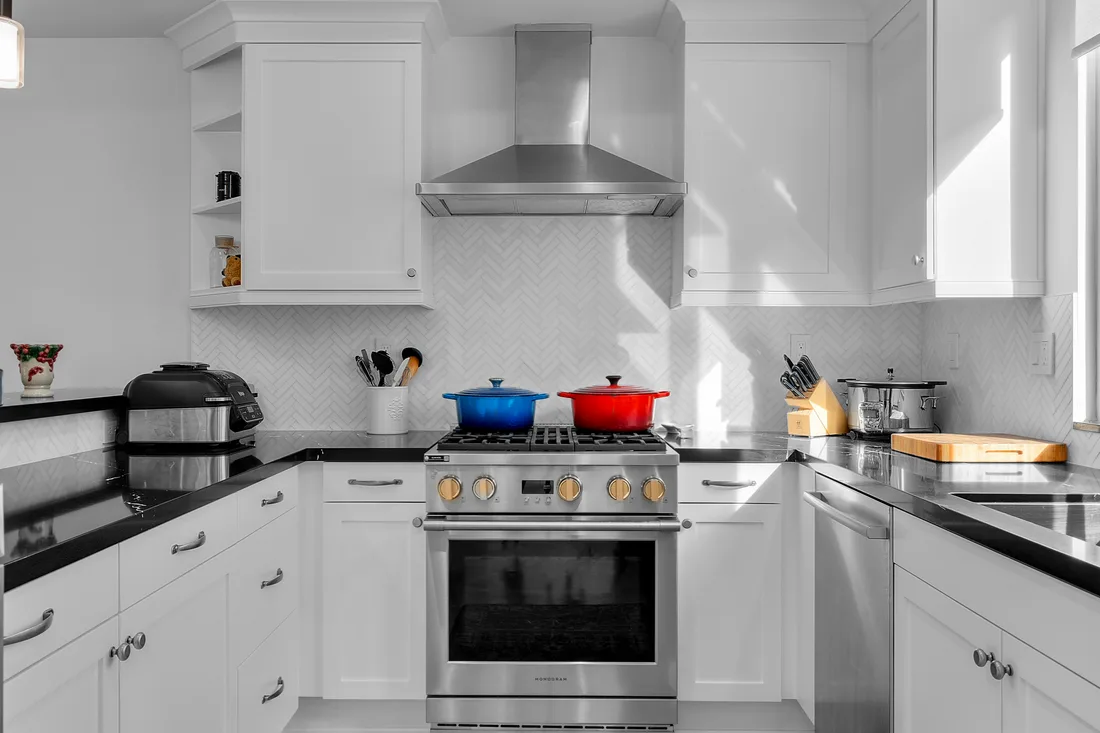
Shaker never went out of style. Thick, stark-white shaker did.
Why shaker is the safe, high-resale call here
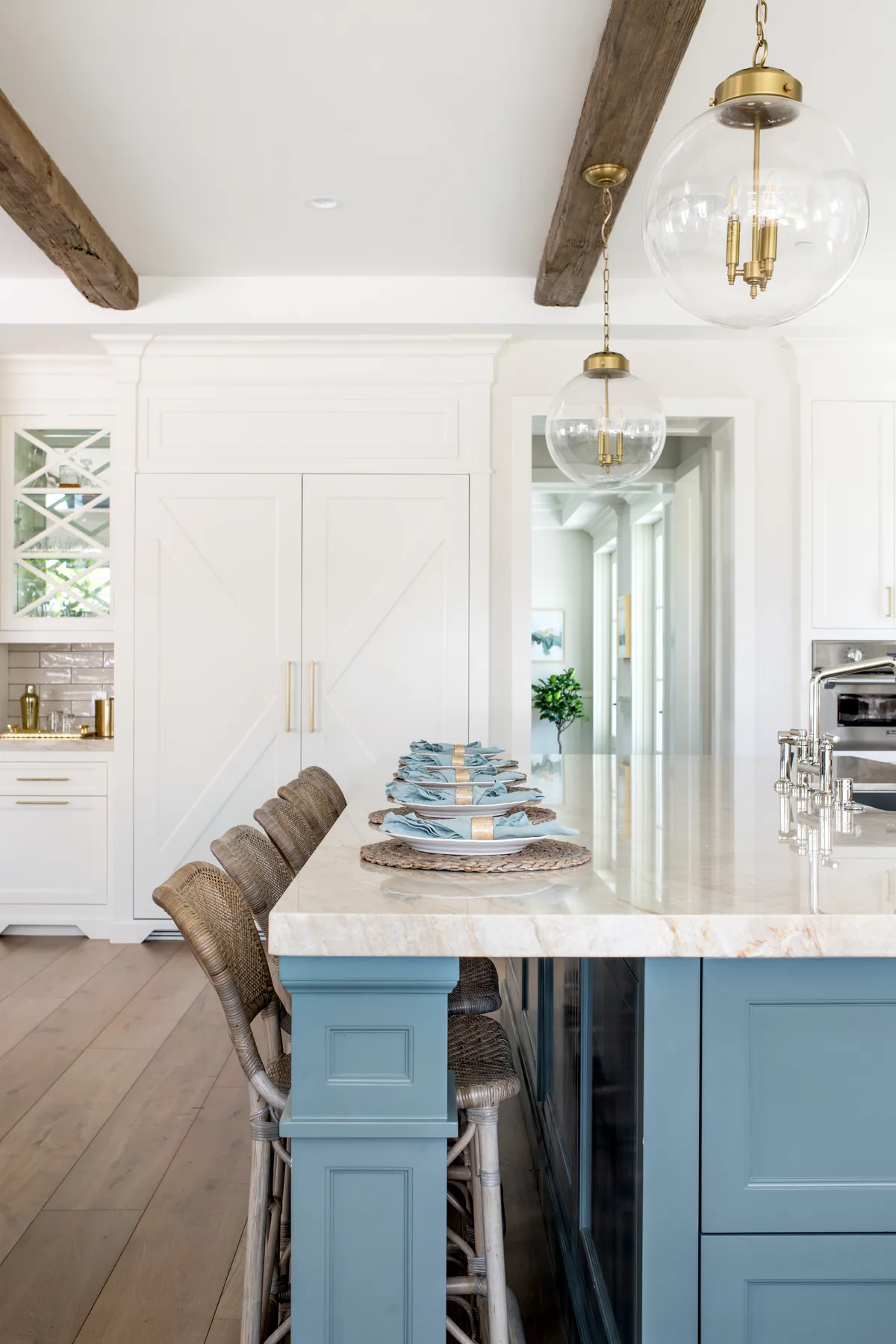
Coastal-transitional is the dominant South Bay aesthetic, and shaker is its default door — which makes it the low-risk, high-resale choice when you eventually sell. A warm-white or wood shaker with a blue or natural-wood island is the look buyers in the beach cities expect to walk into, and it photographs beautifully when the listing goes up.
The room shapes the details. On tighter Manhattan Beach, Hermosa and Redondo beach-lot kitchens — often long, narrow runs — slim shaker keeps the sightlines clean where a chunky frame would make the space feel busy. In a mid-century Torrance ranch or a Palos Verdes traditional, a slightly warmer, more classic shaker respects the home's bones instead of fighting them. Same door style, tuned three different ways for three different homes.
See the cities we serve →Why a specialist builds shaker better.
Proportion, not a catalog.
Slim rail-and-stile widths and door sizes dialed to your walls — because the frame proportion is what makes shaker read current or dated.
One accountable team.
Design through final walkthrough under one roof — no subcontractor chaos, no finger-pointing.
A fixed written scope.
Quoted in writing before we start, with a line-item breakdown. No vague bids, no surprise change orders.
Licensed & insured.
Milestone payments tied to real progress — never a big check up front — backed by our 2-year workmanship warranty.
Shaker cabinet questions
Are shaker cabinets outdated?
No — shaker is still the most popular cabinet door style, and it stays that way because a flat recessed panel works in both traditional and modern rooms. What looks dated is the generic execution: thick, chunky frames, stark builder-white on everything, and plain subway tile. Slim-shaker proportions and warmer color keep the same door reading current.
What is a slim-shaker cabinet?
A slim-shaker door narrows the rails and stiles — the flat frame around the recessed center panel — from the chunky builder profile to a tighter, quieter one. The result reads more refined and more modern, and on long or narrow runs it keeps the wall of cabinetry feeling calm rather than busy. It's the single easiest change to move shaker from 2015 to 2026.
Are shaker cabinets more expensive than slab or flat-panel?
They're usually in the same neighborhood — cost is driven far more by construction quality, wood species, finish, and whether it's custom, than by the door profile itself. A five-piece shaker door has a bit more milling than a flat slab, but at the same construction spec the difference is modest. These are market-typical ranges, not a quote; we price yours in writing after we see the kitchen.
Should shaker cabinets be MDF or solid wood?
It depends on the finish you want. A painted MDF center panel gives the crispest, most dimensionally stable painted surface — it resists the seasonal expansion that can show hairline cracks at the joints of a solid-wood painted door. If you want visible grain, a stained or natural white oak shaker should be solid wood or veneer, not MDF. Neither is universally better; they solve different rooms, and we'll recommend based on your color and budget.
What color shaker is most popular in 2026?
Warm and creamy whites have largely replaced stark builder-white as the default, because they read softer and more current. Beyond white, medium wood tones, sage green, and soft blues are where a lot of South Bay kitchens are landing now — often as a contrasting island against a lighter perimeter. See our cabinet color guide for how these play in different light.
Do shaker cabinets work in a modern kitchen?
Yes. A slim-shaker door with a tight reveal, flat-panel or integrated hardware, and a restrained palette reads clearly modern while keeping a little more warmth and detail than a pure slab. Pairing it with reeded, fluted, or glass-panel accents is a common way to keep a modern kitchen from feeling cold.
Full overlay or partial overlay for shaker?
For a current look, full overlay — the doors cover most of the cabinet face, so you see slim, even reveals between them rather than a wide frame. Partial overlay, where the frame shows around each door, reads more traditional and more dated; frameless (true full-access) construction takes the full-overlay look furthest. We'll match the reveal to the style you're after.
Let's build a shaker kitchen that reads 2026
Tell us about your home and we'll show you the proportions, colors, and construction that keep shaker current. A real person answers — usually the same day.