Marble countertops — the most beautiful surface in the room, told honestly
Nothing else has marble's soft, luminous depth — and nothing else etches the way it does. We won't sell you a fantasy of indestructibility. We'll tell you exactly what marble does in a real kitchen, so the right buyer chooses it with confidence and the wrong one happily lands on quartzite instead. Beauty with the truth attached.
The etching truth — and why staining and etching are different problems
Here is the thing most showrooms won't lead with. Marble is calcium carbonate, so kitchen acids — lemon, wine, vinegar, tomato, even a splash of orange juice — react with the surface and leave a dull spot. That's etching, and it is not a stain you can scrub out: it's a microscopic burn in the stone, and on a polished slab it's permanent regardless of how well the marble is sealed. Day to day it looks like a faint matte ring where a glass of wine sat, or a cloudy patch by the prep zone. Sealing does nothing to prevent it, because sealer sits in the pores and etching happens on the surface.
Staining is a completely different problem — and the good news is it's the solvable one. Marble is porous, so an unsealed slab drinks up oil and pigment; a sealed slab, resealed every 6 to 12 months, resists staining well. So the two truths live side by side: sealing stops stains, sealing does not stop etching. Marble is right for the person who finds a little patina beautiful — who sees the soft dull spots as the record of a well-used kitchen, the way a marble pastry counter in a good bakery looks. It is wrong for the person who will be upset by the first etch mark. If that's you, we'll say so plainly and walk you to quartzite, which gives the marble look without the flinch.
Honed vs polished, Carrara vs Calacatta, and the patina mindset
The single most important decision for a marble kitchen is the finish. A polished surface is glossy and shows every etch as a contrasting matte spot; a honed, matte finish is already dull, so etches blend in and all but disappear in daily use. For a working kitchen we almost always steer clients to honed marble — it's the finish that lets you live with the stone instead of policing it. It shows a little more of an oil mark until sealed, but it hides the acid etching that would otherwise drive you crazy.
Then the varietal, which drives both the look and the price. Carrara is the everyday classic — soft grey background with fine, feathery grey veining, and market-typical of roughly $75 to $120 per square foot installed. Calacatta is the dramatic one — a whiter, brighter background with bolder, more contrasting veins, and it runs about $150 to $250 or more per square foot installed. Statuario sits in between and above — a bright white ground with striking grey-to-gold veining, prized and priced accordingly. Those are market-typical figures to set expectations, not a quote; we price your kitchen in writing once we've seen the slab and the layout. Whichever you choose, marble is UV-stable, so unlike some stones it holds its color in a sun-filled room — the veining you fall for on day one is the veining you keep. Go in with the patina mindset and marble rewards you for decades; go in expecting granite's toughness and it will disappoint you.
See marble vs quartz, quartzite & granite →Planning a marble kitchen
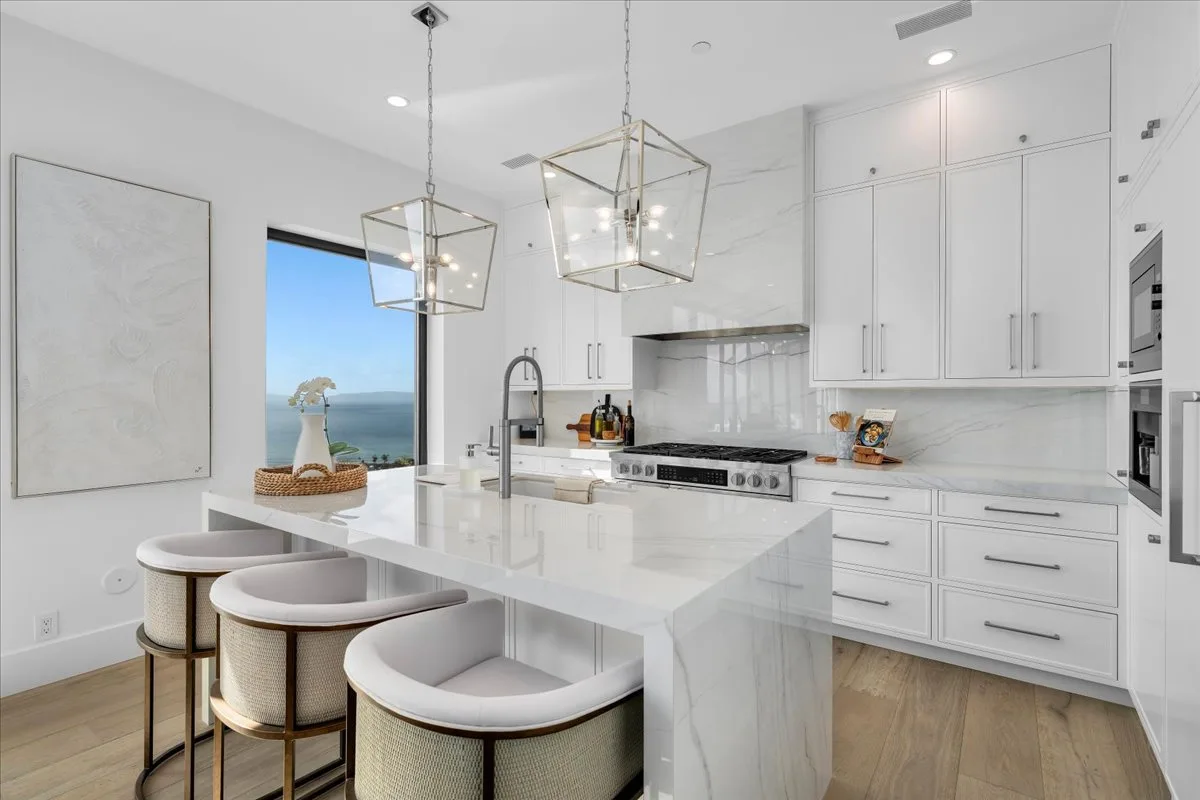
Marble on a statement island
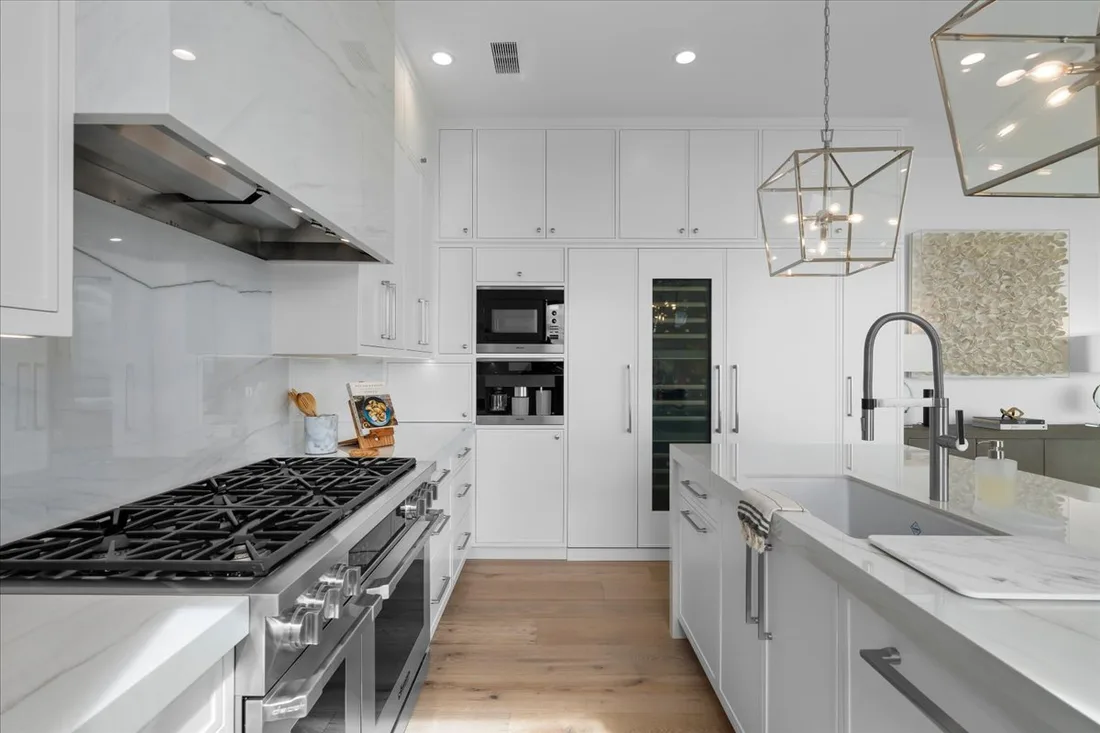
The smartest way to use true marble: a showpiece island or a dedicated baking zone, where the beauty lands and the acid-heavy prep can live on a tougher surface nearby.
Learn more →Honest alternatives
Quartzite gives you natural veining that won't etch; marble-look quartz gives you zero maintenance. If marble isn't right for how you cook, we'll show you the side-by-side.
Learn more →Luxury marble kitchens
Full-height slab backsplashes, book-matched veining and integrated appliances — the high-end coastal look, detailed properly.
Learn more →Pair with cabinetry
Warm white oak or a soft painted perimeter against pale marble is the pairing that makes the stone sing. We tune the two together, not in isolation.
Learn more →Coastal palette fit
Marble's grey-and-white veining is a natural fit for the South Bay's sea-air neutral palette. We spec the finish and the layout around your light and your life.
Learn more →What it costs
Carrara is market-typical of about $75–$120 and Calacatta roughly $150–$250+ per square foot installed. See where a full remodel lands.
Learn more →
Marble doesn't stay perfect. It ages into beautiful — but only for the person who wanted patina in the first place.
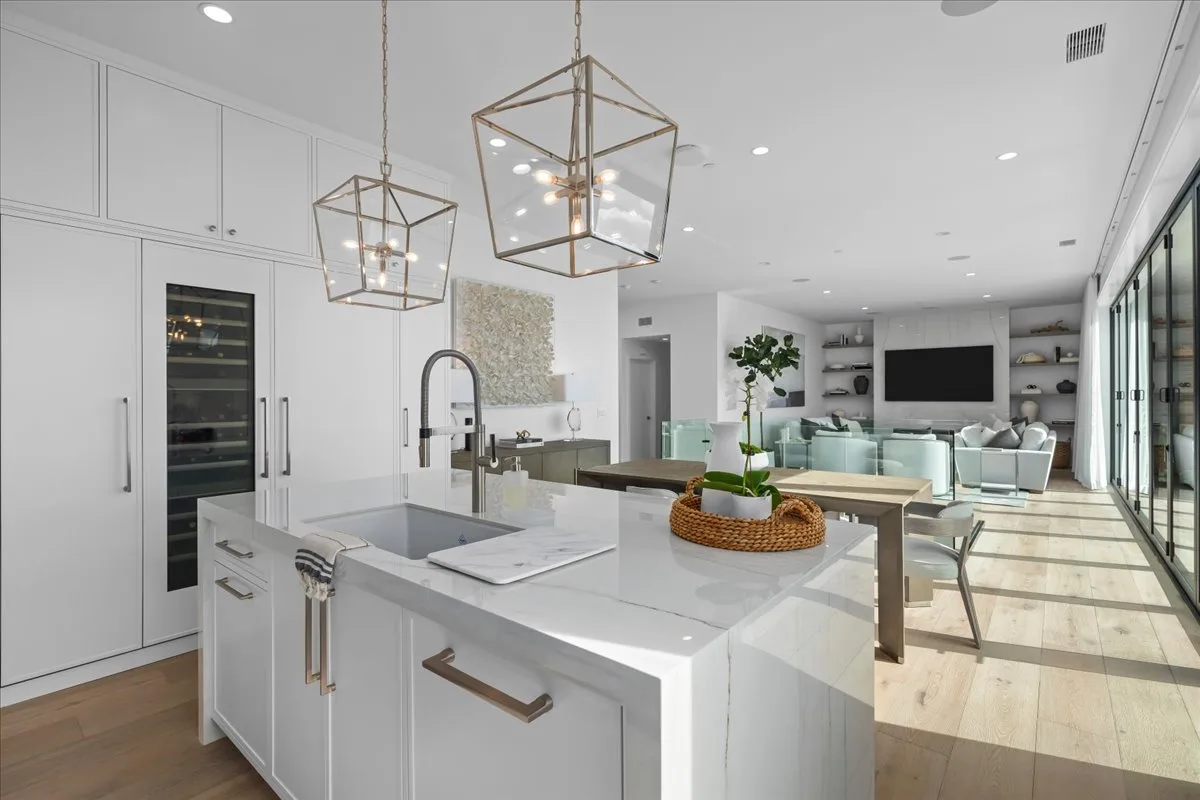
How we use marble in a coastal South Bay home
Marble belongs to the South Bay's aesthetic more than almost any other stone — its soft grey-and-white veining is the sea-air neutral palette in solid form, and because it's UV-stable it holds that color in the wall-of-windows, afternoon-sun kitchens we build in Manhattan Beach, Redondo, and Palos Verdes. The temptation is to run it everywhere. The honest specialist move is to be selective.
So here's how we actually guide clients: honed finish, nearly always, because it hides etching. And for a hard-working kitchen we'll often reserve true marble for the statement island or a baking station — where the beauty is on show and the acid-heavy prep happens elsewhere — while speccing quartzite or a marble-look quartz for the high-use perimeter runs around the sink and cooktop. That way you get the marble moment you fell in love with, in a kitchen that still forgives a spilled glass of wine. If your whole heart is set on marble everywhere and you embrace the patina, we'll build that too, eyes open — we just make sure you chose it, rather than being surprised by it.
Marble kitchens in Manhattan Beach →Why a specialist installs marble better.
The truth up front.
We tell you what marble does — etching and all — before you commit, so you choose it confidently instead of regretting it later.
One accountable team.
Design through final walkthrough under one roof — no subcontractor chaos, no finger-pointing over a chipped seam.
A fixed written scope.
Quoted in writing before we start, with a line-item breakdown. No vague bids, no surprise change orders.
Licensed & insured.
Milestone payments tied to real progress — never a big check up front — backed by our 2-year workmanship warranty.
Marble countertop questions
Does marble stain easily?
Marble is porous, so an unsealed slab absorbs oil, wine and pigment quickly. Sealed on install and resealed every 6 to 12 months, it resists staining well and handles everyday spills if you wipe them up. Staining is the solvable part of marble ownership — sealing genuinely prevents it.
Does marble etch?
Yes, and this is marble's defining weakness. Kitchen acids — lemon, wine, vinegar, tomato — react with the calcium carbonate and leave a dull spot that no amount of scrubbing removes. On a polished finish it's a permanent matte mark. A honed finish hides it far better, which is why we recommend honed for kitchens. If you can't accept any etching, marble isn't the right stone for you.
Is marble a bad idea for kitchens?
Not a bad idea — a specific one. Marble is wrong for someone who needs a bulletproof, always-perfect surface, and right for someone who values its beauty and reads its soft patina as character rather than damage. Bakeries have used marble counters for a century precisely because cooks love it and accept the wear. The mistake is choosing it by accident; the success is choosing it knowingly.
Are marble countertops worth it?
For the right person, absolutely — nothing else matches marble's depth and luminosity, and it holds its color for decades because it's UV-stable. Worth is about temperament, not just money: if patina reads as beautiful to you, marble is deeply worth it; if the first etch mark would bother you, your money is better spent on quartzite or a marble-look quartz that gives the look without the upkeep.
Does sealing stop etching?
No — and this is the most important thing to understand about marble. Sealer sits in the pores and stops staining, which is a below-the-surface problem. Etching is a chemical reaction on the surface itself, so a perfectly sealed slab etches exactly the same as an unsealed one. Sealing stops stains; it does not stop etching. Choosing a honed finish is how you manage etching, not sealer.
What's the difference between Carrara and Calacatta?
Both are Italian white marbles, but they look and cost differently. Carrara has a soft grey background with fine, feathery grey veining and is the more affordable classic — market-typical of roughly $75 to $120 per square foot installed. Calacatta has a whiter, brighter background with bolder, higher-contrast veins and runs about $150 to $250 or more installed. Statuario sits between and above them with a bright white ground and dramatic veining. Those are market-typical figures, not a quote.
How do you maintain marble countertops?
Seal on install and reseal every 6 to 12 months — a quick wipe-on job. Day to day, wipe up acidic spills promptly, use a cutting board because marble is soft (about 3 to 4 on the Mohs scale) and scratches, and use trivets. Clean with a pH-neutral stone cleaner, never a vinegar- or citrus-based one. And make peace with a honed finish's patina — that's the maintenance mindset that keeps marble owners happy.
Let's find out if marble is right for your kitchen
Tell us how you cook and what you love about marble, and we'll give you the honest read — marble, quartzite, or a marble-look quartz. A real person answers — usually the same day.