Quartz countertops for South Bay kitchens — the marble look, none of the babysitting
The default-smart choice for a kitchen that actually gets used: the veined, marble-like look with zero sealing, ever. We'll tell you the whole truth about it — including the two things a showroom rarely volunteers — so you choose it for the right reasons.
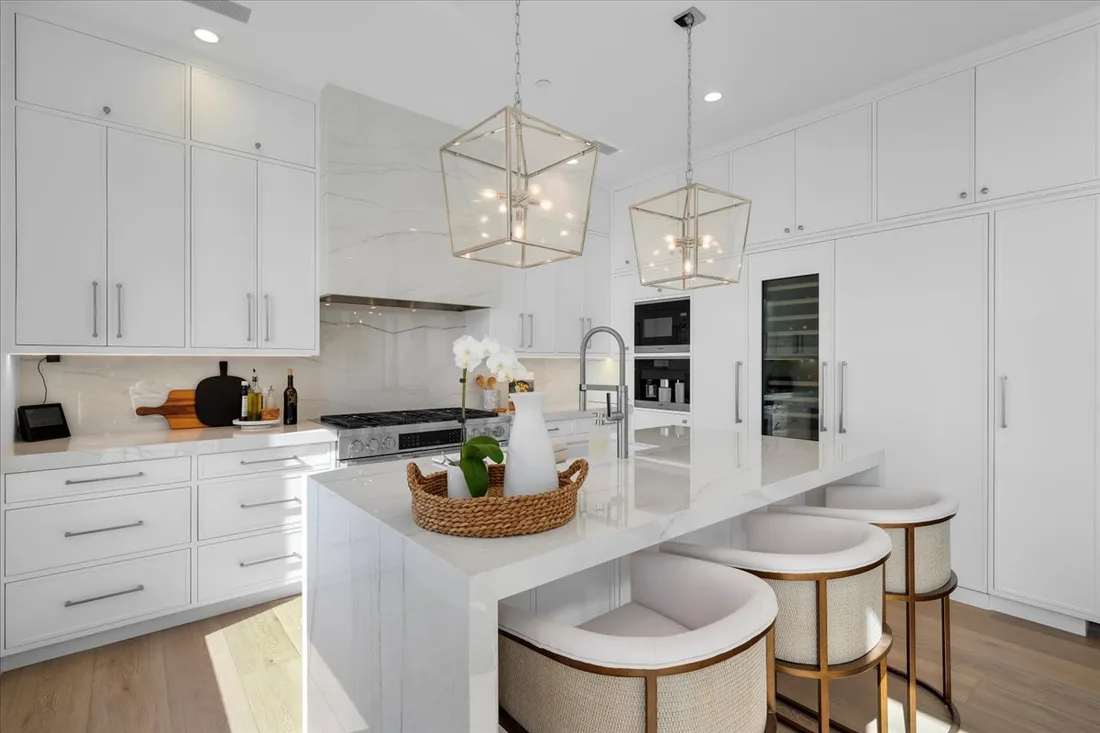
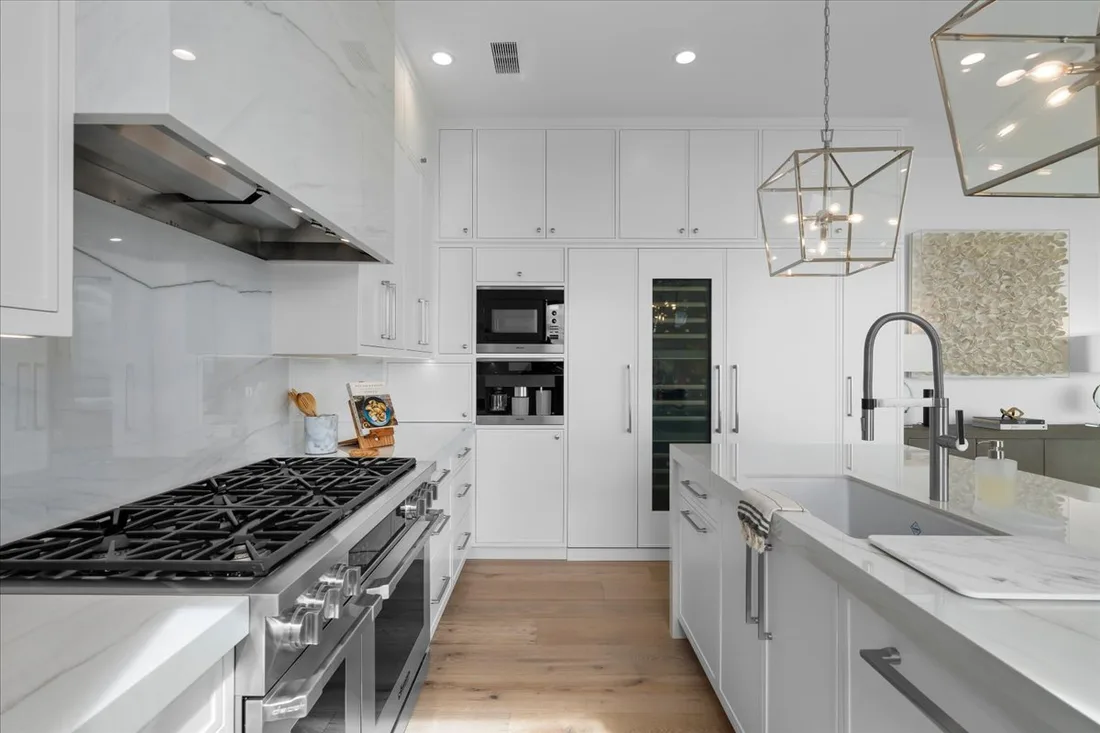
The two things salespeople don't mention: heat and sunlight
Quartz is close to bulletproof on the things people worry about most. It's non-porous, so it never needs sealing and shrugs off stains — wine, coffee, oil, citrus — better than any natural stone. It's hard (around 7 on the Mohs scale) and highly scratch-resistant. But that resin binder, the same thing that makes it maintenance-free, is where the two real limits live, and neither one usually comes up in a showroom.
First: quartz is not heatproof. The stone handles roughly 300°F, but the resin can scorch or discolor above that, and a pan straight off a burner will leave a mark. It's a trivet-and-hot-pad surface, full stop. Second: prolonged direct sun can yellow lighter quartz over the years, because UV degrades the resin. Neither is a dealbreaker — it just means quartz belongs where you'll use trivets and, in a bright ocean-facing kitchen, where we've thought about which runs sit in direct south or west light. That's a design decision, and it's exactly the part we plan around instead of leaving to chance.
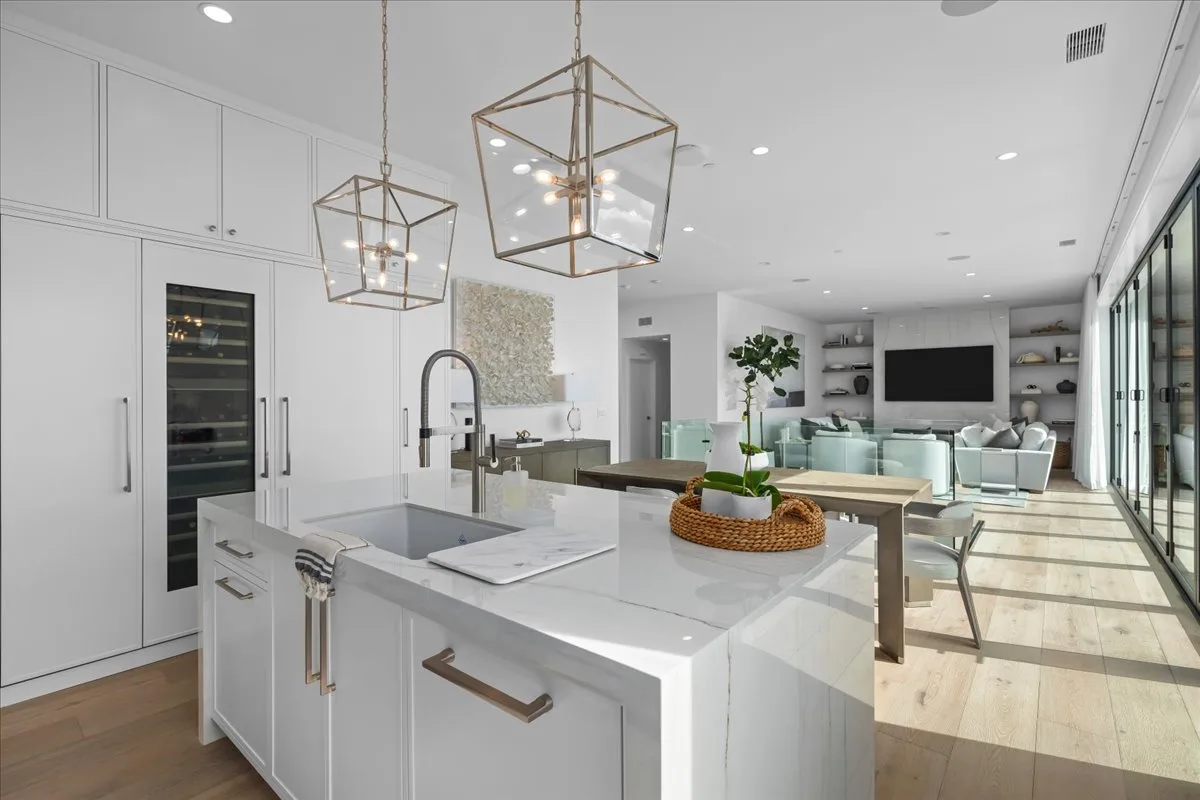
Marble-look quartz — the coastal-contemporary workhorse
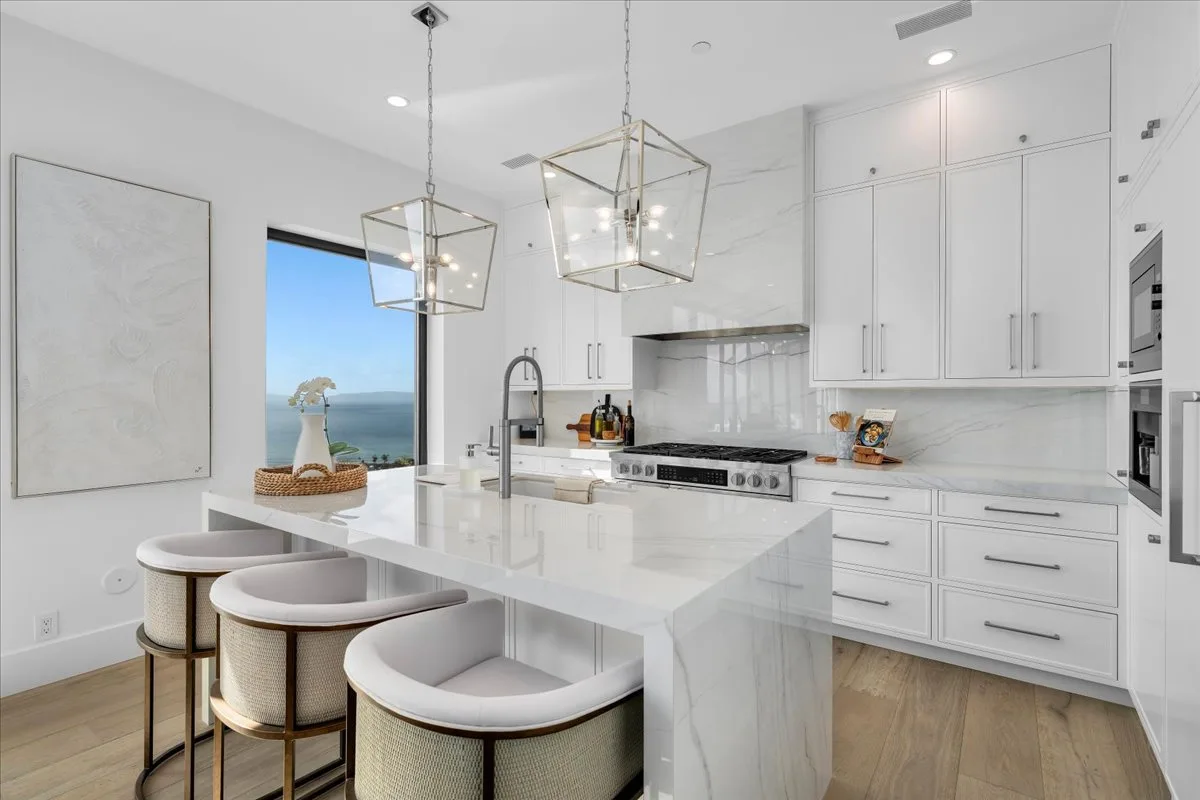
Most people who ask for marble actually want the look, not the upkeep — and modern quartz gives them exactly that. Calacatta- and Vena-style patterns put soft grey veining across a warm-white field, and in a matte or honed finish they read as convincingly stone as anything on a beach-city island. The difference is you can set a cutting board down, wipe up a lemon, and never think about sealing or etching again.
That's why quartz is the surface we reach for first on a hardworking kitchen: it's the most consistent slab-to-slab, the easiest to live with, and the one most design pros lean toward when a client wants low drama. On a full remodel we fabricate and template it as part of the job — waterfall edges, an integrated sink run, a matching full-height backsplash — so the counter is designed into the room, not dropped on at the end.
Explore custom cabinetry →How we work quartz into a kitchen
Marble-look quartz for coastal kitchens
Calacatta and Vena-style veining in matte and honed finishes — the marble look tuned to a bright, warm-white South Bay palette without the maintenance.
Learn more →Islands & waterfall edges
Quartz is ideal for a waterfall island — its consistency lets the veining wrap the corner cleanly, and it takes daily island abuse without a fuss.
Learn more →Quartz vs quartzite vs granite
Not sure quartz is the right stone? We'll walk the trade-offs honestly, including where a natural stone earns its place instead.
Learn more →Paired with custom cabinetry
The counter is one layer. We tune the slab to your door style, finish, and hardware so the whole kitchen reads as one considered decision.
Learn more →Fabrication & install, done in-house
Templating, fabrication, and install handled as part of a full kitchen — one accountable team from first measure to final seam.
Learn more →What it costs
Market-typical quartz runs about $50–$150 per square foot installed, with most South Bay kitchens landing around $70–$100 — the slab itself is usually 40–50% of that. Figures are typical, not a quote; we price yours in writing.
Learn more →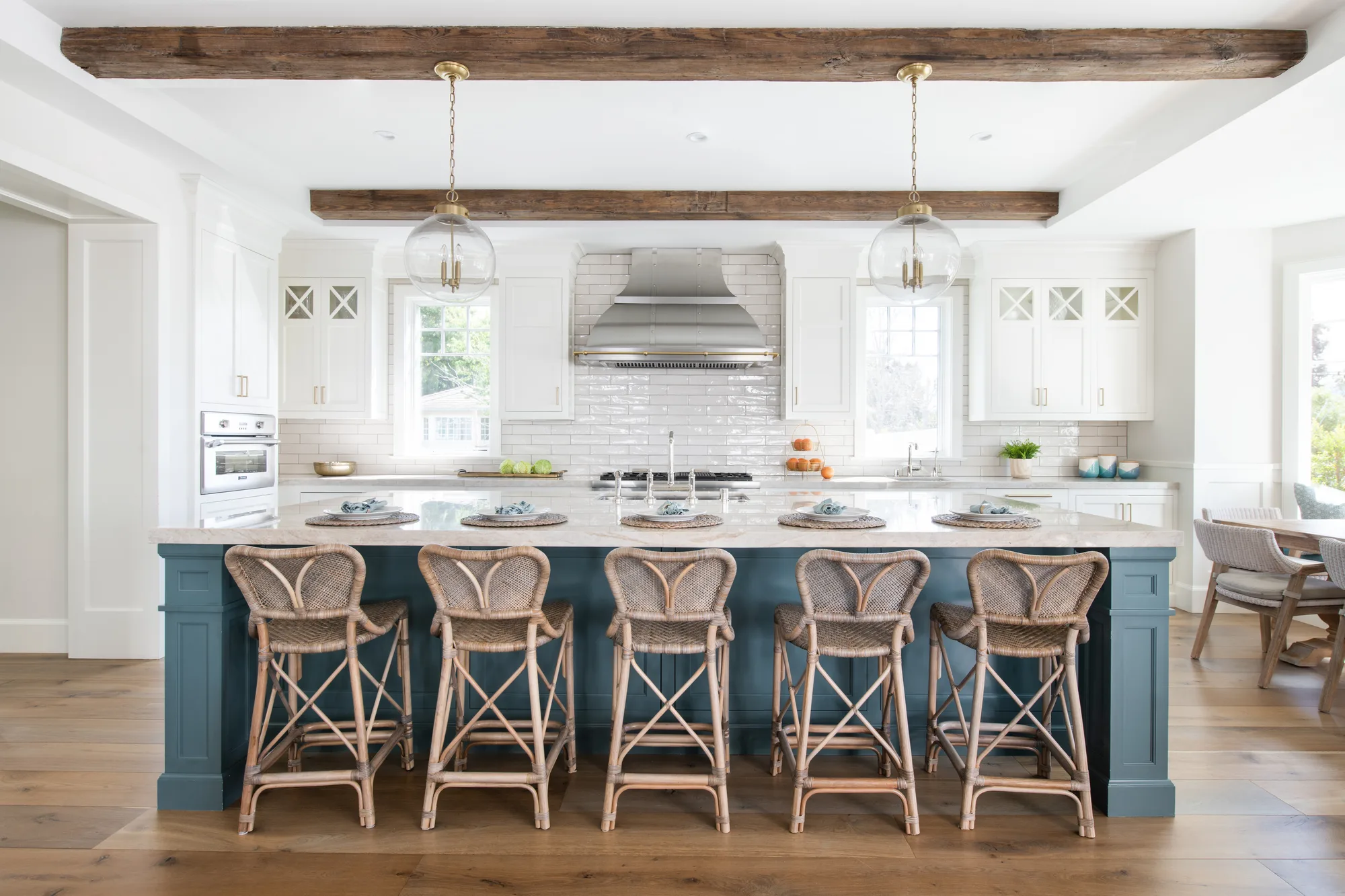
Buy quartz for what it does all day, not for the one hot pan it can't take.
Why quartz suits coastal living — and the one place we pause
For most South Bay kitchens, quartz is the low-maintenance winner. Salt air, sandy feet, and a kitchen that runs all day are hard on natural stone that needs sealing — and quartz simply doesn't care. In a busy Torrance or Redondo Beach family kitchen, it's the surface that looks the same in ten years with nothing more than soap and water.
The one place we slow down is the bright, ocean-facing kitchen with big south- or west-facing glass — think a Manhattan Beach or Palos Verdes home built around the view. That's exactly where prolonged direct sun can yellow lighter quartz over time. So we plan for it: steer toward tones that mask any shift, keep the most sun-baked runs in a spot the design can absorb, or, when a countertop sits in relentless direct light, pivot that run to UV-stable quartzite or porcelain. Same honest look, matched to how the light actually falls in your room.
See the cities we serve →Why a specialist installs quartz better.
Planned around the light.
We map which runs sit in direct sun before we pick a slab — so a bright coastal kitchen gets a surface that stays put.
One accountable team.
Template, fabrication, and install under one roof — no handoff between showroom and installer, no finger-pointing on a bad seam.
A fixed written scope.
Slab, edge profile, and square footage quoted in writing before we start. No vague bids, no surprise change orders.
Licensed & insured.
Milestone payments tied to real progress — never a big check up front — backed by our 2-year workmanship warranty.
Quartz countertop questions
Does quartz stain?
Rarely. Quartz is non-porous, so liquids can't soak in the way they do on unsealed natural stone. Wine, coffee, oil, and citrus wipe off with soap and water and it never needs sealing. Give a spill a reasonable wipe and you'll essentially never see a stain.
Is quartz heatproof — can I put a hot pan on it?
No, and this is the big one. Quartz handles everyday warmth, but the resin binder can scorch or discolor above roughly 300°F, so a pan straight off the burner can leave a permanent mark. Always use trivets and hot pads. If you want a truly heat-tolerant surface, natural quartzite or porcelain is the better call — we'll flag that when it matters.
Does quartz fade in sunlight?
It can, over years, in prolonged direct sun — UV slowly degrades the resin and lighter colors may yellow. In most kitchens this never comes up. In a bright, ocean-facing kitchen with big south- or west-facing windows, we design around it: tone choice, layout, or pivoting a sun-baked run to UV-stable quartzite or porcelain.
Is quartz better than granite?
For most kitchens, quartz is the easier choice: non-porous, never needs sealing, more consistent slab-to-slab, and the widest range of marble-look patterns. Granite is fully natural and more heat-tolerant, so it wins if you want a one-of-a-kind natural stone or set hot pans down often. Neither is universally 'better' — it depends on how you cook. We'll talk it through honestly.
How long does quartz last?
Decades. It's hard, highly scratch- and stain-resistant, and doesn't need resealing to keep performing. Treat it as a trivet surface and keep it out of relentless direct sun and a quality quartz counter will outlast most other finishes in the kitchen.
Does quartz need to be sealed?
Never. Because it's non-porous, quartz needs no sealing at any point in its life — that's one of its biggest advantages over marble, granite, and quartzite. Routine care is just soap and water.
Is quartz good for a kitchen with lots of windows?
Usually yes — but it's the one case where the answer depends on the room. Diffuse or north light is no problem. It's prolonged, direct south- or west-facing sun on a lighter slab that can yellow over time. In a bright coastal kitchen we either choose tones that hide any shift or move the most sun-exposed run to UV-stable quartzite or porcelain, so you keep the look without the risk.
Let's spec the right quartz for your kitchen
Tell us how you cook and where the light lands, and we'll match the slab to the room. A real person answers — usually the same day.