Coastal kitchens for South Bay homes — the coast, not the cliché
The feeling of the South Bay coast — light off the water, salt-bleached wood, sea-air neutrals — with not one seashell, coil of rope, or navy-and-white sailboat in sight. Coastal done right is texture and tone, not theme. And the whole craft is evoking the ocean without ever announcing it.
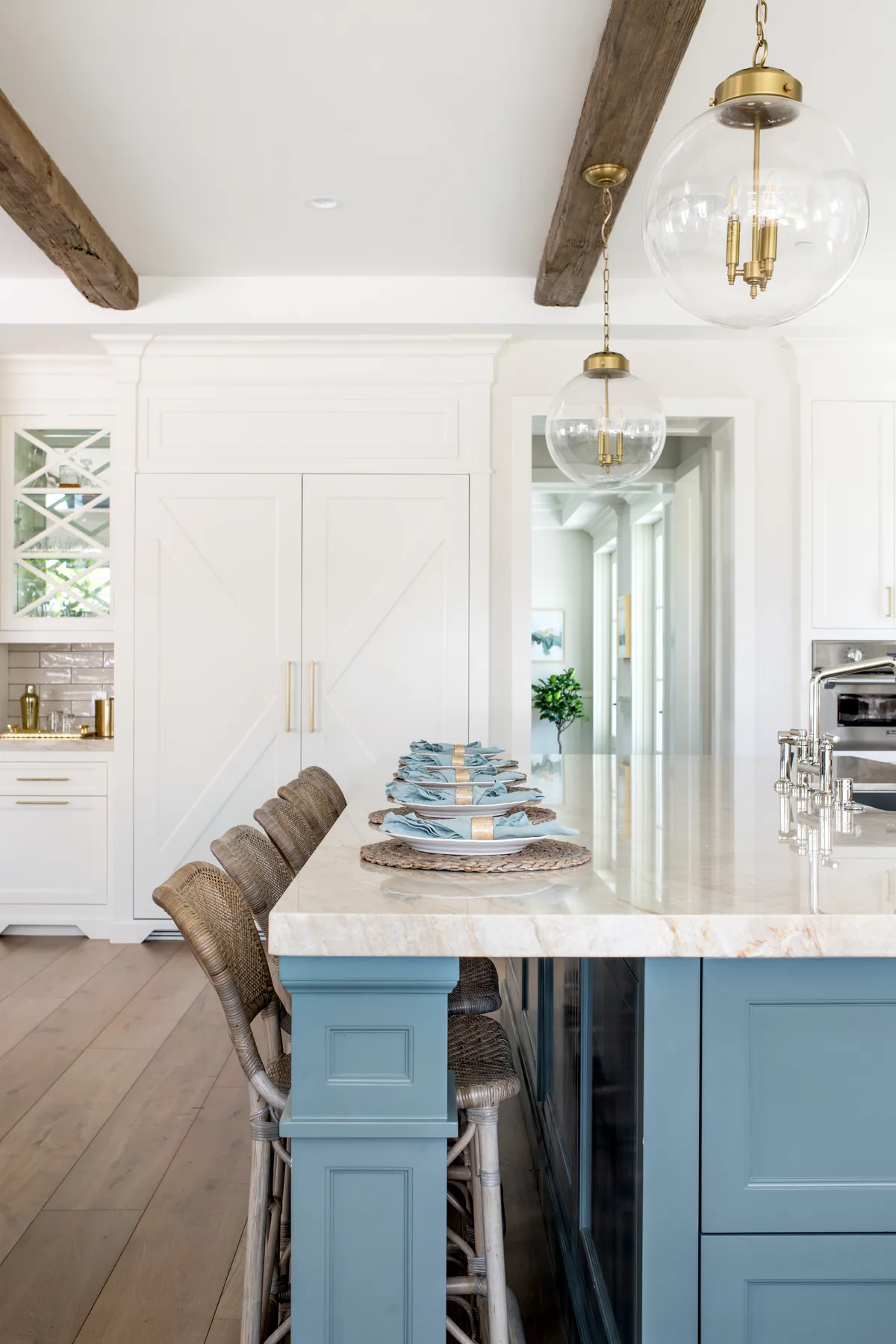
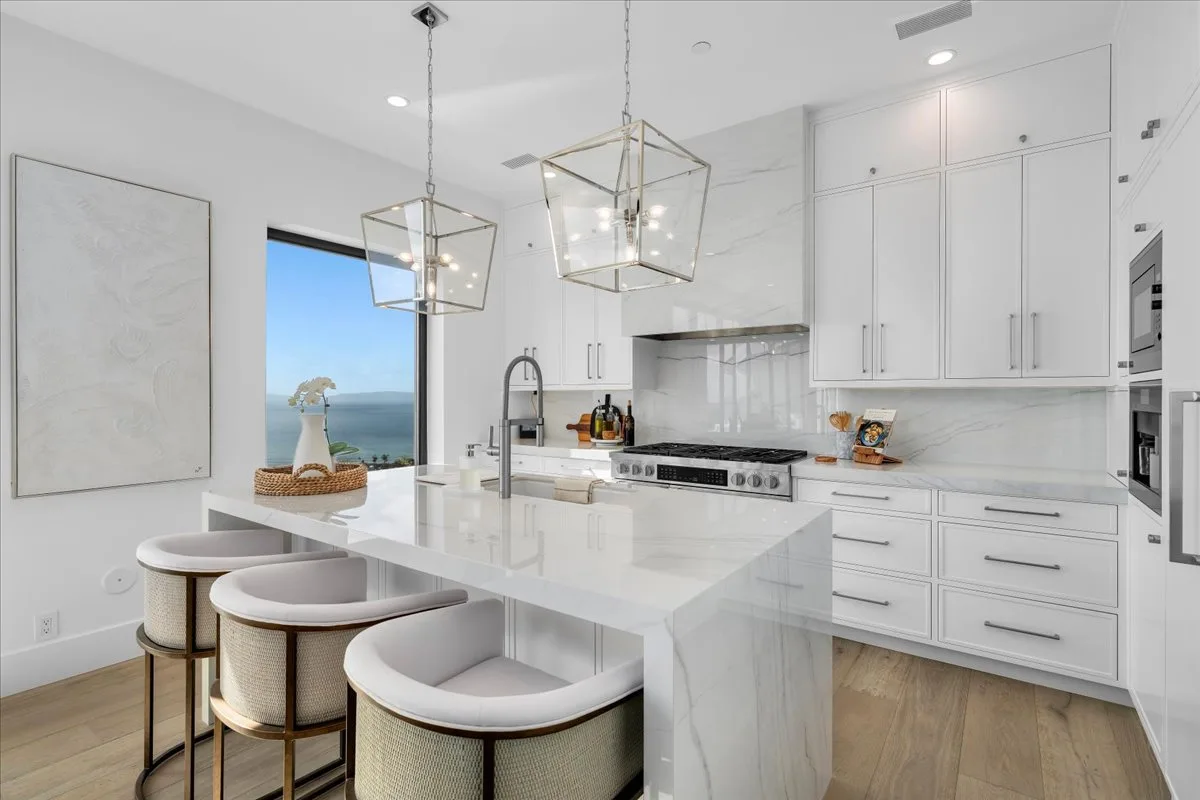
The four ways a coastal kitchen goes wrong
One: the blue-and-white default — navy island, white shaker, and nothing else, a formula so overused it reads as a builder's stock package rather than a home near the sea. Two: the souvenir shop — shells, coral, rope pulls, a driftwood sign that says BEACH — literal motifs that turn a kitchen into a theme restaurant. Three: overt theming of any kind, where every element points at the ocean until the room has no confidence of its own. Four, the one nobody warns you about: cold, sterile whites with no warmth, an all-grey "coastal" kitchen that feels like a hospital corridor instead of a house full of afternoon light.
The fix is the same in every case — texture and tone over motif. You evoke the coast the way the coast actually feels: warm white walls, the grey of weathered wood, the soft green of sea glass and dune grass, the honest grain of white oak and the cool weight of stone. Get the materials and the light right and you never need a single seashell to say where you are. That restraint is precisely the part a specialist earns their keep on.
Sea-air neutrals and materials that carry the theme
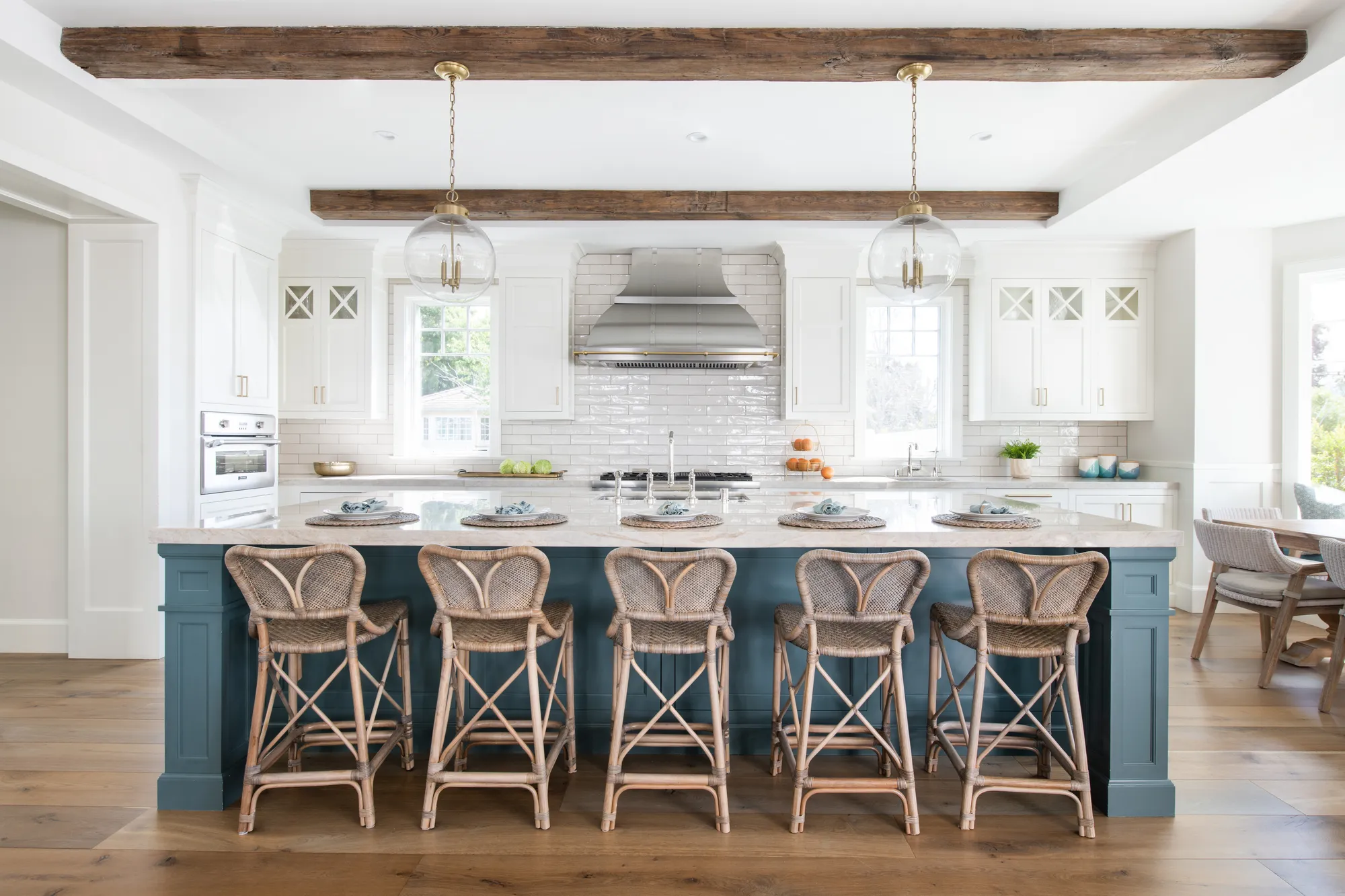
Start with a palette pulled from the shoreline, not the gift shop: warm layered whites instead of one cold grey, driftwood greys, and muted greens somewhere between sea glass and dune grass. When we reach for an accent it's the unexpected one — a buttery cream, a soft sage, or a moody deep blue with real depth — rather than the predictable nautical navy that instantly dates the room. Color does quiet work here; it sets the temperature and then gets out of the way.
Then the materials do the rest, because in coastal the texture is the theme. White oak in a matte or waxed finish for warmth and grain; quartzite and marble for light-catching stone; leathered surfaces that read soft rather than glossy; seagrass and woven fronts; a few blackened-steel accents for contrast that keeps the whole thing from going sweet. We build these full-custom, so the finish, the reveal, and the way the light lands on each surface are tuned to your room instead of pulled from a catalog.
Explore custom cabinetry →The elements of a coastal kitchen
White oak & warm-white cabinetry
Matte or waxed white oak for grain and warmth, paired with a layered warm white — never a single cold grey. The wood is what keeps coastal from going sterile.
Learn more →Light-toned counters
Quartzite and light marble catch and throw the light the way the coast does. We match the stone to how you actually cook, so the airy look survives real dinners.
Learn more →Panel-ready appliances
Fridge and dishwasher hidden behind cabinet fronts so the eye reads calm, uninterrupted material — not a wall of stainless. Quiet is the whole point of coastal.
Learn more →The island as gathering center
The heart of a coastal kitchen: room to seat the family on woven stools, sized to your walkways rather than to a rendering. Painted, natural, or a soft accent tone.
Learn more →Luxury coastal kitchens
Ocean-view homes where the palette is pulled from the actual coastline and the finishes are calibrated to big view windows. Restraint at a level you can feel.
Learn more →Layered natural light & fixtures
Maximize the daylight first, then layer glass globe or woven pendants that read like sea glass and rattan. Light is the material coastal is actually built from.
Learn more →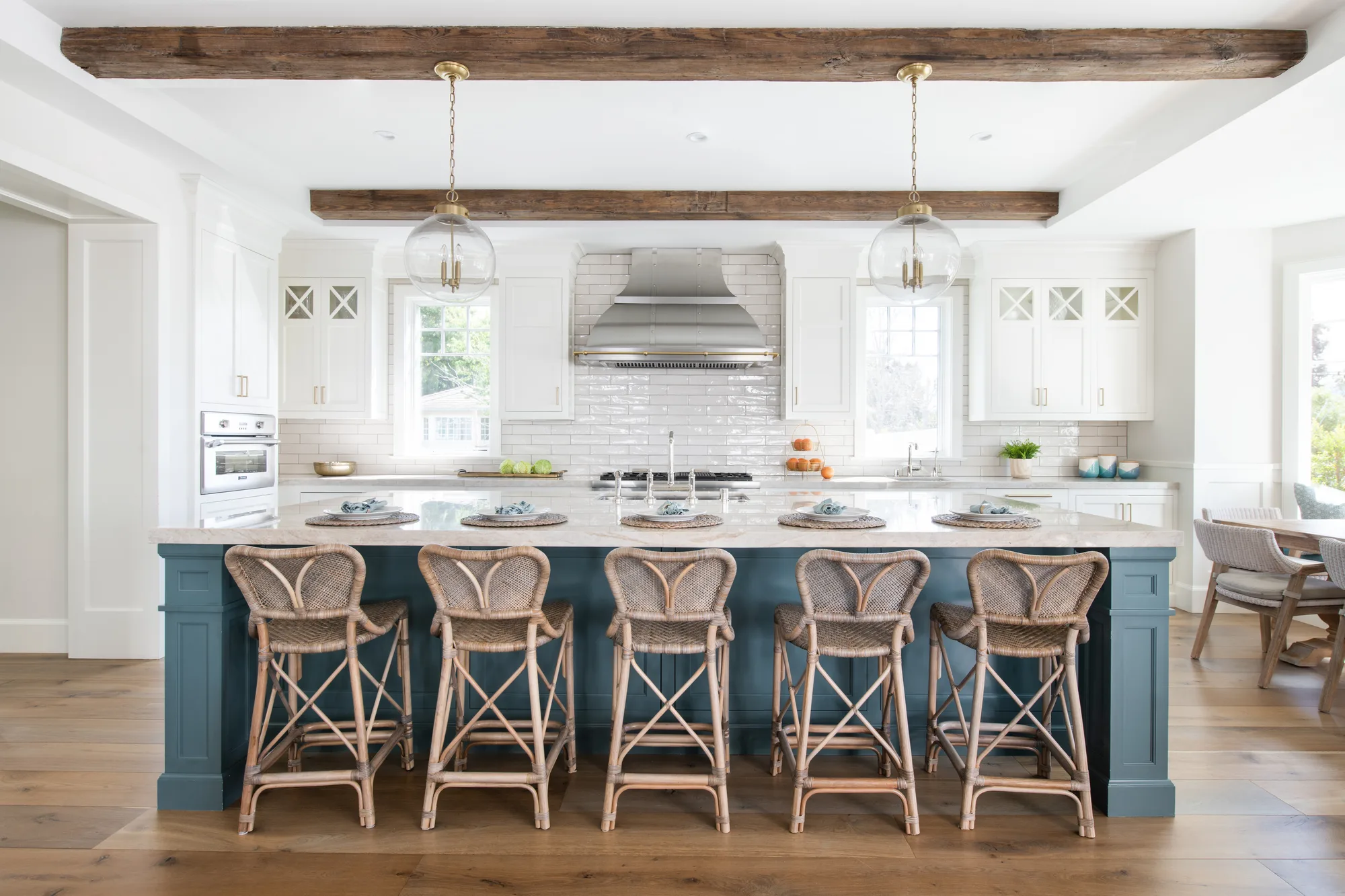
A coastal kitchen should feel like the sea, not describe it. Texture and light, never a seashell.
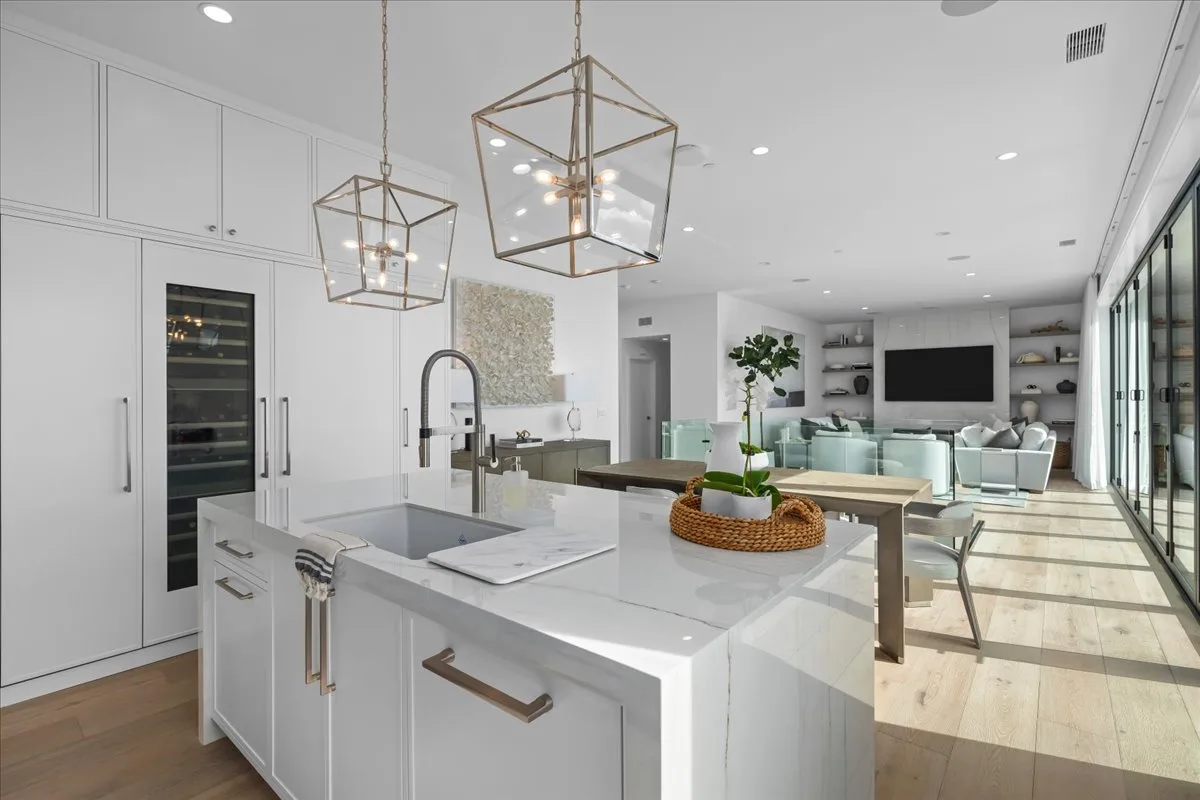
Coastal, calibrated to the block it sits on
On a Hermosa or Manhattan Beach walk-street, we build the kitchen that belongs three blocks from the sand without a single seashell — warm-white cabinetry, white oak, and a woven-stool island that feels like the outdoors walked in. These are the homes where the coast is real, so the kitchen never has to imitate it; it just has to hold the light coming through the door and let the salt air do the rest.
Up in Rancho Palos Verdes and Palos Verdes, where the window is a straight shot to the water, we pull the palette from the actual PV coastline and sky rather than a mood board, and we lean on matte finishes to cut the glare bouncing off those big view panes so nothing fights the view. And in Redondo Beach, where the footprints run smaller, coastal earns its keep as a light-maximizing strategy — pale stone, reflective surfaces, and panel-ready appliances that make a compact kitchen breathe like a bigger one.
See the cities we serve →Why a specialist builds coastal better.
Tone over theme.
We evoke the coast with palette, texture, and light — never a motif — because the line between coastal and kitsch is exactly where a specialist earns it.
One accountable team.
Design through final walkthrough under one roof — no subcontractor chaos, no finger-pointing.
A fixed written scope.
Quoted in writing before we start, with a line-item breakdown. No vague bids, no surprise change orders.
Licensed & insured.
Milestone payments tied to real progress — never a big check up front — backed by our 2-year workmanship warranty.
Coastal kitchen questions
How do I make a coastal kitchen without it looking cheesy or nautical?
Build it from texture and tone, not motif. Warm white cabinetry, white oak, light stone, sea-air neutrals and layered natural light will read unmistakably coastal on their own. Skip the shells, rope, coral, and sailboat-navy formula — the moment the room points at the ocean it stops feeling like it and starts feeling like a theme.
What colors are best for a coastal kitchen?
Layered warm whites as the base — not a single cold grey — with driftwood greys and muted greens between sea glass and dune grass. For an accent we prefer the unexpected one: a buttery cream, a soft sage, or a moody deep blue with real depth, rather than the predictable nautical navy that dates the room.
Is coastal the same as beach or nautical style?
No. Beach and nautical styles use literal motifs — shells, rope, anchors, blue-and-white stripes. Coastal, done the way we build it, is coastal-contemporary: it evokes the feeling of the shore through natural materials, light, and sea-air neutrals without a single decorative reference. It's calmer, more current, and it ages far better.
What cabinets suit a coastal kitchen?
White oak in a matte or waxed finish is the heart of it — the grain brings warmth that keeps coastal from going sterile. Pair it with a layered warm-white shaker or slab, and consider woven or seagrass fronts as an accent. We build full-custom, so the finish and proportions are tuned to how your room takes light.
Do coastal kitchens have to be blue?
Not at all — and the blue-and-white default is the most overused version of the style. Blue can work beautifully as a moody, deep accent with real depth, but a coastal kitchen can just as easily live on warm whites, driftwood greys, and muted greens. The coast is a temperature, not a single color.
Will a coastal kitchen look dated?
The themed version dates fast — trend colors and literal beach motifs are the first things to feel tired. The coastal-contemporary version we build ages well because it's grounded in natural materials and a restrained palette rather than a trend. Get the texture and tone right and it reads current for the long run.
What countertop is best for a coastal kitchen?
Light-toned quartzite is the workhorse — natural veining that reads like the sea and holds up to real use. Marble earns a statement moment where you'll maintain it, and a soft, low-sheen leathered finish reads more coastal than a high polish. We match the stone to how you actually cook so the airy look survives everyday life.
Let's design a coastal kitchen that feels like the coast
Tell us about your home and we'll show you how coastal tunes to it — the palette, the materials, the light. A real person answers — usually the same day.