Quartz vs quartzite: which countertop is right for your kitchen?
The names are nearly identical, which is why the showroom is confusing. One is made in a factory, the other is quarried from the earth — and that single fact drives every difference that matters.
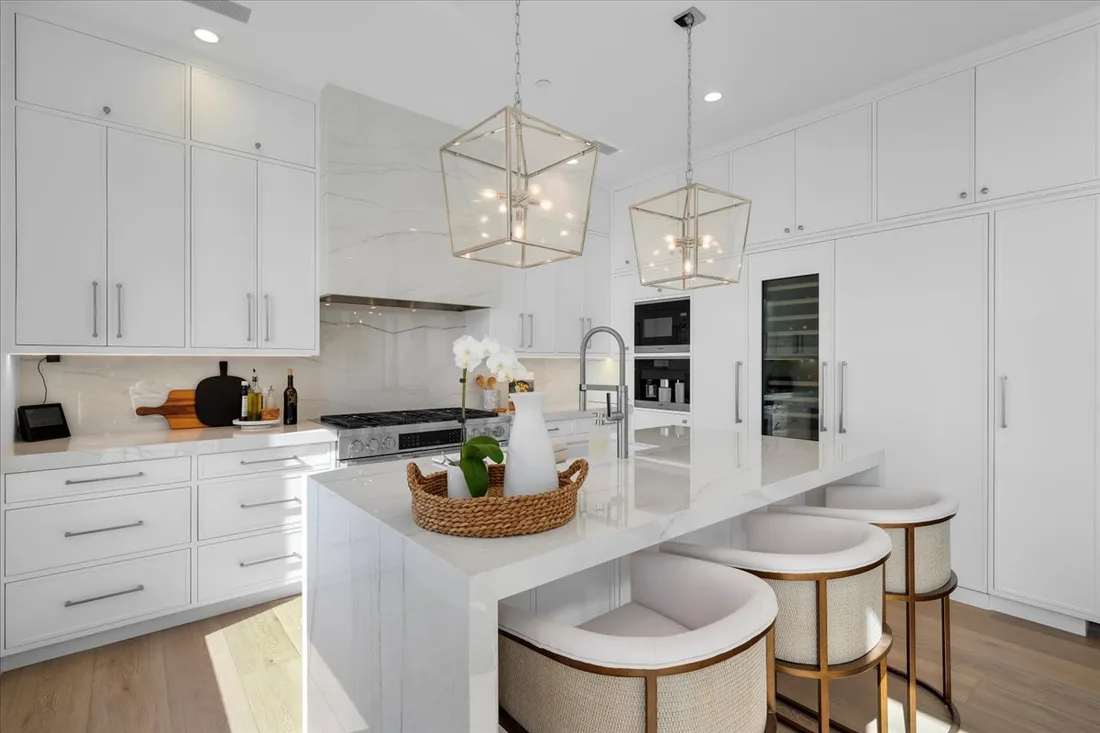
Quartz and quartzite look similar on a four-inch sample and are fundamentally different materials. Quartz is engineered. Quartzite is natural stone. That difference drives how they wear, how much upkeep they ask of you, how they handle a hot pan, and what they cost.
This guide gives you the plain-English comparison, and then does something the national articles cannot: it factors in living here. Sun exposure through a west-facing beach-city window, salt air, indoor-outdoor kitchens, and the practical business of getting a full slab into a home on a Hermosa walk street all change the answer.
If you want the wider field — granite and marble included — our four-way countertop comparison covers all of them side by side. This guide is about the two that get confused with each other.
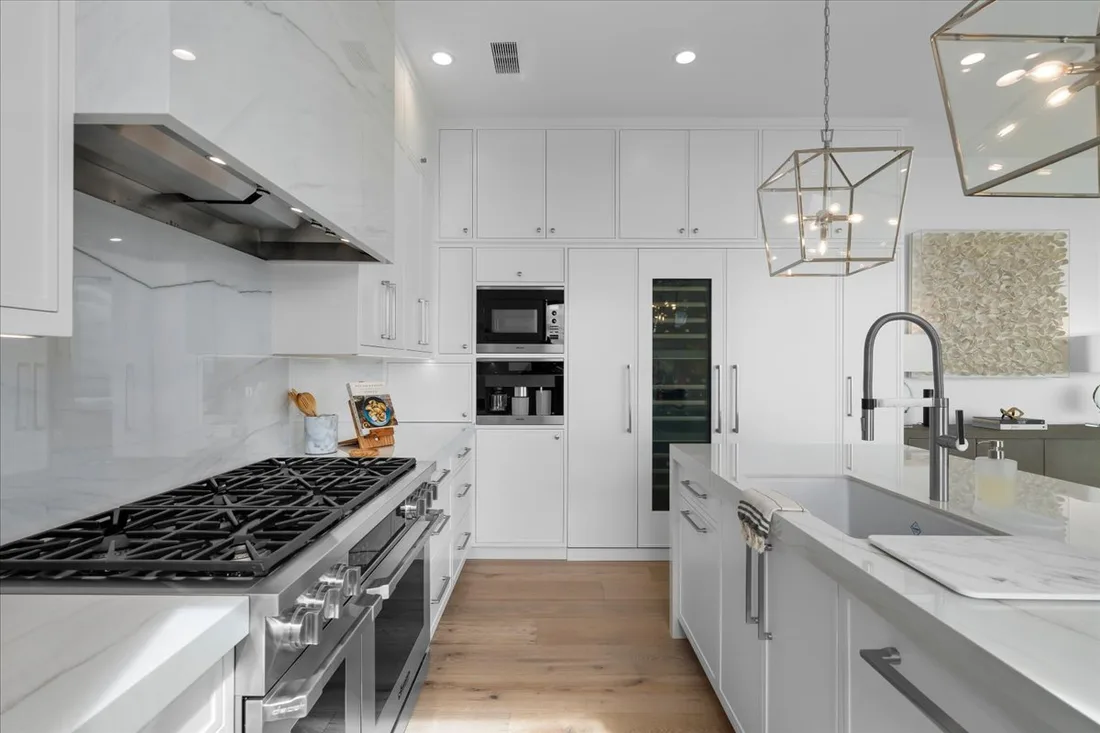
Made versus quarried
Quartz is engineered stone. It is manufactured from roughly 90 to 95 percent ground natural quartz bound with resins and pigments, then pressed and cured into slabs. Because it is made rather than quarried, it is non-porous and comes in highly consistent colors and patterns — including convincing marble looks. The names you will see in South Bay kitchens are Cambria, Caesarstone, and Silestone.
Quartzite is natural stone. It begins as sandstone and, under heat and pressure over a very long time, recrystallizes into a dense, hard rock. It is quarried in slabs, so every piece is unique, with the flowing veining and optical depth of real stone. Taj Mahal, Calacatta quartzite, and White Macaubas are the names driving current kitchens.
Two points of confusion worth clearing up. Quartzite is not marble — it is considerably harder and more durable. And quartzite has no relationship to engineered quartz beyond the unfortunate similarity of the words. A homeowner asking for "quartz" and meaning "quartzite" is one of the most common mix-ups in the business, and it is worth being precise about early, because they are priced and maintained differently.
Where they actually differ
The short version: quartzite is tougher against heat and scratches, quartz is easier against stains and upkeep. Here is the detail.
| Quartz (engineered) | Quartzite (natural) | |
|---|---|---|
| Appearance | Consistent and predictable — what you see on the sample fills the kitchen | One of a kind, with real movement and depth; you choose the actual slab |
| Heat resistance | Lower — the resin binder can scorch or discolor under direct high heat | Higher — formed under heat, tolerates a hot pan better |
| Scratch resistance | Hard and durable in daily use | Extremely hard, harder than granite |
| Stain resistance | Excellent — non-porous, essentially unbothered by wine, oil, or citrus | Good once sealed; porous if the seal lapses |
| Sealing | Never | Periodically, commonly about once a year |
| UV stability | Can discolor in sustained direct sun; most are not warrantied outdoors | Natural stone, generally stable in sun |
| Cost | Mid to high; designer lines like Cambria at the upper end | Slightly higher on average; rare slabs considerably more |
| Best for | Busy households that never want to think about counters | A statement island, a genuine natural-stone look, serious cooking |
Both are premium surfaces and the price ranges overlap more than people expect. Fabrication is often the bigger variable — waterfall edges, full-height slab backsplashes, and mitered edges add labor to either material.
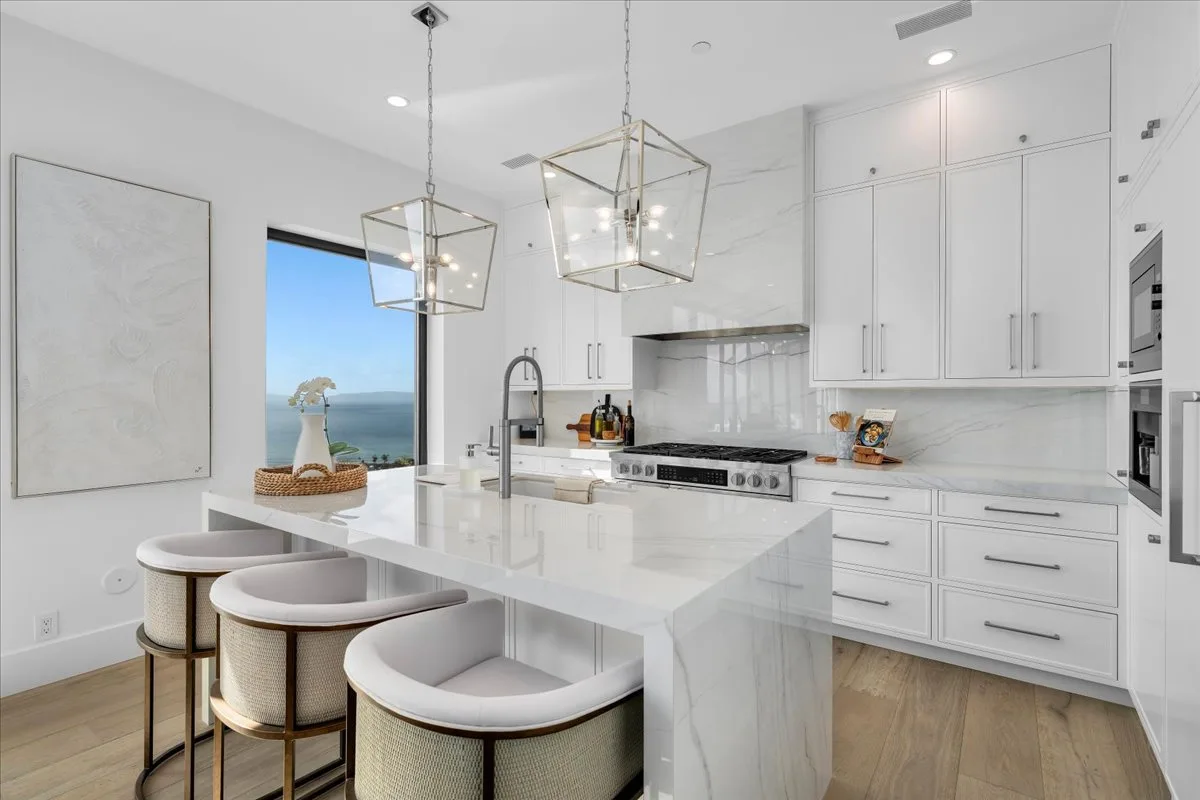
Sun, salt, and the west-facing kitchen
Here is the consideration that national comparison articles never raise, and that matters a great deal in a beach city.
A west-facing kitchen in Manhattan Beach, Hermosa, El Segundo, or coastal Palos Verdes takes direct, sustained afternoon sun through large windows or sliders — the same feature that made you want the house. Some engineered quartz can discolor or yellow under prolonged UV exposure, which is precisely why most manufacturers do not warranty it for outdoor use. Indoors behind glass the risk is much lower, but on a run of counter that sits in unshaded afternoon light for years, it is a genuine question worth asking your fabricator rather than assuming away. Natural quartzite does not have this vulnerability.
Salt air, by contrast, is largely not a countertop problem. It shows up in hardware, fasteners, fixtures, and appliance finishes long before it touches your stone. Near the water we specify marine-grade 316 stainless for sinks and exposed metal and corrosion-resistant hardware throughout, whichever counter you choose. The counter is the wrong place to worry about salt; the faucet is the right one.
The one place both materials meet their limit is a genuinely outdoor kitchen — a Manhattan Beach roof deck, a Palos Verdes view patio. There the answer is usually neither. Sintered stone such as Dekton or Neolith is engineered to be UV-stable, heat-proof, scratch-resistant, and non-porous, built for exactly those conditions. It is what we steer most indoor-outdoor projects toward.
What choosing quartzite actually involves
This is the part homeowners are least prepared for, and it is genuinely one of the more enjoyable days of a remodel. With natural stone you are not picking a color from a chart — you are picking a specific piece of rock.
- 01
You go to the slab yard.
Quartzite is selected slab by slab at the stone yards around Los Angeles. Two slabs of the same named stone can look meaningfully different. Photographs do not do it — the depth and movement only read in person, and under the yard's lighting we will talk about how it will look under yours.
- 02
You buy the whole slab, and sometimes two.
Stone is sold by the slab, not the square foot you use. A large island, a full-height backsplash, and a waterfall edge can push a project onto a second slab — which is a real budget step rather than a gradual increase. We work out the yield before you commit to a piece.
- 03
Book-matching, if the veining deserves it.
Consecutive slabs cut from the same block can be opened like a book so the veining mirrors across a seam or up a backsplash. It is the detail that makes a dramatic stone look intentional rather than busy. It requires buying the slabs together and planning the layout around it.
- 04
Templating happens after cabinets are set.
Counters cannot be measured until the cabinets are installed and level. Then the slab is templated, fabricated off-site, and returned. It is the one-to-two-week gap in the middle of every remodel where the kitchen looks nearly finished and nothing appears to happen.
- 05
And then it has to physically get into your house.
A full slab is heavy, rigid, and unforgiving. In the Manhattan Beach Sand Section and on the Hermosa walk streets — no driveway, no vehicle access, and frequently a top-floor kitchen because that is where the view is — it is carried in by hand, up stairs, by a crew sized for it. Entirely doable. Not something to discover on delivery morning.
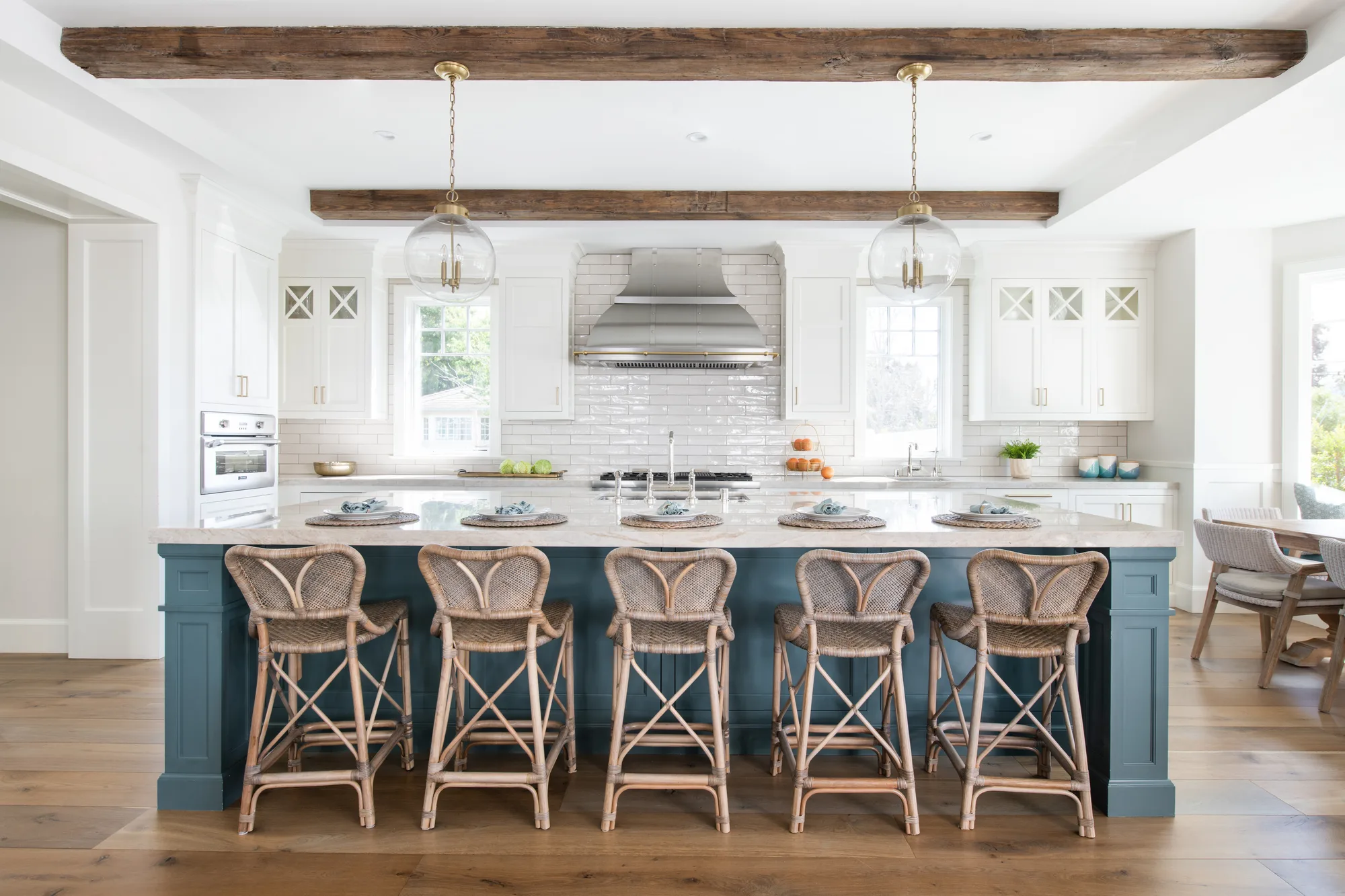
With natural stone you are not choosing a color. You are choosing a specific piece of rock, and no one else will ever have it.
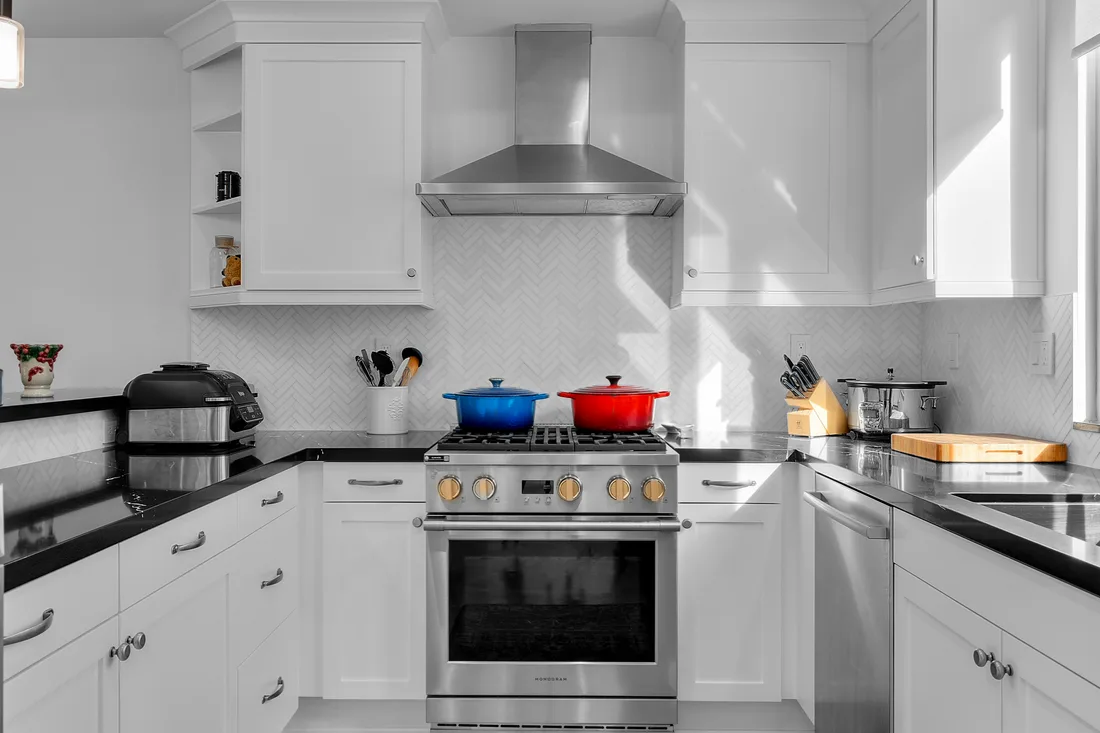
What each one asks of you
Quartz asks for essentially nothing. Wipe it with soap and water. No sealing, ever, for the life of the counter. That genuinely low-fuss reality is most of why it dominates in households with young kids, homework at the island, and no appetite for another maintenance task.
Quartzite asks for periodic sealing — commonly about once a year, though it depends on the specific stone and how hard you use it. It is a fifteen-minute job with a bottle from the hardware store, not an ordeal. But it is a recurring task that quartz simply does not have, and the consequence of forgetting it for a few years is a stone that starts absorbing what you spill on it.
There is a simple diagnostic question we ask homeowners: when you imagine a glass of red wine going over on the island during a dinner party, does your stomach drop? If it does, that is useful information, and it points toward quartz. If your reaction is that you would wipe it up and get on with the evening, quartzite is well within your tolerance.
Both materials, incidentally, want a trivet. Quartz needs one because of the resin. Quartzite handles heat better but is still stone, and thermal shock is real. Nobody should be putting a cast-iron pan straight from a 500-degree oven onto either surface.
Compare all four materials →A simple way to decide
Lowest maintenance, total color control.
Quartz. Non-porous, never sealed, forgiving of the wine-and-homework life.
Genuine stone, better heat tolerance.
Quartzite. One-of-a-kind veining, and annual sealing you will barely notice.
Outdoors or in heavy sun.
Sintered stone — Dekton or Neolith. UV-stable and built for the elements.
Still not sure?
Tell us how you cook and how you feel about spills. That answers it more reliably than any spec sheet.
Quartz vs quartzite FAQ
Is quartzite better than quartz?
Neither is universally better. Quartzite is natural stone with unique veining and superior heat and scratch resistance, but it is porous and needs periodic sealing. Quartz is engineered, non-porous, and essentially maintenance-free, with consistent color. The right pick depends on how you cook and how much upkeep you want.
Does quartzite need to be sealed?
Yes. Quartzite is porous, so it should be sealed — commonly about once a year, depending on the stone and how hard the kitchen is used — to stay stain-resistant. It is a short job, not an ordeal. Quartz is non-porous and never needs sealing.
Which is more heat resistant, quartz or quartzite?
Quartzite. As natural stone formed under heat and pressure, it tolerates a hot pan better than quartz, whose resin binder can scorch or discolor under direct high heat. Use trivets with either — thermal shock can damage natural stone too.
Is quartz or quartzite more expensive?
The ranges overlap, but quartzite runs a bit higher on average and rare or dramatic slabs can cost considerably more. Designer quartz lines like Cambria sit at the upper end of the engineered range. Fabrication details — waterfall edges, full-height backsplashes, mitered edges — affect both materials significantly.
Will quartz fade in a sunny kitchen?
Sustained direct UV can discolor some engineered quartz over time, which is why most manufacturers do not warranty it outdoors. Indoors behind glass the risk is much lower, but for a west-facing beach-city kitchen that takes hours of unshaded afternoon sun it is worth raising with your fabricator. Natural quartzite does not share this vulnerability.
What's the best countertop for an outdoor South Bay kitchen?
Usually sintered stone — Dekton or Neolith — rather than standard quartz or quartzite. It is UV-stable, heat-proof, and non-porous, which suits sun and salt air. Some quartz is explicitly not warrantied for outdoor use because UV can discolor it.
Do I have to go to the stone yard to pick quartzite?
For natural stone, yes, and it is worth the trip. Two slabs of the same named quartzite can look quite different, and photographs do not capture the depth. We go with you, talk through yield and whether the project needs a second slab, and plan any book-matching before the stone is cut.
Still deciding?
Tell us how you cook and the look you are after. We will help you choose the right surface, walk the slab yard with you, and fabricate and install it to spec.